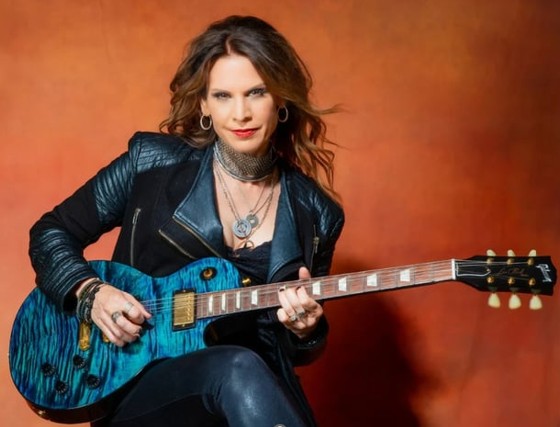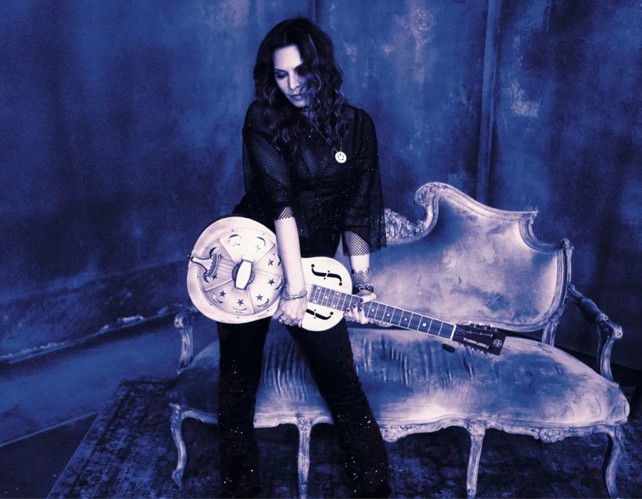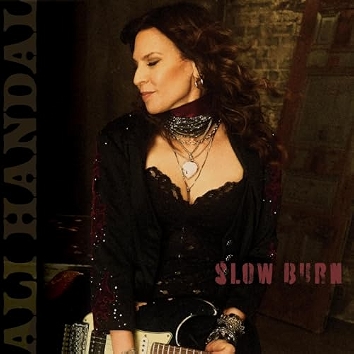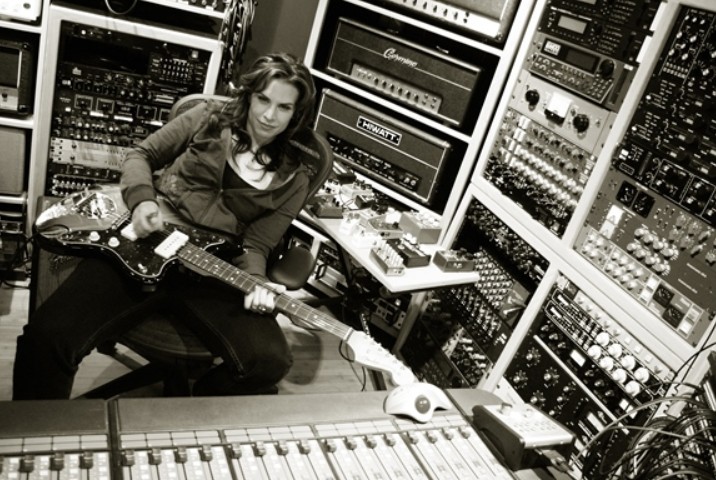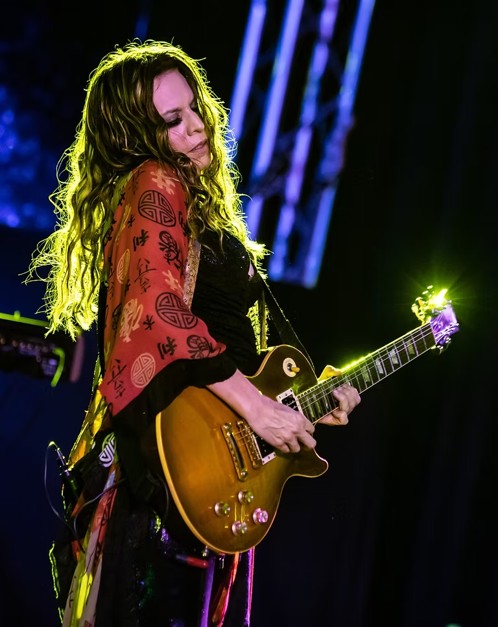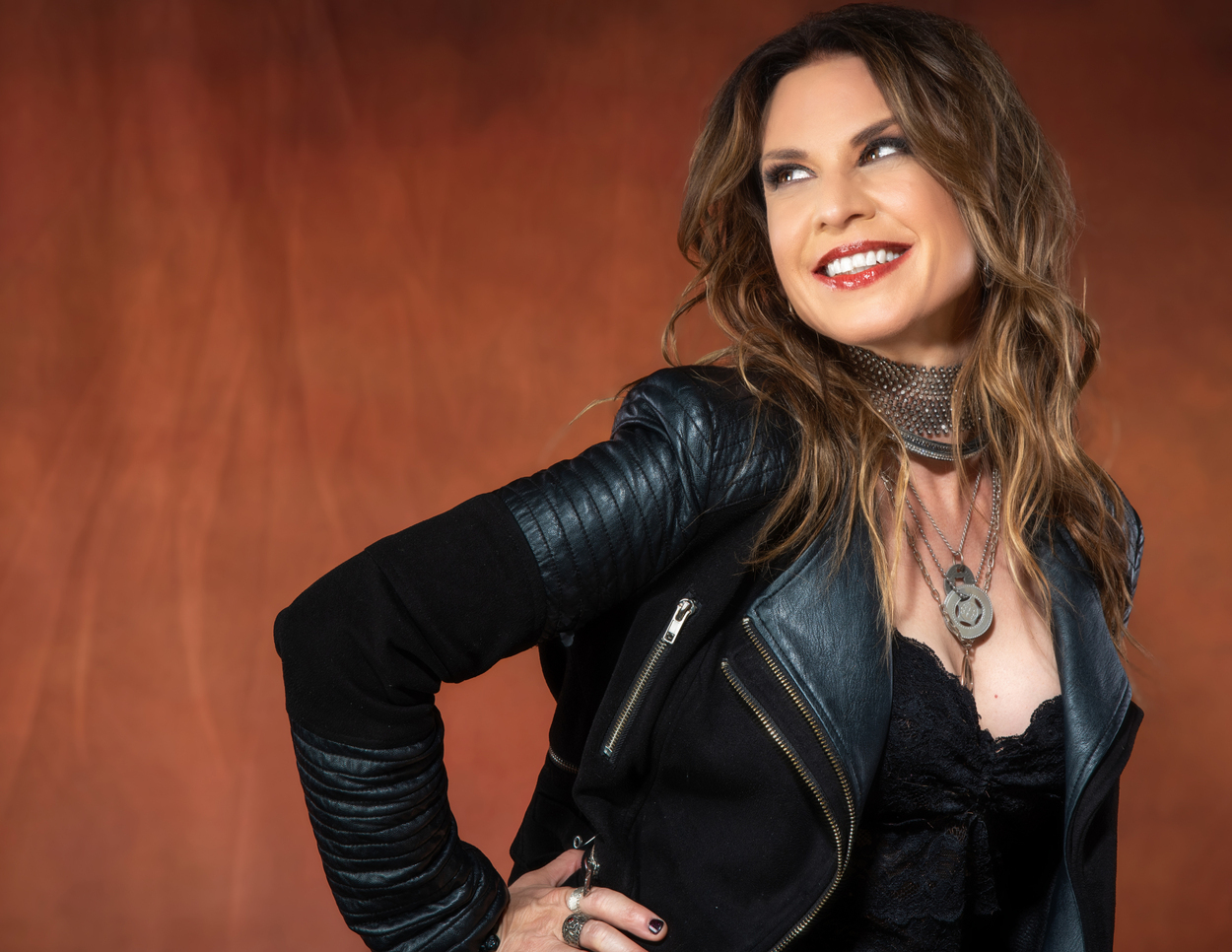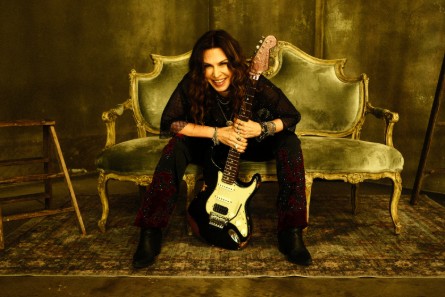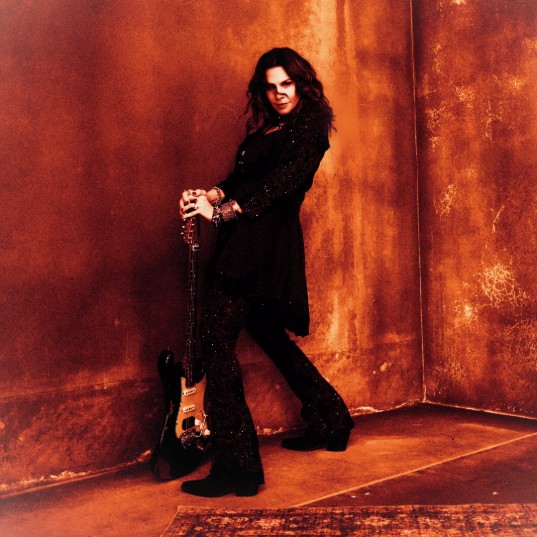

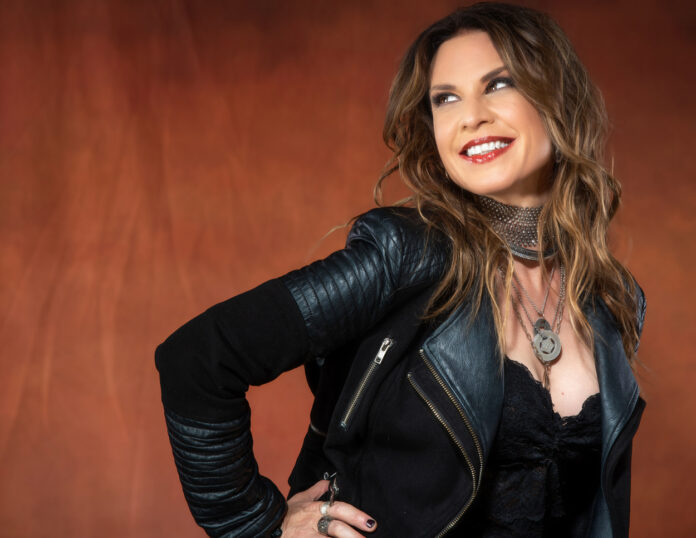
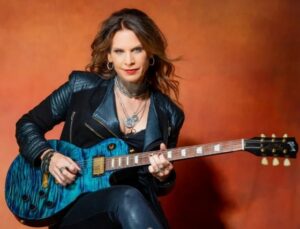
When I first sat down with Ali Handal in early October, I knew going in that I was in trouble. I had prepared an outline for what was supposed to be a 30-minute conversation, and it ballooned to roughly three hours of questions. Ali’s career has that many layers: a UCLA psychology graduate turned blues-rock guitarist, singer and songwriter, and the co-founder of a successful music licensing business. We had a terrific talk, but when the clock ran out, we had covered only about a third of what I wanted to ask.
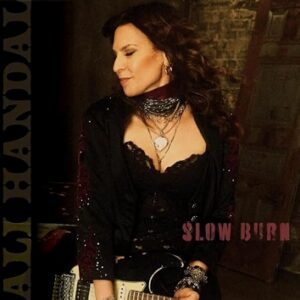
That first conversation, which ran just ahead of the release of her fifth album, Slow Burn, is available right here on Denver Entertainment Hub: An Interview with Ali Handal/Denver Entertainment Hub. If you haven’t read it yet, I encourage you to start there, because it lays the groundwork for everything that follows.
Fortunately, Ali agreed to a second round. A lot has happened since we last spoke. Slow Burn is now out in the world and drawing strong reviews, and Ali has spent the weeks since the release basking in the response while also catching her breath after an ambitious album release concert: two 75-minute shows in a single night. She has also landed a coveted showcase at NAMM (National Association of Music Merchants) in January, on the largest stage at the event, and she is already plotting a horn-fueled funk set to go with it.
In this conversation, we pick up some of the threads we left dangling the first time around. Ali talks about the post-release letdown she experienced, her plans for a live album, and what the NAMM opportunity means to her. We also dig into the two subjects we ran out of time to cover previously: her role as the Joe Perry of the Aerosmith tribute band RagDolls, and the surprising story of how a wedding photographers’ convention in Las Vegas led to Triple Scoop Music, the licensing company she co-founded and has helped grow for roughly 20 years. Read on, and get to know Ali Handal a little better.
************************************************************************
(Author’s note: Text in italics and parentheses was added by the author for clarity and is not part of the interview itself. Ali and I laughed throughout the conversation, far more often than the lone “(Jokingly)” tag in the transcript suggests; marking every instance would have become tedious.)
Ali: Hey Rick, sorry I’m a little late.
Rick: No worries – you’re only a couple of minutes late. How are you doing?
Ali: I’m good. I’m good. Just running a little behind, but I’m here now. Been busy, you know, preparing for Black Friday, and I just found out I’m doing a big showcase at NAMM, and so I’m working on that. I’m looking at bringing in some horns, and doing a whole new kind of show. So it’s kind of crazy.
Rick: I heard that news, and we’re definitely going to talk about that some more. You know, the last time we talked, I think we got through about 30% of the three-hour interview outline I had for you. I don’t think we’ll be able to get to all of the 70% we still have left, but we’ll chip away as much as possible.
Ali: Awesome, awesome.
Rick: Anyway, it’s really nice to see you again.
Ali: Yeah, good to see you too.
Rick: It doesn’t seem like it’s been that long, but it’s actually been a little over a month and a half since the last time we talked, and a lot has happened in that period of time. Let’s start with the release of Slow Burn, which was six weeks ago today. How’s that been? What kind of response have you gotten from it?
Ali: It’s been going great. We’ve been getting a really good response. Still getting responses coming in. Found out that Music Connection (Magazine) – you know they have these lists, and I guess I made the list of 100 hot artists, or something like that. So that’s going to come out soon, I think.
 Rick: I saw a real nice piece on Rock and Blues Muse.
Ali: Yeah, it’s getting some good reviews. I’m doing a little something for Guitar World Magazine’s year-end issue. So we’re continuing to get it out there, continuing to sell, and like I said, getting ready for Black Friday. I’m doing this kind of cleaning out my closets of merch and other weird and wild stuff, and that started this morning, so it’s been kind of fun. We sent out an email just this morning. I collect stickers and all kinds of weird stuff, so I like to put freebies in all of my orders. I’m putting a lot of the old merch up for 50% off, just to clean the old merch out of my closets and get ready for what’s coming next year.
Rick: I’ve enjoyed your posts on Facebook. Your excitement over the new record is so obvious and so contagious that it’s really fun to watch those. I can tell how much this record means to you.
Ali: Yeah, it really does. And it was obviously a long time coming and a labor of love more than anything. So I’m doing my best to enjoy the process. You know, right after I put it out, right after my party, especially the concert, I kind of had a little bit of a, I guess it would be like a postpartum kind of thing of, what am I supposed to do now? Everything’s been building up to this for so long. But now I’m okay, and I’m just gonna enjoy it and I’m gonna take it easy and clean my house. I’m not going to put pressure on myself for what I’m supposed to do next. I’ve spent so much of my career just like such a, to quote one of my own songs, “slave to ambition.” That’s what I am, but I’m trying to tame that a little bit and enjoy where I’m at.
Rick: Come on, girl. You’ve got a degree in psychology. You know how this works! I was going to ask you about that though, because I did see your email where you talked about that postpartum funk you were going through… Is this something that has happened to you with previous records, or was it unique to Slow Burn?
Ali: It was unique to Slow Burn. I mean, I have depression normally, so that’s not unique. But like after a big show, usually I don’t go through that. This was just really big. This was a big mountain to climb. I had never done two shows in one night, 75 minutes each one. That was a lot to prepare for, and there was a lot of stress leading up to it. So I think some of it was just relief, you know. Usually after a show I’m kind of like, all right, let’s go on to the next thing. But this time I really felt like I just, you know, needed a minute.
Rick: You recorded those shows, right? You’re going to be releasing those as a live album, maybe next year?
Ali: I think so. They sound great. I’ve only watched a little bit of the video, and I have all of the separate audio files. The only audio I’ve listened to is the video stuff, and that’s pretty clean. So I’m pretty confident that I’ll be able to have my engineers do a great job with mixing it and making everything sound really pro.
Rick: Are you planning to release it as audio only, or are you thinking about video as well?
Ali: I might do both. We have like eight different camera angles, but I’m not sure if it’s going to be worth paying someone to do a massive edit. I mean, that’s kind of the job I would want to have done. I’d want to make sure like everything looks awesome. And I would want it to be more controlled because I am a bit of a control freak. So we’ll see. Maybe I’ll do it with one song first, and then see how much work that is.
Rick: That’s a good idea. You can put them out on social media, just to see what the reaction is. I’d love to see some clips. But of course I’m being selfish, because I don’t have any other options to see you perform live, and I’d really like to do that.
Ali: I think that would be great. There’s a lot I can do with the footage and with the audio, and we had two different sets. Most of the songs were repeated in the second set, just so I could give myself, you know, two options.
Rick: When you do an album release party like this, do you typically play the entire album? I know some people play the new record all the way through front to back, and others play only parts of it, and mix in older material as well.
Ali: I never do that (play the entire new album). There are a couple of songs on this record that are pretty dark and fairly depressing, and I wouldn’t want to bring the mood of the live show down. I always think it’s nice to give some context for that kind of song, and I really didn’t want to do that for these shows. Plus, I didn’t want that many ballads. I wanted it to be much more of an up tempo thing. And I actually used that show as an opportunity to bring back a lot of my earlier stuff and to play it and rearrange it in a funky way.
I’m taking that to an even more extreme level for this next show I’m doing in January at NAMM, where I’m thinking about hiring a horn section and doing a 40-minute funk set. Just a full-on party that will be a mix of rock and funky kind of stuff with horns.
Rick: So let’s talk about the NAMM thing. Is that something you applied for, or is it something that just came out of the blue?
Ali: No, it was something we applied for.
Rick: Okay, all right. So it wasn’t a total shock when you got selected for it. I mean, you knew you were at least being considered.
Ali: Right. It wasn’t a total shock, but I was really excited to get this stage (The Yamaha Grand Plaza Stage, which is the largest stage at the event). I did request this huge stage, and I’ve never gotten to play on it before. It’s pretty exciting. It’s right in the middle of everything. It’s very big, and yeah, I’ve always wanted to play on it since I saw it the first time. They (NAMM) took longer than normal to get back to everybody because there were so many people applying this time. So, given that I have showcased in the last few years and I was still chosen, I was very excited about that.
Rick: Well, congratulations! That’s a very cool honor. I saw a picture of the stage in one of your emails, and it looks fantastic. I’m very excited for you.
Ali: Of course, I’m going to be there at noon, so it’s not quite the same as 8:00 at night. But that’s okay. We’re going to be welcoming everybody who’s coming into NAMM.
Rick: This will be great exposure for you, and if you’ve got a great set going, people will be walking by, and they’ll just stop to check it out. I mean, that’s what this event is all about. I looked at the dates and I thought, I haven’t been to L.A. in quite some time.
Ali: Come on now.
Rick: The closest airport is John Wayne. I love flying into that airport. Hmm.
Ali: Well, if you come, you gotta let me know. We gotta get together and get dinner or something.
Rick: That would be great. I haven’t ruled it out. You never know. Anyway, there were a couple of things we didn’t get a chance to talk about in our last interview, but before we go to them, I need to ask you about something I made a note of when we were talking, but I forgot to circle back to it. You told me that you were a straight A student through college, with the exception of a single B+ you got in one class.
Ali: That’s right – I did.
Rick: All right then, you have GOT to tell me what the class was that you got the B+ in!
Ali: Oh, it was one of those required classes, like history. One of those liberal arts classes – I forget what it was called, but it was some sort of history thing.
Rick: You’re really trying to blank that B+ out of your mind, aren’t you? You remember the grade, but you’ve blanked everything else out.
Ali: Well, it was, you know a long time ago. (Jokingly) Who cares?
Rick: Well, I had to give you a hard time because, I mean, my whole image of you was shattered when I found out you got that one B+.
Ali: I know. It was for me too.
Rick: Fortunately, I’ve moved on.
Ali: I’m really glad you have. I clearly have not moved on.

Rick: Yeah, you still bring it up in conversation, so you’re clearly working your way through it. Okay then, let’s move on. The two things we didn’t get a chance to talk about in the last session were your music licensing business, and your involvement with RagDolls. Which one do you want to talk about first?
Ali: We can talk about RagDolls.
(RagDolls is a critically acclaimed Aerosmith tribute band founded by lead vocalist Susie Major. Known for its faithful re-creation of the Aerosmith experience, the band pairs note-for-note musicianship with authentic visual style, so audiences feel they have seen the real thing. Ali plays the Joe Perry role, capturing his tone and groove.)
Rick: All right, let’s talk about it. As I mentioned last time, Aerosmith is my favorite band of the classic rock era. I’ve seen them perform live four or five times. How did you get involved with that project?
Ali: Actually, it was just about this time of year in 2019 when Susie Major reached out to me via email. She had been referred to me by Janet Robin, who is a Grammy Award-winning guitar player and artist. Janet is such an incredible person. She got me my very first paying gig as a guitar player in L.A. and she introduced me to Susie. Susie had reached out to her, and Janet wasn’t interested in doing a tribute thing, so she referred her to me. I was actually on vacation with a friend of mine and I was like, “I really don’t have time for this, but it would be so cool. I love Aerosmith, and if I could play like Joe Perry, I’d be so much better of a guitar player.” And so I thought about it, and of course I talked to my husband about it, and he was like, “You should do it.” So I did, and I was right; it did make me a much better guitar player, and it’s been really fun and a great learning experience, musically.
Rick: You really rocked it on the cover of “Walk This Way” (from the Slow Burn album). You know, on the extended outro on the song. As I listened, I felt like that actually could have been Joe Perry.
Ali: Thank you. It’s about half speed of the original, but that speaks to what a brilliant solo he wrote. It works at full tempo, and it works at halftime, almost even better. It’s just such a great melody, and the groove and everything about it is so great.
Rick: How often do you guys get together, either to actually perform, or to rehearse?
Ali: It totally depends on the season. Our summer season can be quite busy, but not too busy, which is kind of good for me because I have so many things I’m balancing. During the summertime, usually we’re doing at least two weekends a month – a couple of gigs each weekend. A lot of them are in the Bay Area, but we travel nationwide. Susie really wants to get us international as well, and it’s just a matter of what makes sense financially. But we’ve traveled all over the country. We do a lot of festivals, we do casinos, we do some private events, some clubs, and it just totally depends on what our booking agent presents to us.
Rick: Well, if you make your way out here to Denver, you’ve got to let me know.
Ali: Absolutely. I mean, Denver is not that far away, so you know it’s just a matter of getting the right gigs. I know the whole band would love to go to Denver. I’d love to go to Denver.
Rick: I don’t cover a lot of tribute bands, but I would be there in a heartbeat.
Ali: It’s a fun one, and Susie is – I mean, I would never have joined if Susie had not been absolutely unbelievable. She’s incredible. There’s no way I would have spent the thousands of hours I’ve spent on this music without her level of excellence, because it’s not worth it otherwise. You know, you can’t have Aerosmith with a crappy Steven Tyler. She just brings it musically.
Rick: So, what’s your favorite Aerosmith song to play?
Ali: Probably “Last Child.” And I don’t even do any solos. It’s just the rhythm – it’s so funky. I love it.
Rick: Yeah, it’s a great song. And I love that it’s a bit of a deep cut, you know.
Ali: I just love all their old stuff.
Rick: That’s terrific. You know, I don’t see a lot of Aerosmith tribute bands around here, but I certainly see a bunch of Zeppelin tribute bands. So if you got a call tomorrow from a big name Led Zeppelin tribute band…
Ali: Like Zepparella.
Rick: Okay, let’s say Zepparella. I’ve actually covered Zepparella, and they’re excellent. So they call you, and say, “Hey, we need somebody to come in on lead guitar to play Jimmy”…
Ali: I don’t think so. I don’t think I would. I don’t think I could do it justice. Maybe if I were 17, because to do it justice would require so much time. I’ve spent a lot of money on gear just for the Aerosmith tribute to get certain guitars that Joe uses, which I love, and I use for my own stuff too. But at this point in my career, and especially my career as a solo artist, I don’t want to spend that much time on another project other than my own songs. You know, it’s a huge investment to do it right now. To do a single song, absolutely. If it’s a song I love, absolutely. But if I’m going to do a tribute, I’m going to want to dive into it the way I dove into Aerosmith, which is an accurate note for note, phrase for phrase representation, and that is a huge investment of time. And also, with Zeppelin there’s a lot more mystery because I haven’t dived into all of their songs, and I’m not really eager to do that with every single Led Zeppelin song. Well, I shouldn’t say it that way. I would love to learn every single Zeppelin song that way. And if I had 100 more years to live, I would do it starting tomorrow. But time is so limited.
But I do enjoy taking some of my favorite songs of theirs, like I did with “Over the Hills and Far Away” on my last record, and completely messing with it. I learned the guitar solo note for note, and then I did it in a different way. So I still love to do that, but I don’t think I’m up for more than that, given my current life expectancy.
Rick: No, I get it. It would take a tremendous amount of time and energy to do. I just know how much of an inspiration Jimmy was for you, so I thought I’d ask.

Ali: If I didn’t have my solo career, that would be what I would want to do. That and also, I would love to just play rhythm guitar in like a James Brown funk band. I would love to find something in L.A. with the best rhythm section ever. Just to be able to do that for fun would be great.
Rick: Yeah, that would be fun.
Ali: There’s a lot I’d want to do, but there’s only so much time.
Rick: Believe me… I get that. Speaking of only so much time, let’s talk about your music licensing business. I think it’s an incredibly interesting and important part of your overall story. I know a lot of artists who go into record production, but I’ve never talked to anyone who has taken such a deep dive into the unsung parts of the music industry. How did that happen for you?
Ali: Well, it all started when my business partner Roy Ashen had the idea that we should do something in licensing. He, along with a third partner who we’ve since parted ways with like 14 years ago, and I were all represented by the same sync agent to get our music into film and TV, and we weren’t sure that he was getting us as much as we could maybe get. I had gotten some really significant television placements and some film placements through my producer of my first record, much more than I was currently getting through this agent. So we started meeting once a week at Starbucks and just talked about ideas, like what could we do, you know. And at first, it was more about film and television because that’s what we knew. But then, this very serendipitous kind of thing happened. My oldest friend in the world, from when I was a little girl in New York, was a professional photographer doing weddings and all kinds of different events. She was a huge supporter of me and fan of my music, and she called me and she said, “Hey, Ali, I’m going to be in Las Vegas at this convention for wedding and portrait photographers, and I’m doing a huge keynote speech. And I wanted to know if you would come up and play your guitar and play some of your songs in front of my images on stage.” And she thought that maybe I could even sell some of my music to the people in the audience. And I thought that sounded like fun, although I wasn’t sure if anybody there was gonna want my music, but okay, sure, why not? And so I went to this convention of wedding and portrait photographers, and I walked around the trade show floor, and this was 2005 or 2006, and everyone was doing and offering slideshows. This was right when Facebook and social media were just starting to get bigger, and people wanted slideshows and videos of their wedding photos. And there was one music company there that was just this dude who created music in his basement, on his computer, and it was terrible. It was just instrumental music, and I thought, they really need good music here. So when I performed in front of this audience of maybe 1,000 people, I’d just randomly brought a box of CDs and I announced that if anybody wanted to license any of my music, to be able to use any of my songs or the instrumental versions of my songs for $100, come see me afterwards and I’ll give you a CD and I’ll send you the digital files for the songs. And I ended up with a line of people who wanted my music. And my music is not the most, you know, wedding-friendly kind of music. It was my first record…
Rick: And that was a really rocking one.
Ali: I know, right? So that night I called Roy, and I told him I think I found an audience who needs music, and that’s where it came from. We called all of our artist friends at the time. Initially it was primarily just artists. Now we represent a lot of composers too. I mean, it’s grown in just huge ways. But right then, it was just like us, our friends, some of whom were Grammy-winning artists. Very high quality. And Roy, who was also a musician, had professional experience in marketing. He had worked at Musicians Institute as the head of their marketing department, and he built websites for a living, so he had both the marketing and the technical knowledge to kind of bring the idea into a more practical web-based business. And that’s how it started. It was kind of serendipitous, and now it’s been, oh my gosh, like 20 years now. Crazy.
Rick: That’s a great story, and so incredible that you found that niche, and it’s worked out so well for you. As you’ve noted, it provides you with a level of financial stability that allows you to continue to pursue your own musical career. But I’m still fascinated by how you do that full time, and you also invest so much time and energy into your career as a musician. I mean, I know you said that you’re a workaholic, but come on.
Ali: Well, to be fair, Roy and the rest of the team do much more of the heavy lifting than I do, and you know, I don’t put nearly as many hours into it now as I used to when we were first starting out, and before I was in RagDolls. I’m definitely very lucky to have a business partner who is 150% supportive of my career as an artist because that’s where he comes from. You know, I used to play in his band! I’m so very fortunate in that way. And I can work from the road, or I can work from home. That’s how we designed the business – to work around our lives as much as we responsibly can. That’s kind of the beauty of being a business owner and doing it yourself, you know.
Rick: And what’s the name of the company?
Ali: We’re called Triple Scoop Music. Actually, if you look on Zoom, Zoom has a music app, and all the music there is from our company. And if you look at Getty Images, they have a whole side of Getty Images that’s music. That’s all powered by Triple Scoop Music. We work with a lot of companies, and we still do a little bit of TV and film, but more on the side of business-to-business licensing.
Rick: Wow… that is both awesome and fascinating. I would love to talk more about the business, but we set this interview up for 30 minutes, and we’re just about there. I always try to be respectful of people’s time, so I think we’re going to call that a wrap. But before I let you go, I just want to tell you how much I enjoy your music, and how impressed I am with the path that you’ve taken, and all the cool things that you’ve done. And I always tell artists, I always just say thank you to them because the gift that you share with the rest of us is something that’s a whole lot more than just entertainment. It’s powerful. Sometimes it saves lives. So, sincerely, thank you for being willing to share your gift with the rest of the world.
Ali: Oh, thank you, Rick. Thank you so much.
Rick: And I’m serious. If RagDolls are coming out this way, you let me know. I would absolutely love the opportunity to see you perform live.
Ali: Ah, the end of January. Come on out to L.A.
Rick: It’s not the worst place to be at the end of January. All right, be well, my friend. It was wonderful talking to you again, and hopefully one of these days we’ll get the chance to do it in person.
Ali: Yeah, absolutely.
Rick: All right, you take care.
Ali: Okay, you too, Rick.
************************************************************************

Once again, Ali Handal proved that a half hour with her is never enough. In the time we had, we covered the topics we missed the first time, from the Joe Perry-sized role she plays in RagDolls to the improbable chain of events that turned a convention of wedding photographers into Triple Scoop Music. Through it all, she comes across as an artist who works relentlessly and is only now learning to enjoy the view from the top of the mountain she just climbed.
There is plenty ahead for her. Slow Burn is still earning attention, a live album may be on the horizon, and at the end of January, Ali takes the Yamaha Grand Plaza Stage at NAMM with a horn section and a full-on funk party. If you are in the Los Angeles area, it is a set worth stopping for. And if you want to know where it all began, our first conversation is still waiting for you on Denver Entertainment Hub.
I still have a good chunk of that three-hour outline left, so I suspect Ali and I will sit down again. In the meantime, give Slow Burn a spin, and keep an eye out for RagDolls if they roll through your town. I certainly will.
Postscript: My sincere thanks to Ali Handal for generously giving her time to both interviews. Ali, talking with you was the highlight of my year!
Interview and Write Up by Rick Witt www.rickwittphotography.com
Photo credits as noted and/or used by permission