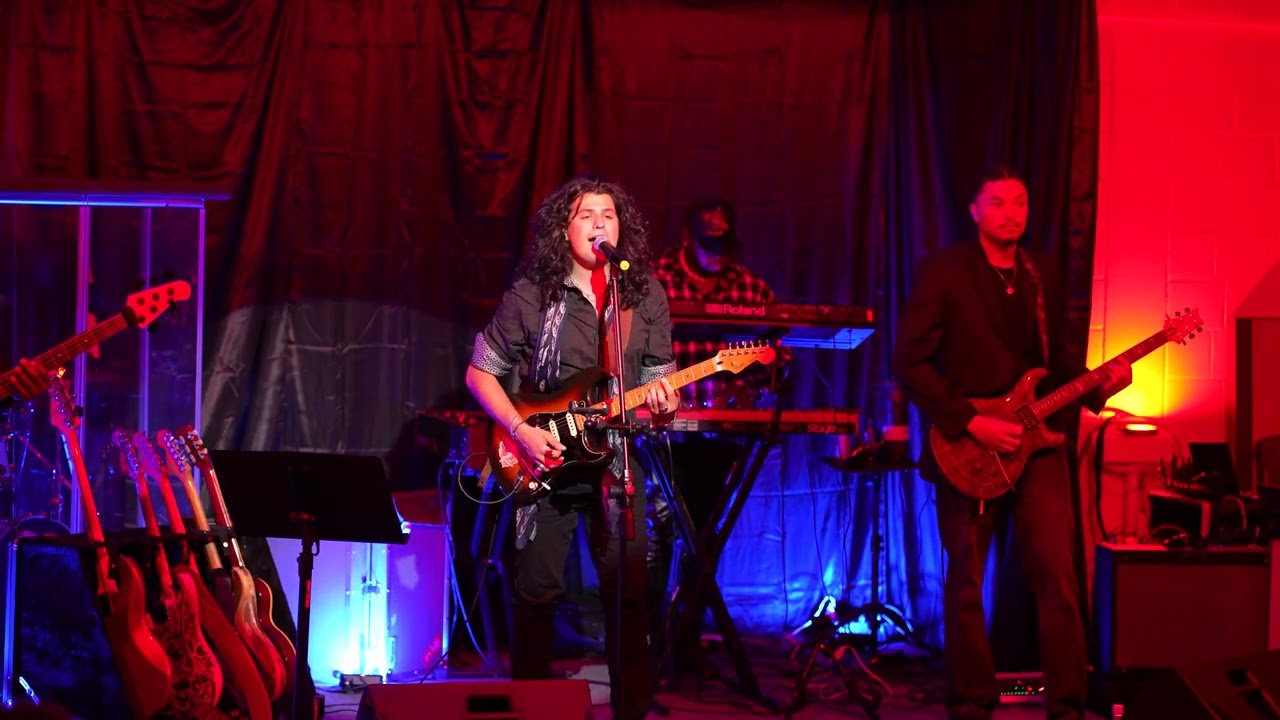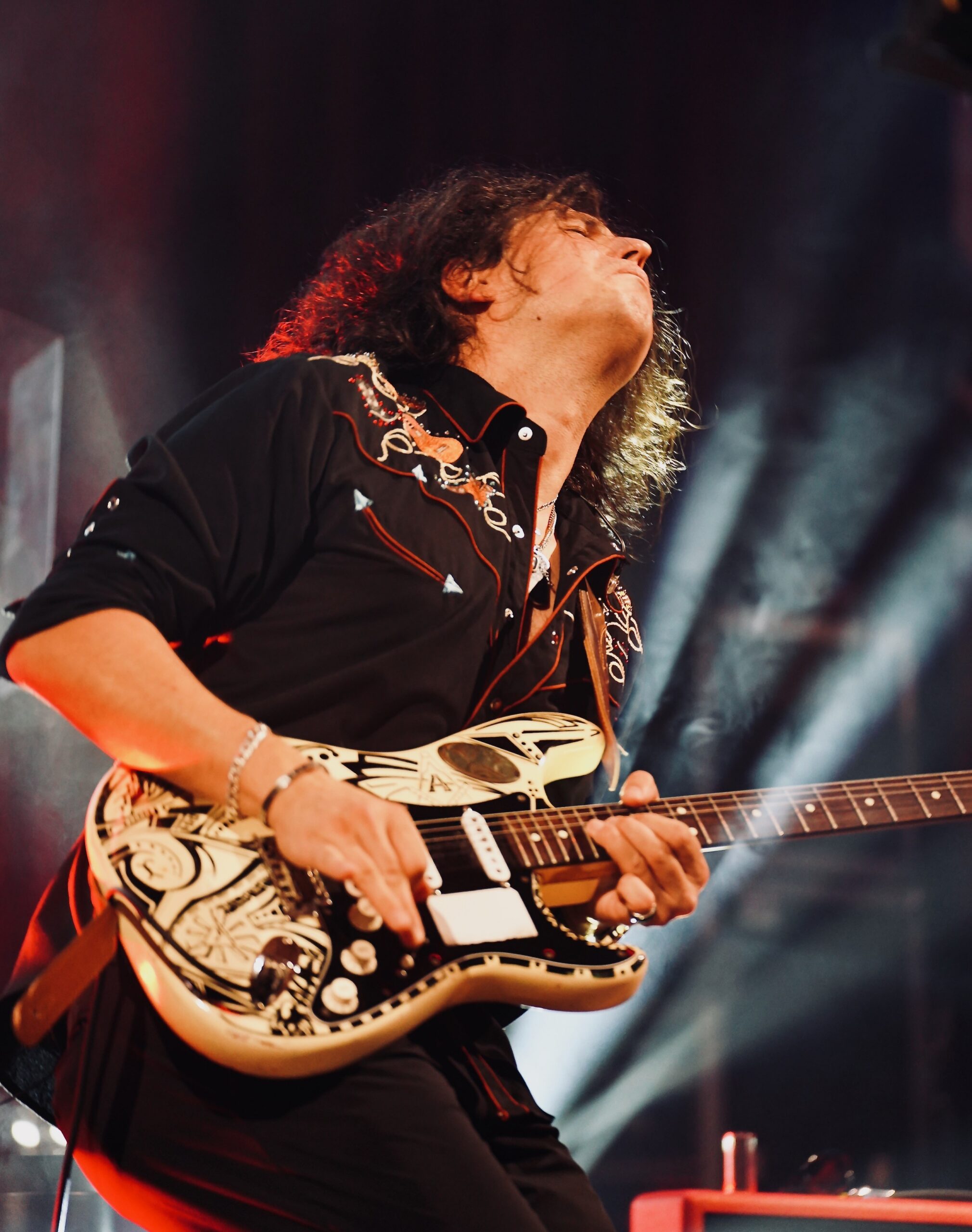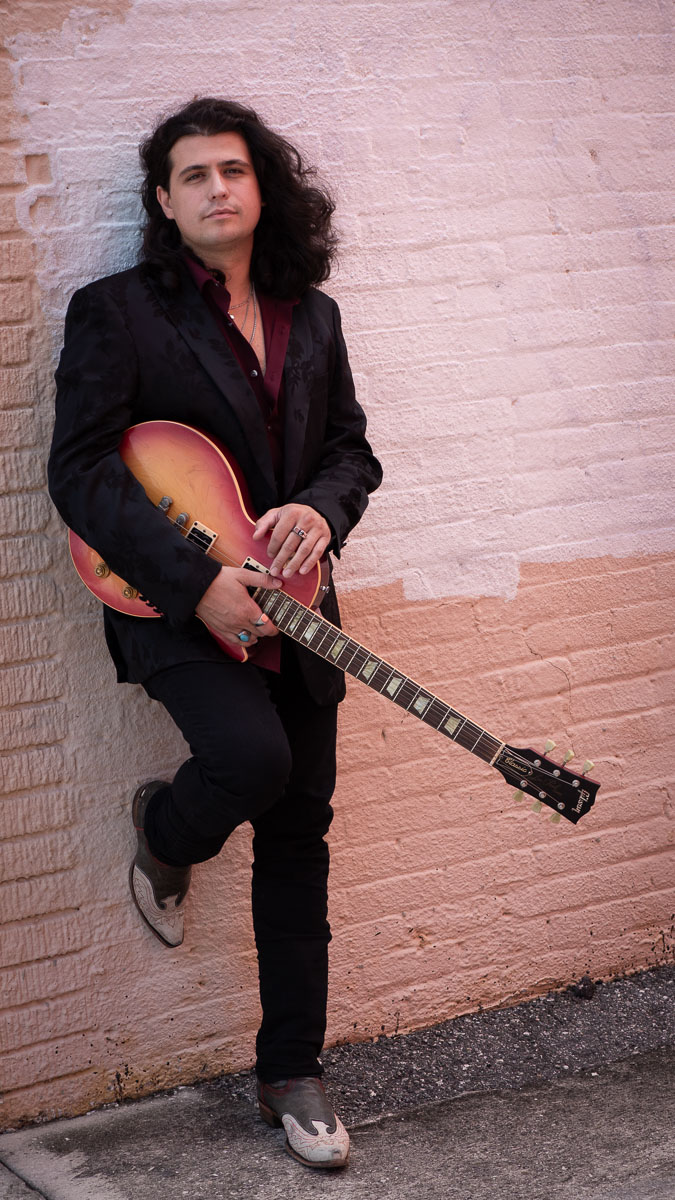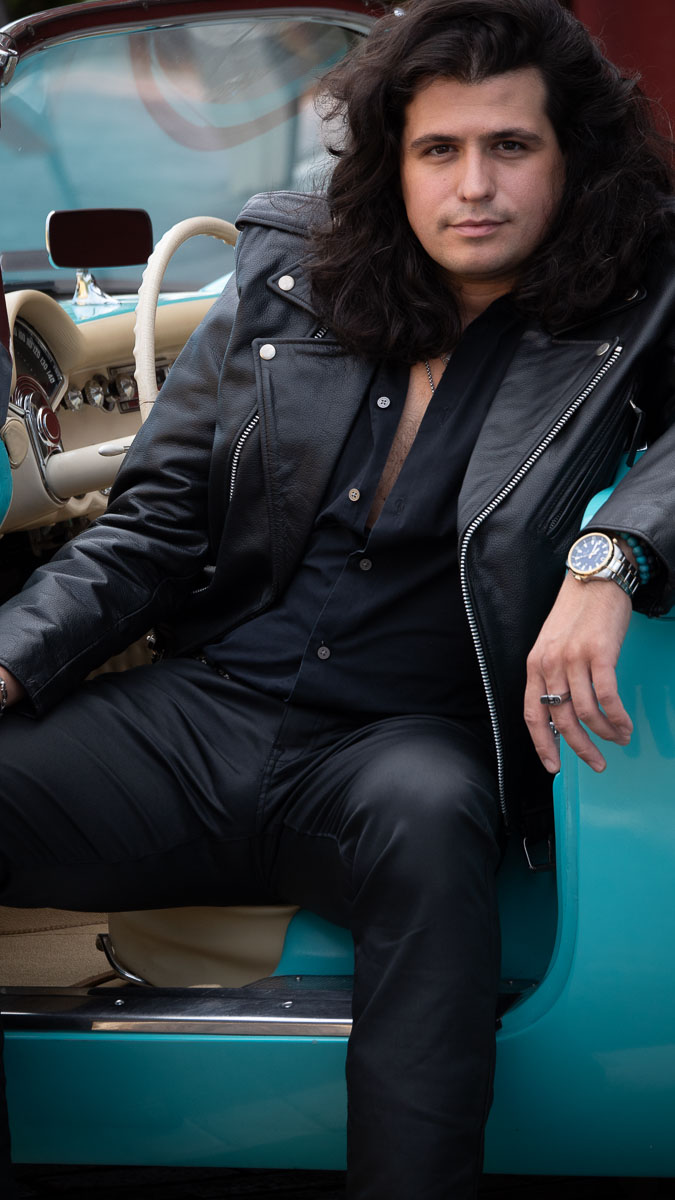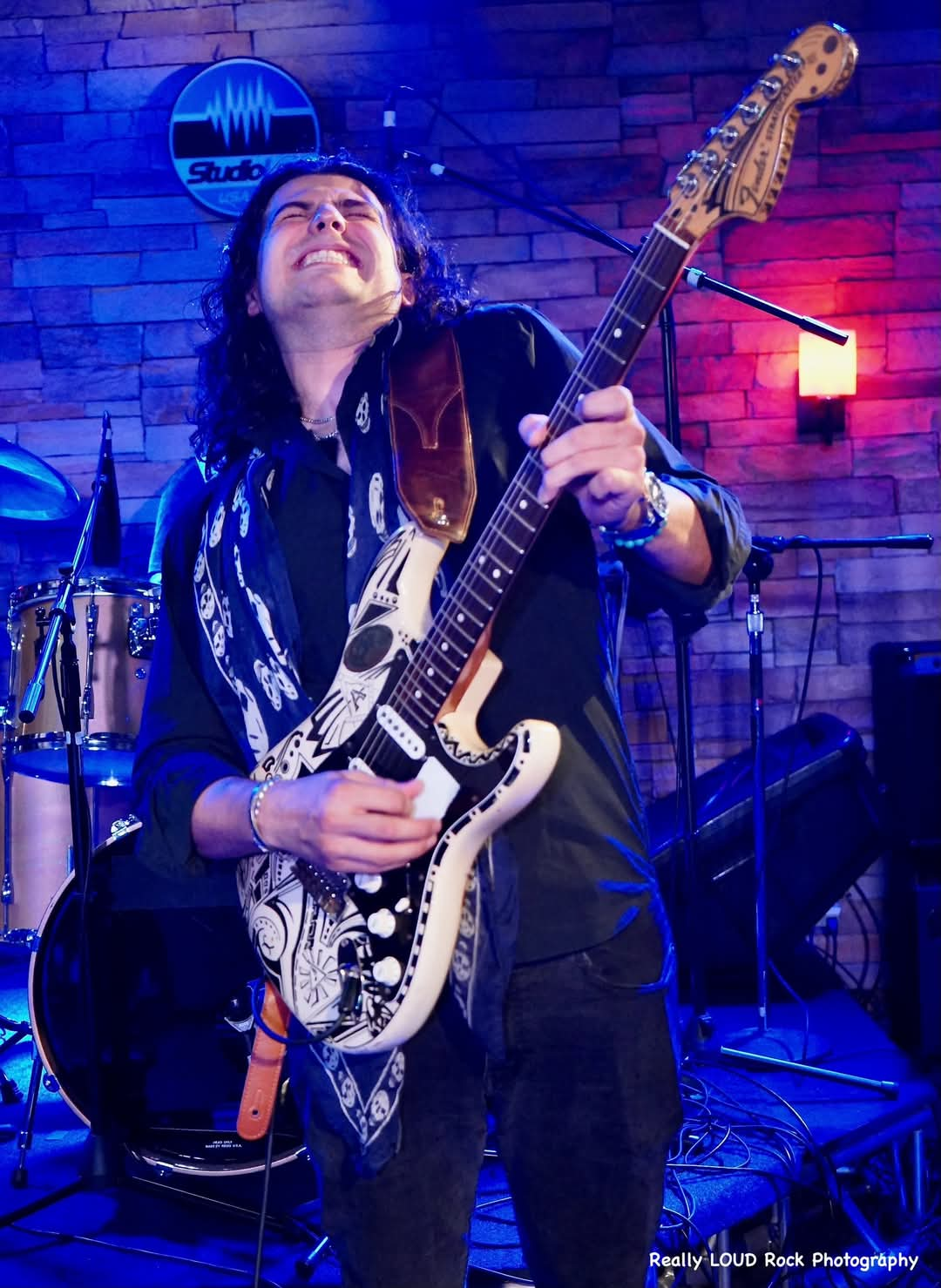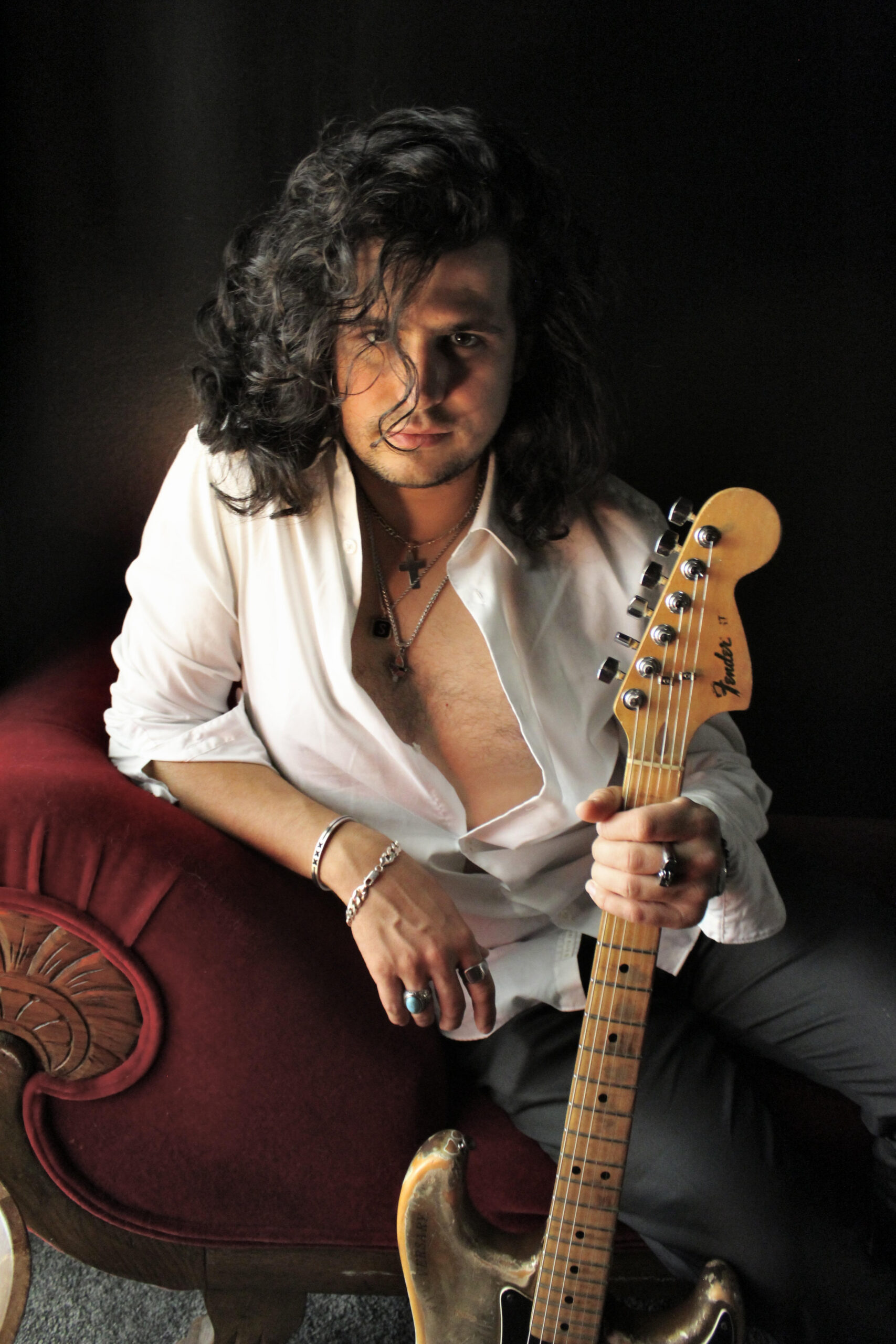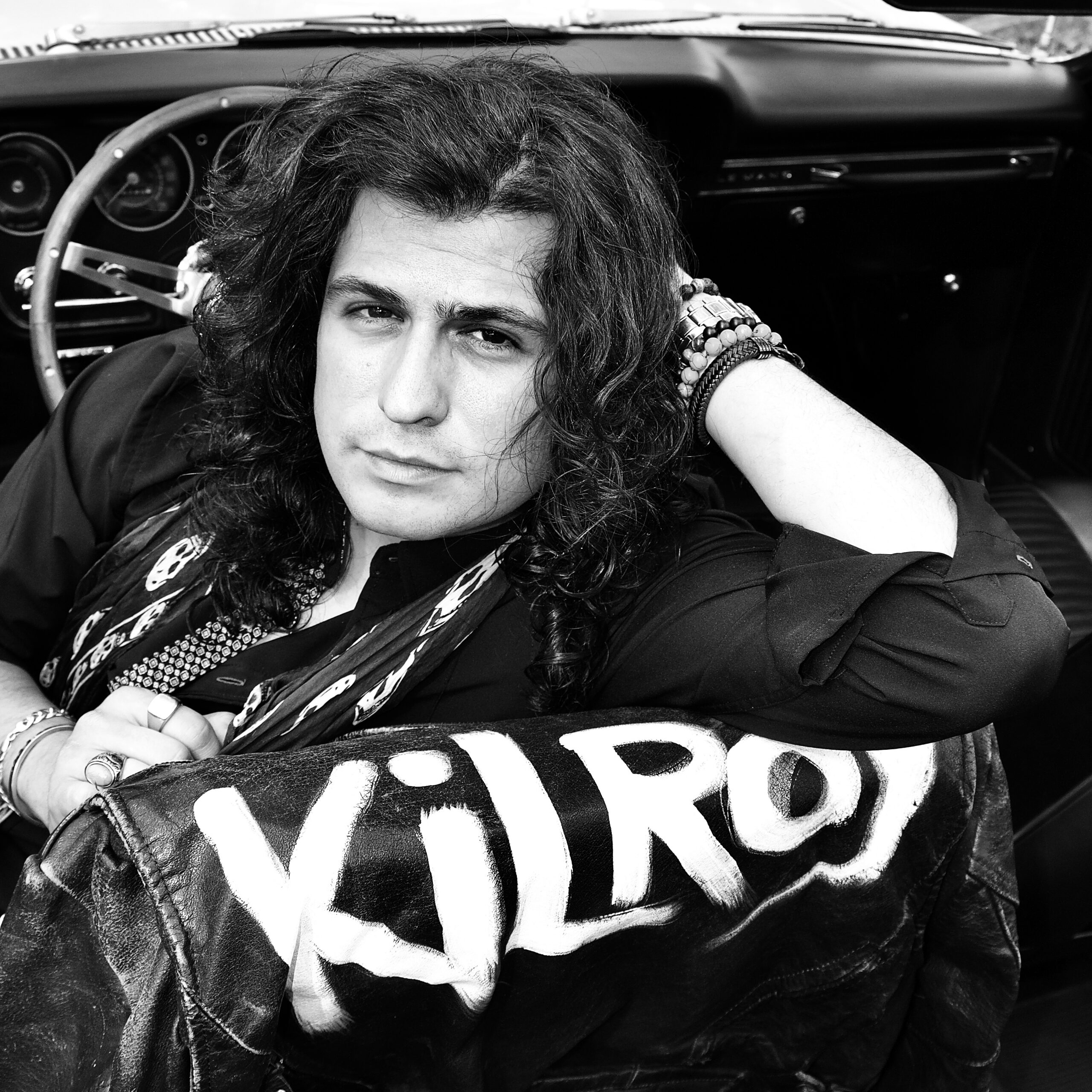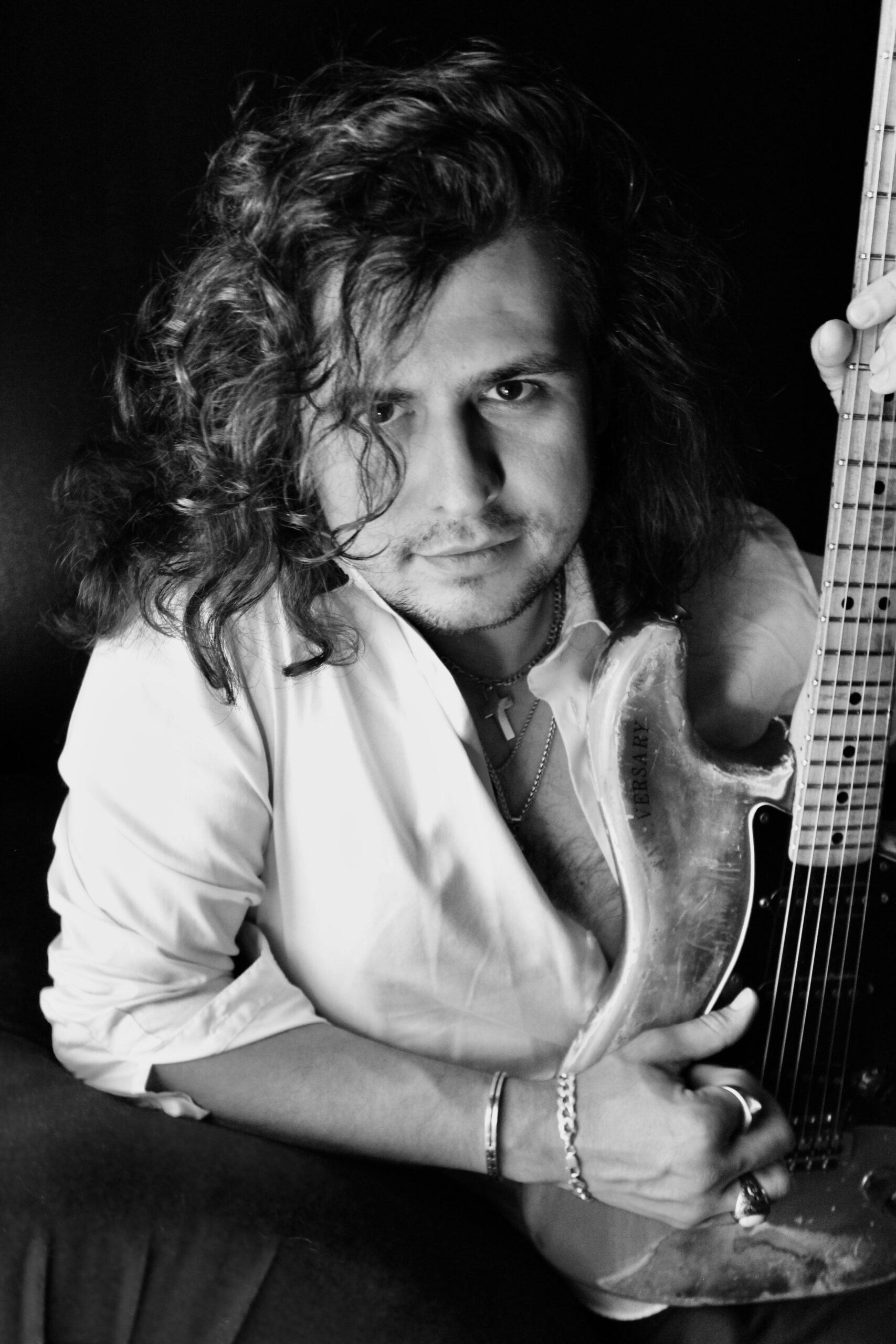

Alex Kilroy’s story begins far from the traditional crossroads of the blues. Raised in Transylvania, Romania, he felt an inexplicable pull toward the United States from an early age. Music was already part of his life—first through singing and rigorous classical piano training—but everything changed when he discovered a DVD of Stevie Ray Vaughan performing at Montreux. In Vaughan’s playing, Kilroy found both inspiration and a sense of freedom, and the guitar quickly became his musical path forward.
That path eventually brought him to America with little more than a guitar, a bag and a willingness to take chances. Along the way, he attended a Berklee summer program, finished second on The Voice of Romania, cold-called Buddy Guy’s Legends while pretending to be his own manager, and landed his first U.S. performance opening for Trombone Shorty. The details of Kilroy’s journey are sometimes improbable, frequently funny and consistently revealing of an artist whose confidence is matched by his determination.
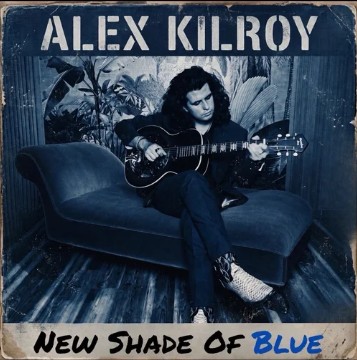
Kilroy brings that same adventurous spirit to his music. His debut album, Break My Chains, draws from blues, rock, country, gospel, funk and cinematic influences, while his new EP, New Shade of Blue, moves more directly into blues-rock territory without surrendering his instinct to experiment. For Kilroy, the blues is not a museum piece with fixed boundaries; it is a living form expansive enough to hold his Romanian roots, his American dreams and everything he has learned along the way.
In the conversation that follows, Kilroy talks about discovering the guitar, making his way to the United States, creating his first album and answering the “blues police” with New Shade of Blue. He also reflects on the influence of Stevie Ray Vaughan, the value of taking risks and the ambition that continues to propel him forward.

************************************************************************
Rick: Good afternoon, Alex! Thank you so much for joining me today. I’d like to start our conversation by talking about the affinity you developed for the United States as a very young child. I understand you had a United States flag hanging above your bed, that at one point you said something to your mother about feeling like you were just visiting Romania, and that you felt homesick for the U.S. even though you’d never been there. So how does that happen for a young person living in Transylvania? I mean, do you remember something specific that kicked that interest off, or how did that happen for you?
Alex: Well, I remember I was around six years old when I told my mother the thing about me just visiting Romania and feeling this homesickness about the United States. And yes, she got me a flag. We hung it over the bed, and I still have it in my room in Romania. But I really don’t know how to explain it, you know. Maybe there’s multiple lifetimes, the simulation theory, the string theory. Who knows? I just felt a belonging to the United States. It’s probably because I watched a lot of the movies. And I wasn’t interested in the scene that was happening as much as just looking at the places, the houses, the school bus because that’s such a typical American thing. You don’t see yellow school buses in Europe. And the FedEx truck. It just comforted me in some way. And then, of course, all the video games combined with all the movies I watched. Most of them take place in the United States, and I just grew to love the country and the culture, and I learned about its history. So I told all my friends, and my parents and family, that I was moving to America. As soon as I’m 18, I’m going. So my parents were like, “It’s like okay if you want to go to America, but you have to learn English. And you’ve got to get good grades.”
And then, the guitar happened.
When I went to first grade – I was like six or seven years old – I was practicing classical piano. I had grown up listening to country music, mostly Alan Jackson and Vince Gill because they were my dad’s favorites. And my father had a guitar in the house because he played guitar when he was younger. I never touched it – it was just sitting in a corner. Then one day my dad bought a vehicle from Michigan. He shipped it over to Transylvania, and it was one of those cars that had a DVD player in it. When I saw that, I remember I didn’t really care about the car. I just cared about the DVD in the car. I was like, “Wow, this has a DVD. It’s like the future. Let’s see, does it have a DVD in it? How do we play this”? And the DVD in it was Stevie Ray Vaughan Live at Montreux, 1985. I started it playing, and I was like, “Wow, what is this guy doing? This guy is on fire! Who is this?” I just didn’t know you could play guitar like that, and that changed everything. I took that DVD, took it upstairs, and put it in the DVD player there. My father went off to do his thing. My mom was out at work, and I just watched it for hours and hours. And I said, “That’s what I want to do.”
Rick: I know exactly what you’re talking about with the Stevie video. The first video I saw of Stevie Ray Vaughan was one of a performance at Austin City Limits, and I remember when he put the guitar behind his back, and I’d seen guitar players play behind their back before, but…
Alex: It’s like a trick.
Rick: Yeah, it was more of a trick than anything. They weren’t really playing. But when Stevie put it behind his back, he was actually playing it, and I was stunned. We’ll talk more about his influence on you in just a bit. Right now I want to go to your classical piano training. I know you started that in first grade. Did you know, all the way back then, that music was going to be what you were going to do with your life? Or was that not even on your radar at that point?
Alex: Yes, it was, and I’ll tell you why. I feel like my parents pretty much set me up for music. My father put me on stage when I was old enough to sing a little bit. I don’t know, four years old or something very young, he put me on stage in front of a huge crowd in a theater with this artist, you know, like a special guest. And I was on stage, and I saw the people and the lights, and that’s how I got the bug. I was like, I don’t know what this is, but I want it. At that time I was singing Romanian folklore music. Then, when I was six or seven years old, my dad, because he was managing this big artist, got me to sing with him on national television. And I saw how happy and proud everybody was with my performance. And so I figured that this was what I’m doing. I gotta perform. Everybody’s happy.
But then, the singing kind of stopped after a while, and the piano started. Singing never really stopped, but it was not the focus. Now the focus was to learn an instrument because my parents knew that I could go down the road of becoming a Romanian folklore singer, but they wanted me to be more of a professional musician and dive deeper into music. So they put me in classical music school. In Romania, we have this conservatory system from first grade to the twelfth grade. And you have two choices: either piano or violin. That’s it. My parents chose piano, and they told my teacher that they wanted my training to be vigorous and very exact. And the lady asked, “Do you want him to be a professional or an amateur?” They said a professional. And if you’re training to be a professional, it’s not going to be one hour of practice. It’s going to be three, or maybe four.
Soon I was being taken to contests, and I started winning awards and so on. The plan was for me to go to Vienna, Austria to become a big classical piano player. That was my parent’s dream at that point. And I loved it in the beginning, but then as time went on, I started to lose that love. I didn’t feel like I was expressing myself that way. And one of the things that bugged me constantly was why did I need to respect this music that was written 300 years ago. I mean, it’s incredible music, but why do I need to spend so much time on it? Why can’t I write my own music? I guess I had this rebellious thing going on. I didn’t like to follow the script. I did learn a lot from it. But when I discovered Stevie Ray Vaughan, it was my liberation day.
Rick: Okay, I have to ask. That first time you got up in front of a big audience, when you were maybe four years old, were you scared to death, or did it just seem like a lot of fun to you?
Alex: (Grinning ear to ear) It seemed like a lot of fun to me.
Rick: That’s crazy, man. I mean, everything I’ve learned about you in prepping for this interview tells me that you’re a supremely confident person. But I mean… four years old? Most kids placed in that situation would probably pee in their pants! Not speaking from experience, I mean.
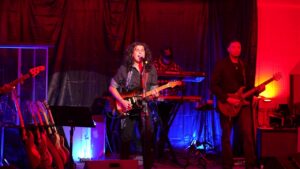
Alex: Well, the thing is that I’m still nervous when I go on stage, even to this day. Before getting on a stage, I’m like that. But as soon as we hit the stage, it’s this warm feeling of like, I don’t know, just super comfortable. It feels great. As soon as the spotlight is on, all the nerves go away, and it’s just like, let’s do this.
Rick: You talked about how you started to become disenchanted with piano, and I’ve read reports that the harsh and rigorous training, which you compared to the movie Matilda, just sort of stole the love of music from you. Looking back on that now, on the rigor and the harshness, did you bring any of that with you as you started learning to play the guitar, or did you have to unlearn that and start from scratch?
Alex: Oh, I definitely brought the discipline with me. And I understood it better now because I was looking at an instrument that I loved instead of something that I was made to do. So now all that rigorous training and paying attention and being perfect in all the details, which was incredibly annoying with the piano because I didn’t love it, made sense with the guitar, because I loved it so much. Finding all the little details in a Stevie Ray Vaughan song, how you bend the note and you slow it down so much that you can hear all the breaths and the picking… I started loving that. So yes, I applied the discipline from the piano to the guitar.
I think what I really loved about the guitar was that nobody was telling me what to do. I did it for myself. There was no authority figure saying I needed to practice now because I was already practicing. I loved it so much that somebody had to stop me to eat. With piano that was reversed, you know. I would try to evade practicing as much as I could.
Rick: So are you self-taught then, or did you go through formal training?
Alex: When I was working on learning these Stevie Ray Vaughan songs, I was practicing like 10 hours a day, on my own. But my father had a good friend who was a guitar teacher, and he asked him to make sure I was doing everything right. So he gave me some lessons, but after the summer, he said I was good to go on my own. And YouTube helped me a lot. And my dad, of course, because he was the last one to listen and he would critique everything and offer advice and help.
Rick: And he issued a challenge to you, that if you could learn three Stevie Ray Vaughan songs by the end of the summer, you could leave the piano behind and move forward with guitar. And those three songs were “Scuttle Buttin’”, “Pride and Joy,” and “Lenny,” right?
Alex: Yes, yes, and yes, sir.
Rick: Which of those three proved to be the biggest challenge?
Alex: “Scuttle Buttin’.”
Rick: Well, no surprise there. I think that would be pretty brutal for someone just starting out. But you know, those three songs suggest a pretty broad knowledge of Stevie Ray Vaughan’s range because they’re very different from one another. Did your father select them, or did you have input into it?
Alex: No, he selected them. We went on YouTube, and he listened and looked at the views to see the most viewed and popular ones. And what’s interesting is that I realized later learning those three songs teaches you everything you need to know about guitar. You know, like the speed, and the pentatonic scales. It’s like if you learn those three songs, and learn a new language. That’s why my dad said, “If you learn these songs now, it will be much easier to learn “Mary Had a Little Lamb,” because it’s almost like “Pride and Joy.” So right after I learned those three songs, I learned “Couldn’t Stand The Weather,” “Little Wing,” “Cold Shot.” Pretty soon I had eight songs. By the time I was 14, I was playing in a Stevie Ray Vaughan tribute band.
Rick: You said earlier that your plan was when you turned 18, you were heading to the United States. Is that when you came? Right when you turned 18.
Alex: It took me a little longer. I ended up coming when I was 20.
Rick: Were you alone, or did somebody come with you?
Alex: I came on my own with a guitar and a bag.

Rick: Twenty years old, all by yourself, traveling to a foreign country. Where did you land when you came to the U.S.?
Alex: I landed in Boston, Massachusetts, because I was going to Berklee (Berklee College of Music). My parents said, “Listen, you can go to America. We’re not against it. We see how much you love your dream, and we want you to succeed. But you cannot just willy nilly pick up a guitar and go. You need a reason. You need a reason even to get your visa.” So I got my visa because I was going to Berklee for their summer camp.
And after that (the summer camp), they asked me if I wanted to join, and it was my honor, of course. It was my dream, so I applied for it. I was accepted, and I got a half scholarship. It was like a $22,000 scholarship. But it’s an expensive school, and that wasn’t enough for me to attend. I think it was around $65,000 at that time. In Europe college is not that expensive, so my parents were not ready for an expense like that. So I went back to Romania, and I went on The Voice (Vocea României (The Voice of Romania)) because I thought that was the fastest way to get a large amount of money to go to Berklee. That was my story on the show, and people loved that story in Romania, so it was great. I made it all the way to the finals. I came in second place, and unfortunately, second place doesn’t get anything (in terms of money). But it does get you some notoriety. People see you, and I met a lot of actors, singers, and so on, who put together a show for me called Pay It Forward. It’s something kind of like We Are The World, but this was to help Alex go to America. So we got a bunch of artists, and we all got into a studio, where everybody sang a verse. Then we put on a big concert in Bucharest, where we raised money for me to go to Berklee. Again, it was not enough money to go to Berklee, but was a pretty good sum of money for me to take another step in the United States direction.
So I had a visa and a dream and now some money in my pocket, and I was headed back to America. I called Jeffrey, my teacher at Berklee to tell him I wasn’t going to be able to attend Berklee, and ask him what I should do. He knew I wanted to play the blues, so he told me to just go out into the world and play the blues for people.
I love Buddy Guy. I really love his music, and he has a club in Chicago (Buddy Guy’s Legends). So I found their phone number, and I called them pretending to be my manager. And I told them that Alex was coming to America in August, and he’d love to play at the club. They told me to send an EPK (electronic press kit), and they’d see what they could do. I sent the EPK, and they came back with an offer to open for Trombone Shorty. I told them “he’d” be there.
Then I called Jeffrey back, and told him I was headed to Chicago, but I didn’t know anybody in music there. But wait… I need to backtrack here.
I had some Romanian friends, incredible people from Philadelphia. When I was in Boston, I spent some time in Philadelphia with this wonderful family, the Romanians, good friends of my parents, and they welcomed me into their house and they hosted me. That’s when I visited New York and Washington and went to all the museums I always wanted to see. And in Chicago, we had another family friend that said I could stay at his house, which was great. But I didn’t know any music people there. Jeffrey helped me connect to some great musicians in Chicago.
So I landed in Chicago. At first I got a hotel downtown to go see Buddy Guy’s. When I got to Buddy Guy’s, I met Mark Maddox, who was the booking talent buyer there. And he was like, “Oh, you’re Alex? You made it. Where’s your manager”? And I told him that he was back in Romania. I was very surreal. So he invited me upstairs because he said he wanted to show me something really cool. We go upstairs to Buddy Guy’s office, and he hands me one of Buddy Guy’s Grammys. And I hold the Grammy, and we take a picture with it. And there’s a jacket hanging there, that was all bedazzled, and I asked who it belonged to. And he said, “It’s Keith Richards.’ He left it here when the guys were in town like a week ago.” It was so awesome. Then a couple nights later, we played the show, and it was my first show in America. Now, for that one, I’m not gonna lie… I was very nervous for that one.
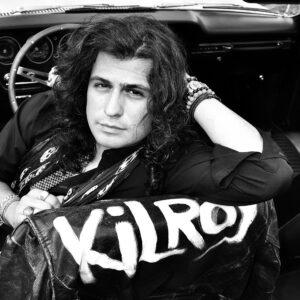
Rick: The whole “cold calling pretending to be your manager” thing was something I wanted to ask you about. I cannot believe you pulled that off.
Alex: (You should see the you-know-what eating grin on this guy’s face) Well, it all worked out. The show was great, and they loved it, and they asked us back. In October we did another one. I stuck around Chicago for a while, and I met some incredible musicians. You know, God has helped me by putting very good people on my path. When I look back at the story, everything went very smoothly, and I’m very grateful. I’m a really lucky guy. I met people that came to me at the right moment to help me to know the right way to go about things.
Like this guy in Chicago, incredible Italian dude, great piano player. He asked me what my status was here. I wasn’t sure what he meant – I told him that I had a visa. And he told me that with that I couldn’t just play anywhere. I needed to get an artist visa. So he had an attorney in Los Angeles, entertainment lawyer. He told me he could help me get my artist visa. I had the money from the thing we did in Bucharest, and that was exactly how much the attorney wanted, so we started the process.
I went back to Romania because that was required of me. And while I was in Romania, I got a phone call to do Dancing with the Stars. They wanted to know if I would like to play guitar in the band for ten episodes. And they’re paying great per episode, so while I was waiting for my visa, I did that. When I got the visa, I went back to the United States. This time I moved to Philadelphia. That was a very exciting time of my life because it kind of felt like I wasn’t a visitor anymore. I got my first American driver’s license. I got my Social Security number. For me those were big wins. I always dreamed about those things, so it was really awesome. I got a Netflix account. Now I’m American. (Laughing)
Rick: Yeah, once you get Netflix, that pretty much does it. That’s funny. And I’ve got to say, when I heard the story about you cold calling Buddy Guy’s Legends, my first thought was that this guy has so much self-confidence. He’s just willing to do whatever. That really took a lot of guts.
Alex: Well, thank you. I guess it did. But you know, I had watched the James Brown movie Get On Up at about that time, and I knew that was it… that you have to be the hardest working man in the business to make it happen. If you need to go outside and put up your own posters, you do whatever is necessary. In the end it makes for a good story. And when everything actually happens, you’re like, ‘Wow, this actually works.”
Rick: Very cool. You know, the minute you said “James Brown” I knew where you were going. And I’ve got to say, when it comes to the value of hard work, that’s a pretty good role model. So let’s get the timeline straight. When you first came to the United States when you were 20, what year was that?
Alex: 2016. No, 2015.
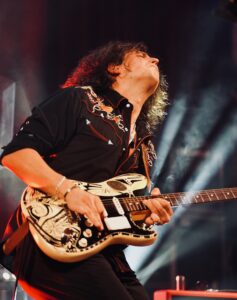
Rick: 2015. So you’ve just gotten off the plane in America. Here it is, the place you’ve been dreaming about for all this time. Now you’re here. Was it what you expected?
Alex: Yes. Oh my God. The plane I was on was this thing they call the Dreamliner, and it had a camera that was shooting at the ground. So I was watching the ocean, for quite a while, thinking we’re getting closer, we’re getting closer. And when I saw land, I was like, “Wow, this is America!” I mean, I gotta tell you, that felt incredible. So we landed, and now I’m at customs, and they say, “Welcome to the United States.” I was like, “Wow, this really is happening.” So I went outside, and I just sat on a bench and just took it all in. This is it. This is what I wanted. I’m looking at the cars, and it was a sunny day. It was so beautiful. It was like a beginning of a movie, you know. For me, that’s how I saw it. It was just like slow motion. I was just really, really happy about it.
After that, it got to be a bit of a crazy story, because I didn’t go to Berklee first. I got to Boston two days before the dorms opened, so I went to a hostel downtown. And I didn’t know what a hostel was. So I go to the front desk, and the lady had a face tattoo, and I was like, “Uh, well, I guess that’s uh very okay,” and she gives me the keys, and I go upstairs and there’s no rugs on the corridor and the doors are all wooden and old and I open the door and there’s no bed, just the mattress. I’m not making this up. Just the mattress, a window, and that was it. And I was like, it reminded me of The Godfather when Vito gets to Ellis Island and they put him in that room, it was exactly like that. And I remember that scene because that was one of my favorite movies. So I went downstairs, and I told the lady that there’s no bed sheets. And she’s like, “Are you cold?” (Burst of laughter) So I went back upstairs, and I realized that there’s no bathroom. Where’s the bathroom? And there was just a common bathroom, and I’m like, I don’t know. I feel like this is a little bit out of my comfort zone. But I was so happy to be in America, so I thought, I don’t care. I’m here. I’m going to go explore everything. I left everything in my room, put in my headphones, and I was listening to John Mayer Continuum. I went downstairs, and I grabbed the coke from the machine. I was smoking cigarettes at the time, so I was smoking a cigarette, just walking down the street, listening to John Mayer, and I’m looking at everything. I was beside myself. I loved it. I’m like, oh, Dunkin’ Donuts. I never been. Let me try that. Oh, Wendy’s. I’m like, this is the biggest burger I’ve ever seen in my life. The fries and the drink was the size of a bucket. I’m like, that’s crazy. So I’m eating all this fast food. I’m having the time of my life, and then it got dark. I’d walked to Berklee to see where it was to get my bearings. But now it was late, and dark, and it turned out that I didn’t have service of any kind on my phone. I didn’t have GPS, so I’m like, where am I?
And then it hit me. I’m so far away from everybody I know and I’m starting to be paranoid. Anything can happen to me, and nobody knows where I am. So I’m starting to freak out a little bit. I’m asking people on the street for help. Do they know this (hostel)? I don’t remember the name of the street it’s on. People are kind of directing me, and that’s how I made it back to the hostel. But when I get back, there are six, maybe seven police cars in front, and something has happened because there’s the yellow tape all over. And to me, this is like a movie. I’m half scared, half amazed, you know. So I’m like, I think I gotta get out of here. I don’t know if I can stay at this hostel. So I go to the lady and ask if it would be possible to get my money back. And she’s like, “I knew you weren’t going to make it.” I mean, I’m from Europe and motels are a little bit different there. I didn’t expect this, but I don’t want to be disrespectful. So I checked out. But now where do I go? It’s late… 11:30 at night. I can’t stay in the lobby. There’s a lot of police. I don’t know what’s happening. So I found a hotel outside of Boston, like a DoubleTree or something like that, like something that I recognized. So I booked it and I found a cab outside. I told the guy where I was going, and the guy’s just being nice, but I’m becoming paranoid because he’s asking me a lot of questions. “I hear an accent. Where are you from? Oh, Romania. How long you been in the States? What are you doing here?” I’m thinking, does he want to kidnap me? So I pick up the phone, and I talk in Romanian for a while. Now remember, my phone isn’t working. But I talk for a few minutes, and then I ask the driver how long before we get to the hotel, and then I talk some more in Romanian on the phone. Then I put the phone down and tell the driver that I just talked to my coach. I’m on the Olympic judo team from Romania. I just wanted to make sure the guy knew that somebody’s waiting for me.

Rick: (By now we’re both laughing) Yeah, and he’s certainly not going to try to kidnap an Olympic judo athlete.
Alex: Yeah, that’s right. That just what came to my mind because my dad was a judo professional. And of course, the guy was just nice. This is just me being paranoid because my phone’s not working. I don’t know where I am. I don’t know any streets or anybody. But I made it to the hotel. And that was my first day in America.
Oh, and the funny thing was – remember that I’m 20 years old, right. But man, what a day I had. So I make it to the hotel lobby, and got my room, and I asked if the bar was still open. And yes, it’s open until 12:30. So great, amazing, I go to the bar and order a whiskey on the rocks. She’s like, “Yeah, man, can I see your ID?” Sure. Then it’s like, “Nah, bro. You’re 20. Can’t do it.” I’m like, “You’ve gotta be kidding me.”
Rick: Yeah, 21.
Alex: 21. But, I had some wings. That was great. And I went to sleep. And the next day I went to Berklee. I mean, a couple of days later. But I explored the city, and it was great.
Rick: This is all so fascinating to me – I could talk to you all afternoon about what it’s like coming to live in the United States from a foreign country. Your stories are incredible, hysterical, and frightening all at the same time. But we probably should shift gears and talk about your music.
Alex: Let’s. Yeah, absolutely. Let’s do it.
Rick: So we’ve established that Stevie was the person who kicked this all off for you, but you list a long line of people and musical styles that have influenced you along the way. There’s Sting, Joe Bonamassa, Mark Knopfler, Carlos Santana, Buddy Guy, Eric Gales. And I know that you’ve rediscovered and reignited your love for classical music through listening to the film scores of Hans Zimmer, Howard Shore, Danny Elfman and others. And all you have to do is listen to your debut album to hear influences from country, R&B, pop, gospel, funk and, of course, blues. There’s so much going on here, so many different styles. So here’s my question for you: If somebody had never heard your music before, and they asked you to describe your music or musical style to them, what would you tell them?
Alex: Well, it’s definitely guitar-driven, story-driven, and (you should) expect hard turns here and there. I love bridges. I love bridges in songs like “Break My Chains” that has a bridge that takes you somewhere else. And I love to experiment with sounds like putting a sitar in the song “Visions Of The Past” instead of playing a guitar solo. I found this sitar emulator, and I’m like, let’s go for that. Let’s see what happens. Let’s go somewhere else. I like to play straight blues, but also I like to go somewhere else and try different things, and then come back home. But I like experimenting, so I’d say it’s a contemporary world blues, rock blues. Maybe world blues would be better because a song like “Kilroy’s Ballad” has some Romanian roots, a very vampire-ish sounding beginning.
Rick: Okay, you brought it up, so I’ll go there for just a minute. You’re in the United States and you tell almost anybody that you’re from Transylvania, and you’ve got to be prepared for the vampire thing, right? How many times do you get asked about that?
Alex: Every day.
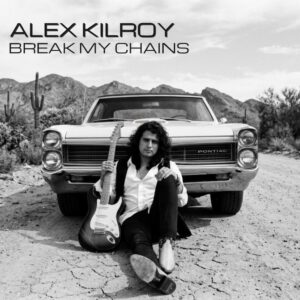
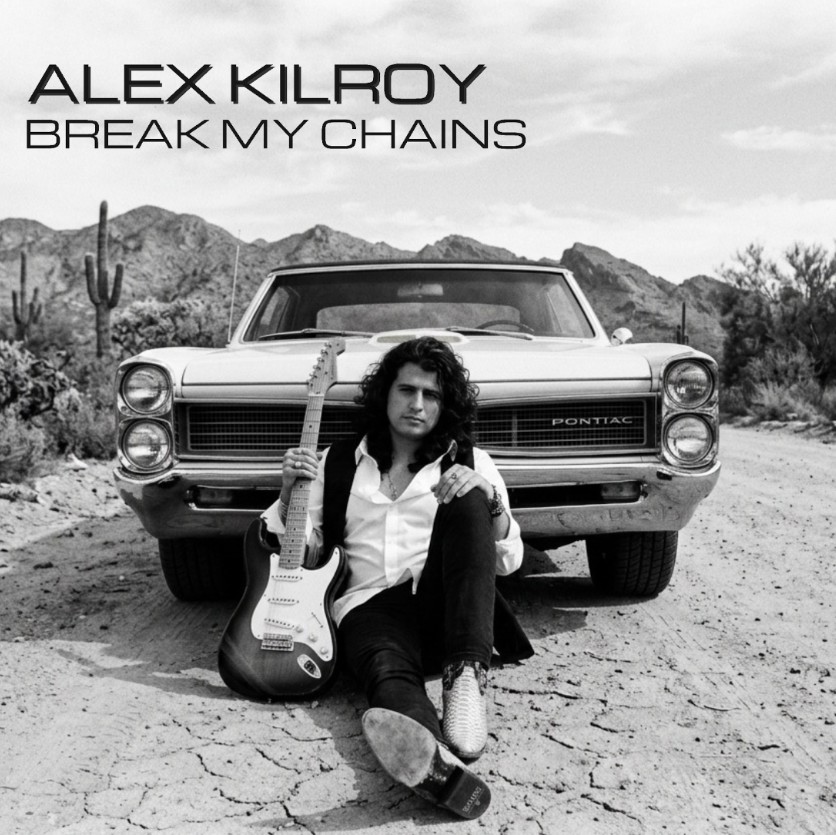
Rick: Well, I’m not going to ask you about it other than to ask you how many times you get asked about it, right? I figure you get asked about that that enough. So I’ve listened to Break My Chains, and I’ve also had an opportunity to listen to New Shade of Blue (new EP scheduled for release on October 23). Your publicist provided me with an advance copy of that, so I’ve had a chance to listen to that too. Break My Chains is a terrific album, a fantastic debut. We’ll talk about that a little bit more in just a second. When I heard you were planning to release an EP only five months after releasing your first album, I wondered about the rationale behind that timeline. But then I listened to New Shade Of Blue, and all I could think of was thank goodness you’re giving it to us so soon. I mean, as good as Break My Chains was, I think New Shade Of Blues takes it to another level. So congratulations on both of them. Let’s talk a little bit about each one of them. My first question for you about Break My Chains has nothing to do with the music. I absolutely love the cover. Clearly, it was not meant to represent Orlando, where you live. Whose idea was that cover, and where did you shoot it?
Alex: So the album cover really was shot outside of Orlando, but just the front of the car and the ground, and we digitally overlayed the Arizona background. I really wanted to go to Arizona, and my father-in-law has the car. It’s a 1966 Pontiac Le Mans, a cream-colored, very beautiful car. But we couldn’t drive it to Arizona. Putting that many miles on it would be crazy. And putting it on a trailer was incredibly expensive. So my partner Sophia, who’s a great photographer, took the picture. Then we digitally laid in the background.
Rick: Okay, well that works. Well done to all involved. My favorite song on Break My Chains is “Hard to Let Go,“ the song that ends the album. I think that’s just an extraordinary song. Is there a specific backstory to that it?
Alex: I’ll tell you how I wrote that song. I went to see No Time to Die, James Bond. And then I decided to write a Bond song. It’s about this assassin that has a heart of steel but falls in love. So I imagined this persona and how would he feel? I created the atmosphere for the whole thing, this scenario in my head. And then for “Kilroy’s Ballad” in the beginning (leading into “Hard To Let Go”) it was like, what if the assassin is a vampire? “Kilroy’s Ballad” is based on a Romanian violin song by Ciprian Porumbescu who was a famous 1800s Romanian violin player. The beginning lines I took from there, and then I continued writing it myself in my own way. So it’s a mix of what I wrote and what he wrote.
Rick: That’s a really good song too. Like I said, I like the album. It’s so eclectic. There’s so much different stuff going on in it, and I think that’s a fantastic way for you to introduce yourself to American audiences. Now for some, it might be frustrating because they want to pigeonhole the artist. They want to say that this is what it is, period. But for me, it’s more like, this is what they can do, and let’s just wait and see what’s going to happen next. See where they go with it.
Alex: Yeah, and what’s next is, as you heard, New Shade Of Blue, which goes more into a blues rock or blues traditional direction.
Rick: Oh I definitely hear that, which is probably why I like it so much. Blues rock is really where my heart is. So let’s talk about New Shade Of Blue, which is scheduled to drop on October 23. Let’s start with the title track. If it’s based on what I think it is, there’s another crazy story there – about how you were disqualified from two different blues competitions because your music wasn’t bluesy enough. Is that what this song is about?
Alex: Yes, it’s about the blues police.
Rick: That a crazy story. I’m sure a lot of people who will be reading this won’t be familiar with it, so can you tell it for them real quickly?
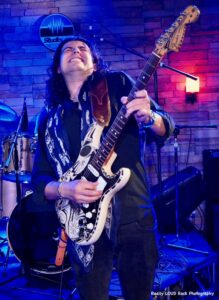
Alex: Yeah, definitely. I did the International Blues Challenge in 2024 for the first time, or 2023 was it? No, 2023 for the first time. But I was disqualified for not being bluesy enough. Overall we got great scores, but for blues content we got a three out of 10. So I said, okay, I have to change my game here and be more bluesy. So we did that, and then we won in Nashville with my band. We got to go to Memphis and represent Nashville, which was an incredible honor. In Nashville, the crowd loved it, and so I thought we were really going somewhere. But then, bam! In the semifinal in Memphis, they said it’s too loud, too rocky, and not bluesy enough. So I thought I’d just write a song about it. And that was when I first moved to Florida, and I was sitting in the backyard, and the sun was just shining, and I’m like, “How am I supposed to get into this bluesy mood? Because you know everything’s great.” (Listen to the song, and you’ll hear that exact sentiment expressed.)
Rick: Yeah, man. I mean, you’re not living that life, right?
Alex: Not living that life. But I sometimes am. I still feel the blues. I feel blue, but it’s the new shade of blue, I guess. So I started writing it. “When I woke up this morning, no rain or clouds around. How can I be sad and blue when it’s sunny all the time?” Then I told the story about the Memphis thing, and that’s why in the middle of the song you’ll hear that we go all old school. We went old school to see how it would feel, and that’s why you’ve got that sort of Chicago type of thing in the middle.
And we found ourselves a harmonica player. I met him a couple months ago. His name is JW Gilmore, and he’s a five time awarded harmonica player from here in Orlando. He’s an incredible musician, and I met him at a club where I was playing. I never heard him play. I just saw the way he was dressed and the way he talked. He had on a blue suit and was wearing a pinky ring, and the way he talked, and he was rolling his own cigarettes and I’m like, “This guy’s the real deal.” So I called him and asked him if he could come and record with us. I didn’t even send him a song. I just invited him to come. And here I am with the tracking engineer, and my producer Tres (Tres Sasser), and Tres asked me if I’d ever heard the guy play. I said, “No. I never heard him play. I never Googled him. But I know the guy is just killer.” And Tres is like, “But what if he’s not?” I’m like, “If he’s not, then we just gotta waste an hour or so.” But sure enough, he came in with a bullet (microphone) and with a Blues Junior (not sure here if Alex is referring to a Fender Blues Junior amplifier or a Fender Blues Junior 8-hole diatonic harmonica) and with the harmonicas, and I felt like I was at Chess Records (legendary Chicago recording studio). And he’s like, “Where should I play?” I said, “Everywhere.” He’s like the syrup on top of the pancake – you can never get enough. Just play it on top of everything.
Rick: Oh, man. Another bold Alex Kilroy story. Dude, you’re going to have to write a book at some point down the road about your entire journey. It would be so entertaining.
Alex: (For the first time somewhat shyly) Thank you.
Rick: The EP closes with two really great covers. And I totally get the Stevie Ray Vaughan cover, “Life By The Drop.” I mean, he was your inspiration and the catalyst for your career. But I was really surprised with Stevie Wonder’s “Living for the City.” First of all, great job. It’s a great song period, and you did a masterful job on it. What made you choose that song?
Alex: Great question. I was listening to that song for no reason while I was driving to a rehearsal here at our club, and we were supposed to work on our new songs and getting ready to go to the EP. But I was listening to this song, and I came in and I started playing it, and everybody’s like, “Man, I haven’t heard that song in a million years.” And the keyboard player starts playing it, and he’s like, “Ah, maybe if we did this.” And all of a sudden, we’re spending four or five hours on it, creating our version. And of course, we didn’t rehearse anything we were supposed to rehearse, but we got this song down. The song just wouldn’t let us stop. And then the drummer would be like, “Let’s do papapa, papapa.” We stayed with it, and we came up with that arrangement, as a band. And I showed it to Tres one night when he was in, when we were working on a different project. And he was like, “Man, we’ve got to record that when the EP is happening.”
Then for “Life By The Drop” – It happened to be August 27th (Stevie Ray Vaughan died on August 27, 1990) when I was in the studio, and that’s a tragic day for music, not only blues music, but all music. The band had left and it was just me and the tracking engineer Omar in the studio. I was remembering Stevie, and I said, “Hey, before we call it a day, let me grab this guitar and record something for Stevie.” And I didn’t know if we were gonna keep it or not. And I put the Dobro on it, the resonator, and everyone loved it, so it stayed. And I’m really happy it did.
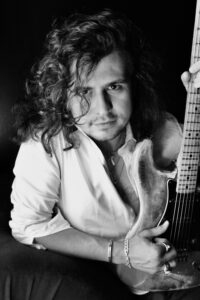
Rick: I am too, and it’s a great tune to close out the EP. As you obviously know, that song is primarily about friendship, and as I listened to it, I started imagining that maybe what you were doing was talking about a kind of perceived friendship in a way, or the relationship that you have with Stevie, even though obviously you guys have never met. I didn’t know if that was true or just my interpretation, but it’s kind of a romantic notion, so I’m going with it.
Alex: I love it, and I feel it. I feel that Stevie has been as much of a presence in my life as my parents. He was always there, and he was definitely a role model for me.
Rick: So let’s try to wrap this. I appreciate you being so flexible with your time. So what’s next for Alex Gilroy? I know the EP is coming out in less than two weeks, but what’s next, after that. Do you have any tour plans?
Alex: Ah, tour plans. I can’t wait to play in front of people and play this music and tour. We’ve been playing here at our club, which is called the Blue Goat. And we’re performing in smaller venues around Florida. And on November 30th we’re booked at a bigger venue for the first time, the Funky Biscuit in Boca Raton.
Rick: I know the Funky Biscuit. That’s great for you.
Alex: Yeah, I’m really excited about that one. And we’ve been looking for a booking agent. We found somebody in Florida who’s going to help us get out, but it’s just not that easy right now.
Rick: Oh, I get it. It’s a really rough time to be a touring musician trying to break through. But of course I need to put in a plug for you to come out west, you know. We’d absolutely love to see you make your way to Denver.
Alex: Yes, I want to come out west. And I love Denver. I love that part of the world. It’s incredible. I can’t wait to get back out there. I’d love to see Red Rocks… it’s on my bucket list.
Rick: Yeah, if you do come out here to play, you want to make sure you leave yourself some time so that you can go see a show at Red Rocks. It’s definitely an iconic place to see a show.
Alex: Oh, something I forgot to mention – Break My Chains is being considered for a Grammy.
Rick: That’s incredible, Alex. When did that happen?
Alex: A couple of weeks ago. So my engineer submitted it for Best Contemporary Blues Album, and we got a letter saying that we are now officially in the race.
Rick: That is absolutely fantastic. I love it. Congratulations and best of luck to you on that. All right, I’m gonna wrap our conversation with one more question for you. If Stevie Ray Vaughan were alive today, and you had a chance to sit down with him one on one, what would you say to him?
Alex: Oh, boy. (Thinks for a minute.) I think I’d say, “Stevie, let’s grab the guitars and just play something.”
Rick: Wow. Just like that, huh? Well, there’s that self-confidence thing again. You’re just going to grab your guitar and jam with Stevie Ray.
Alex: Yeah, that would be fantastic.
Rick: It would, indeed. And with that, Alex, I want to thank you again for your time. We went twice as long as we were scheduled, and the time just flew by. The album is great, the EP is great, and it looks like the future is bright. I love that you’re so willing to take risks, and to branch out and explore. You are truly talented, and I can’t wait to see what comes next.
Alex: Well, thank you for that. Thank you for the kind words. And thank you so much for having me. All the best. Take care. Bye.
************************************************************************
From a childhood bedroom in Transylvania to the stages of America, Alex Kilroy has followed the same instinct that first drew him to Stevie Ray Vaughan: pick up the guitar, take the chance and see where the music leads. That fearless approach is all over New Shade of Blue—an EP that honors the blues tradition while refusing to be confined by it.
If the “blues police” are still listening, Kilroy has given them a spirited answer. He may be working in a new shade of blue, but the fire, heart and restless ambition behind it are unmistakably real—and he’s only getting started.
Check out Break My Chains, the debut album from Alex Kilroy, on all major streaming platforms. And get ready for New Shade of Blue, Kilroy’s follow up EP, scheduled for release on October 23rd. Read more about Alex on his official website, or at Alex Kilroy Music.com.
My deepest thanks to Alex Kilroy for so generously sharing his time for this interview.
Interview and Write Up by Rick Witt www.rickwittphotography.com
Photo credits as noted and/or used by permission