
Much to my wife’s chagrin, I wear a lot of T-shirts. One of my favorites proudly proclaims, “I MAY BE OLD BUT I GOT TO SEE ALL THE COOL BANDS.” I like it so much that I own five or six versions in different colors—which is, much to my wife’s OVERWHELMING chagrin, probably five or six too many.
Sadly, the shirt isn’t completely accurate. As a child of the ’70s, I was fortunate enough to see a lot of the cool bands—maybe even most of them. But there is still a short list of classic rock greats I never had the opportunity to see.
At the top of that list is Queen in its Freddie Mercury era. I loved them then, and I still love them today, but I never had the chance to see that lineup perform live back in the day.
I finally saw Queen in early November 2023, with Adam Lambert on lead vocals. I wasn’t much of a Lambert fan going in, and I’m not sure I would call myself one now, but he was absolutely extraordinary. Brian May and Roger Taylor were fantastic, and the production was everything I could have hoped for: an extravagant show and a true throwback to the spectacles staged by the great bands of the classic rock era.
Even after that extraordinary show, I had virtually no interest in seeing a Queen tribute band. The idea simply didn’t appeal to me. But when a request for show support came in and the date was open, I figured I might as well give Killer Queen a chance.
I’m very, very glad I did.
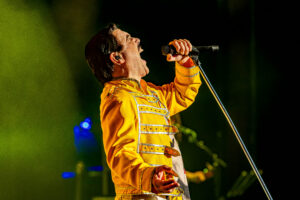
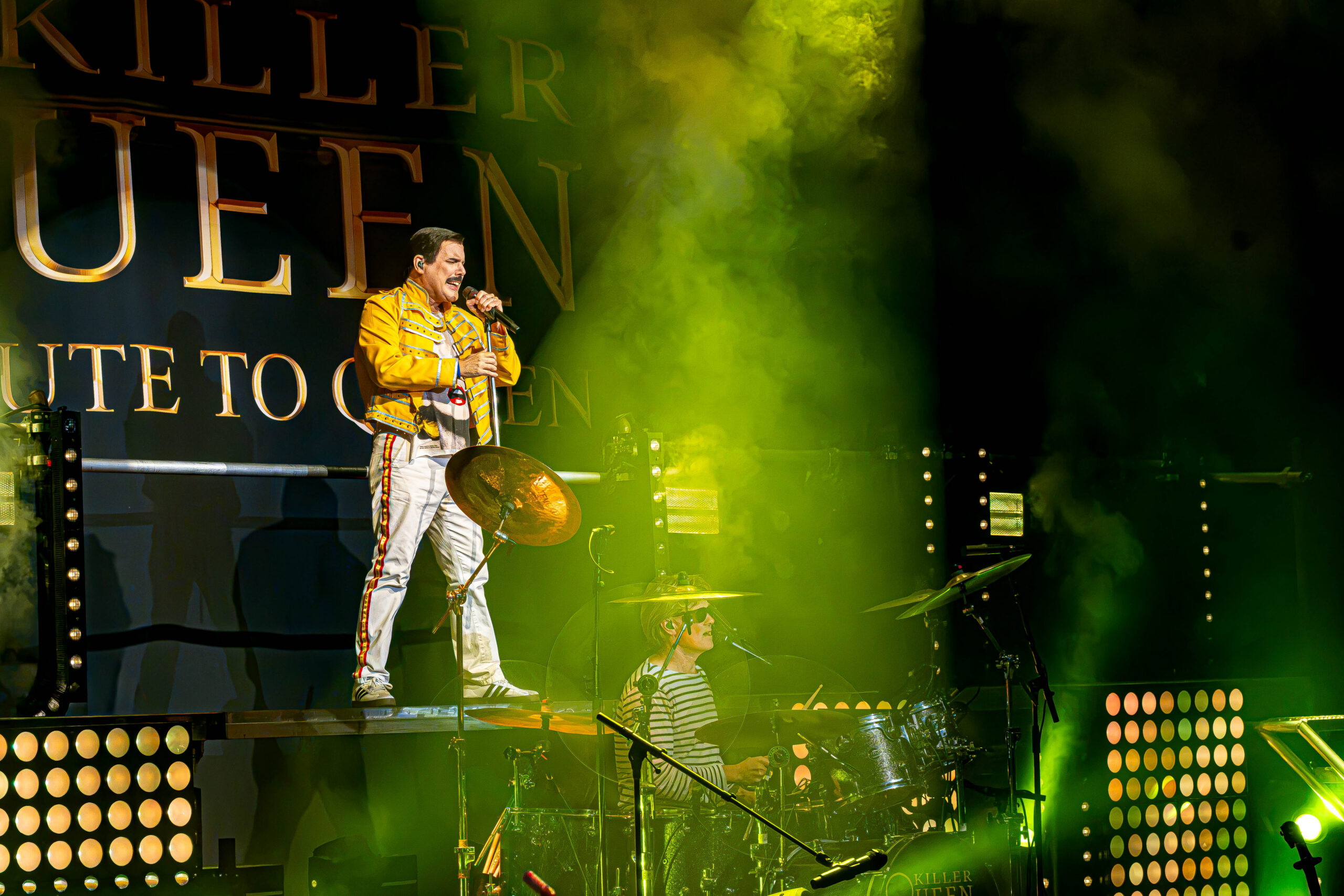
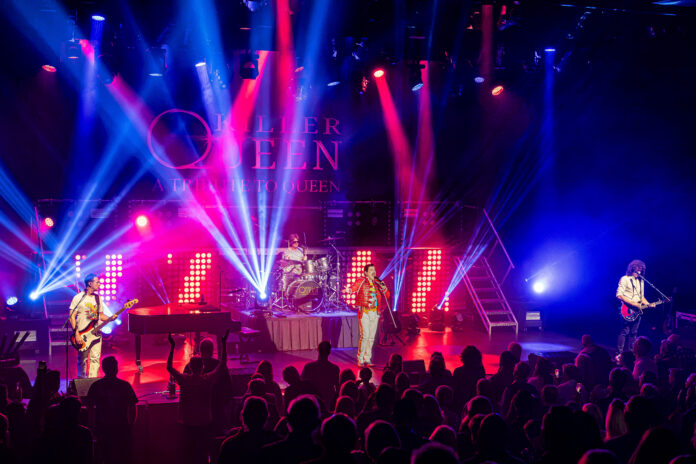
For the uninitiated, Killer Queen is a UK-based tribute act led by Patrick Myers, whose performance draws on Freddie Mercury’s voice, costumes, and unmistakable stage presence. The band has built its reputation not simply by playing Queen’s songs, but by presenting them as a polished, theatrical concert experience—an approach that makes the inevitable question especially interesting: How close can any tribute come to capturing the sound, spectacle, and sheer charisma of the original?
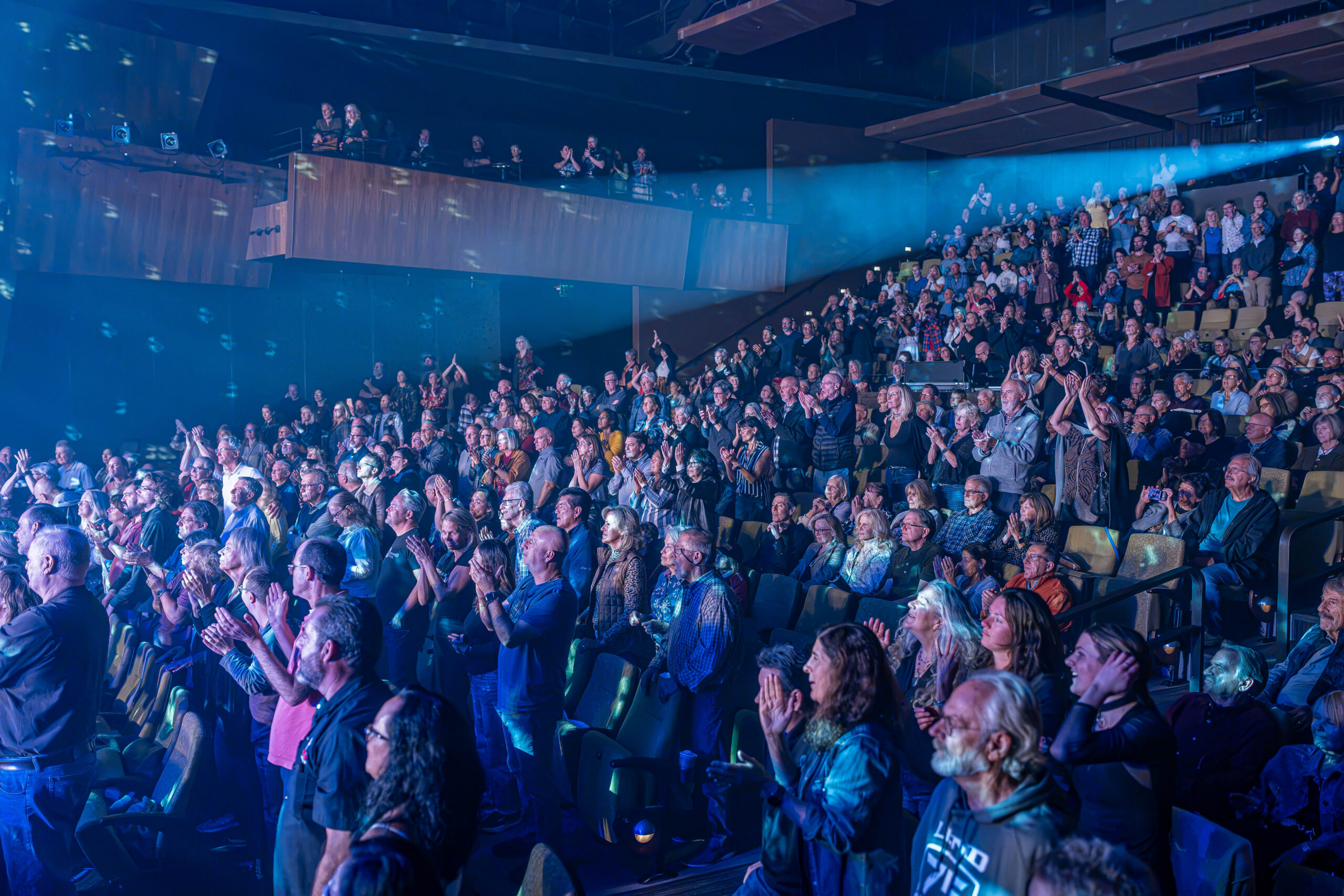
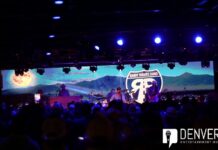
The night before last, I discovered the answer firsthand at the PACE Center in Parker, where Killer Queen played the first of two consecutive sold-out nights. I couldn’t attend Tuesday’s show, so this review covers Monday’s performance alone.
Killer Queen delivered just over an hour and a half of superb musicianship and theatrical spectacle, pairing the ambition of Queen’s music with a production that gave it the scale it deserved. For me, that was what made this a celebration with substance: the show did more than revisit familiar music—it demonstrated why that music still deserves the spotlight.
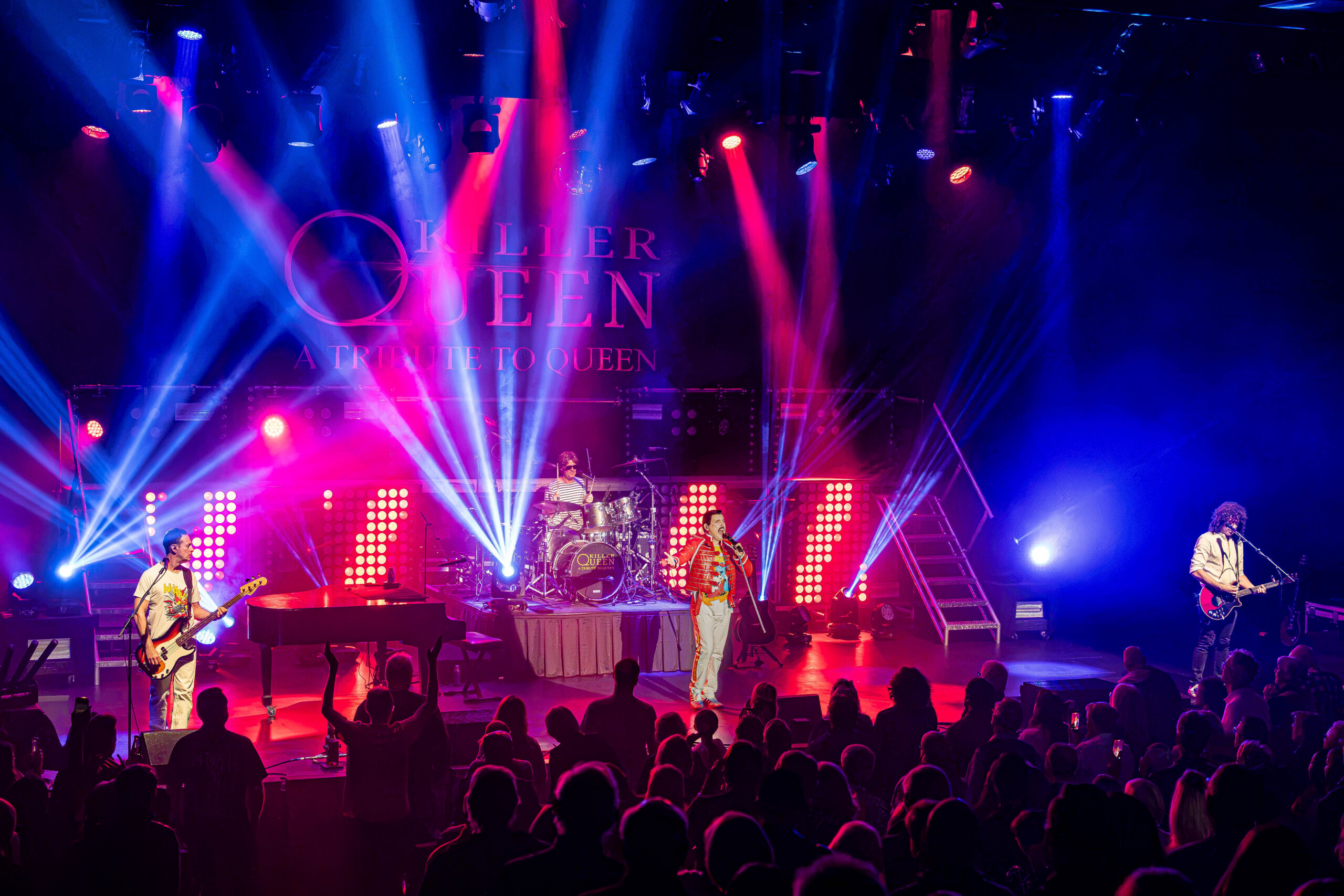
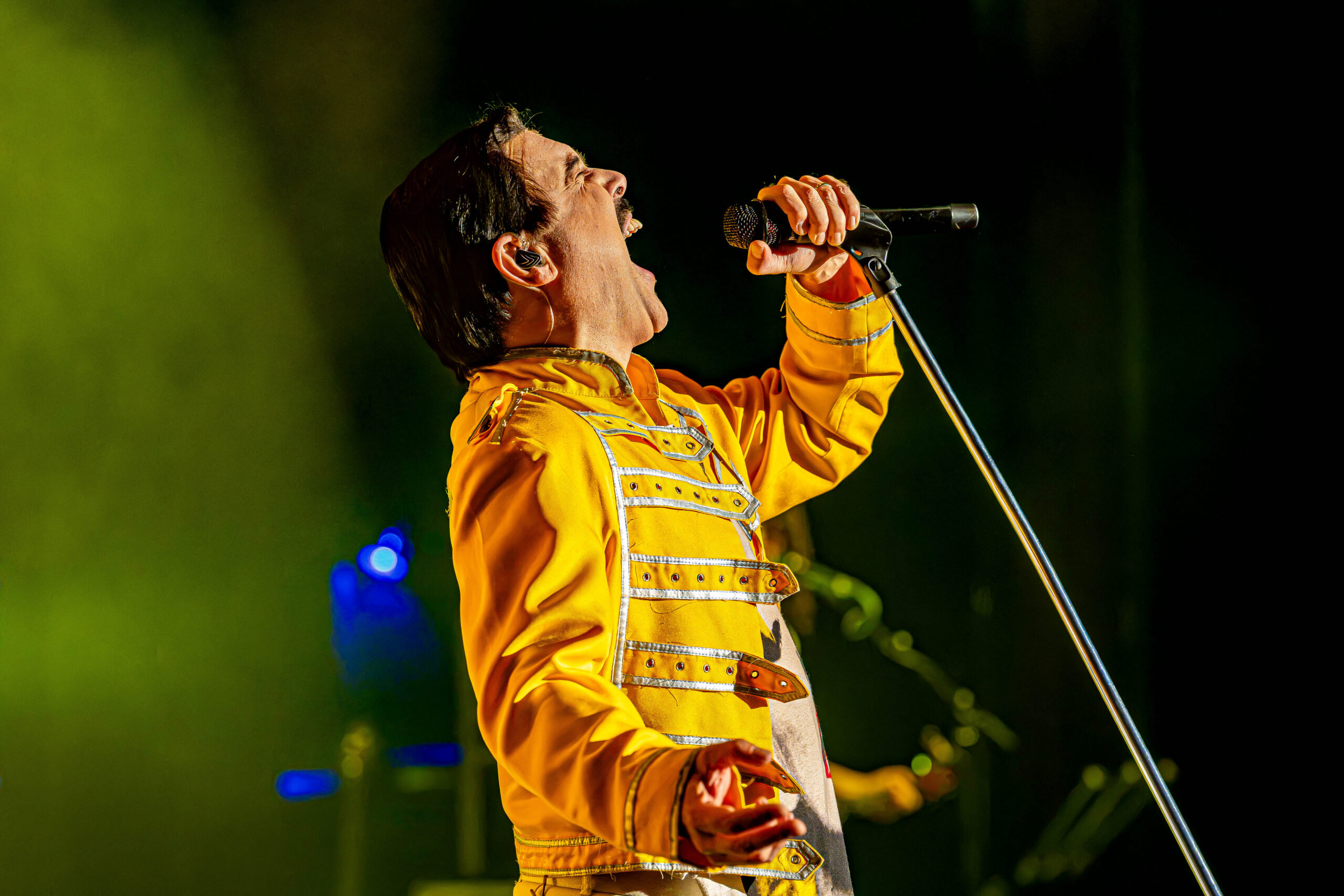
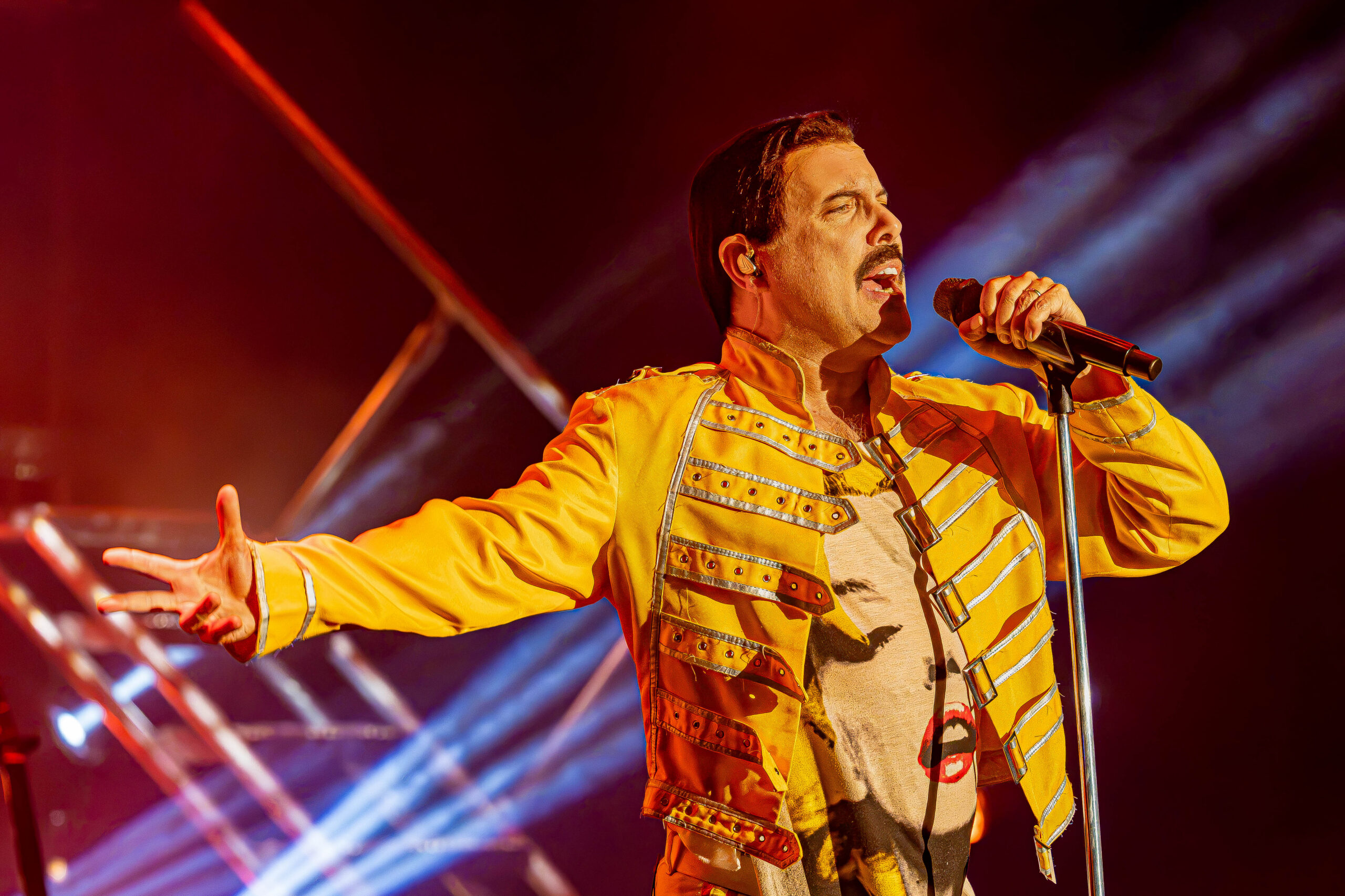
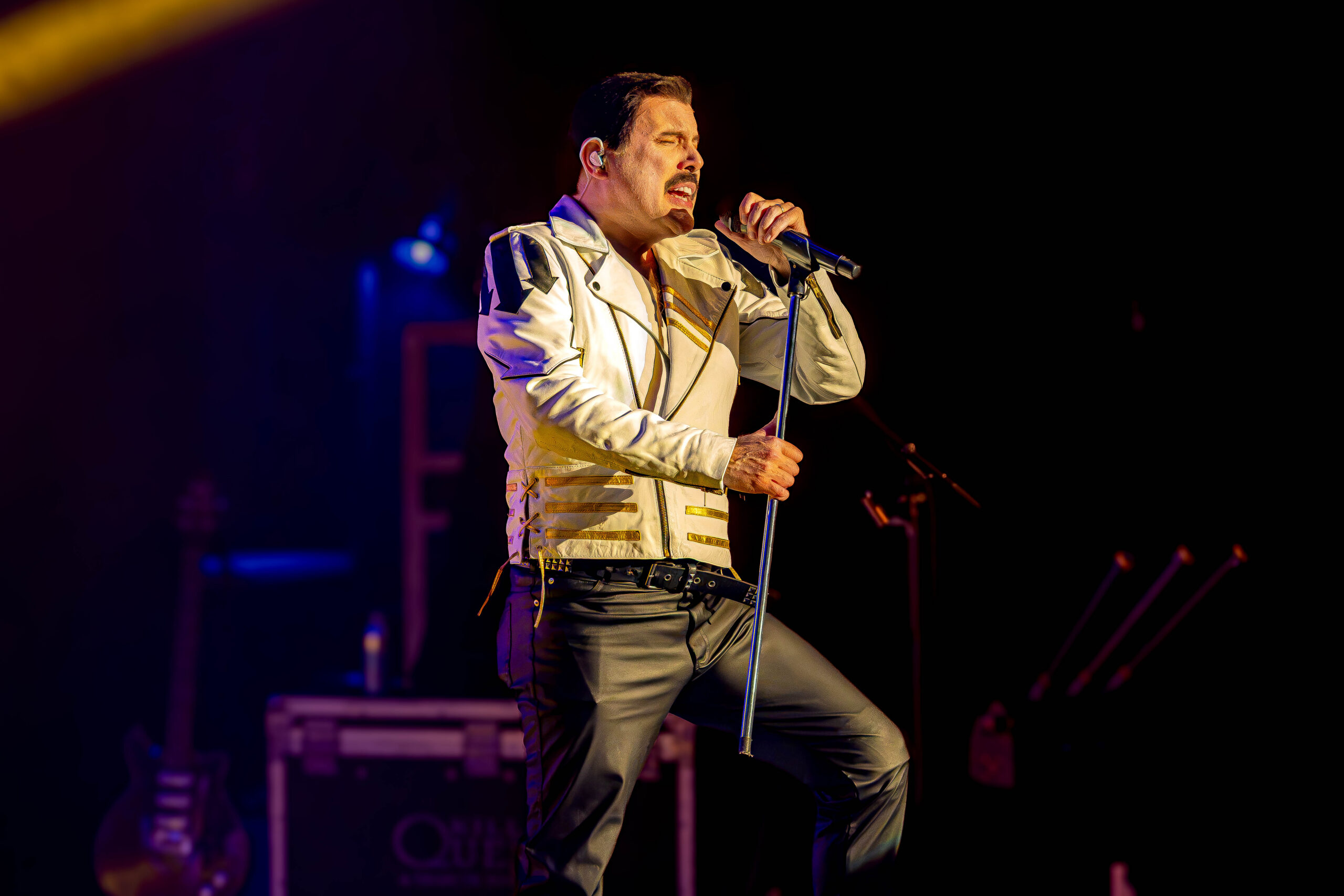
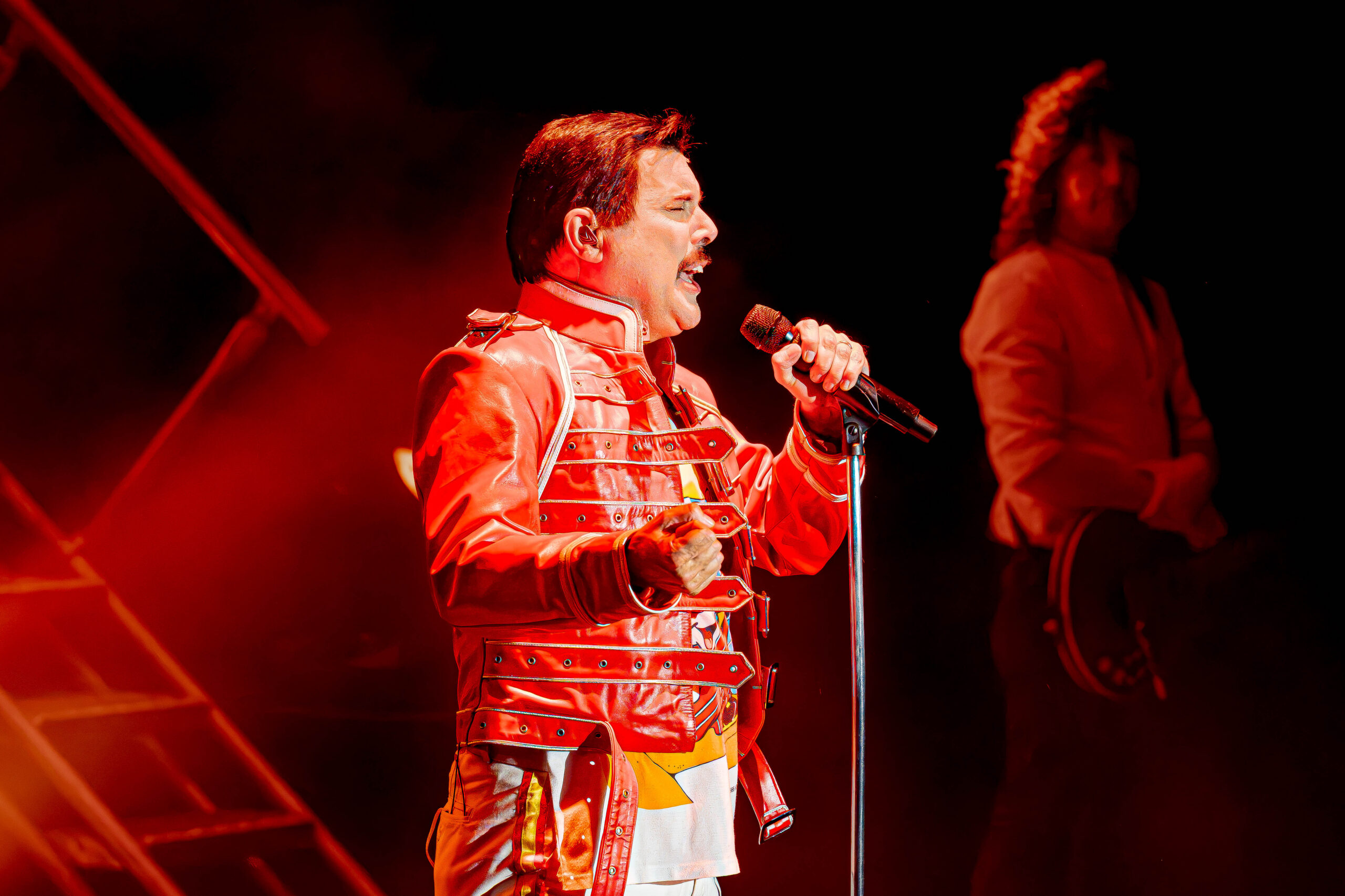
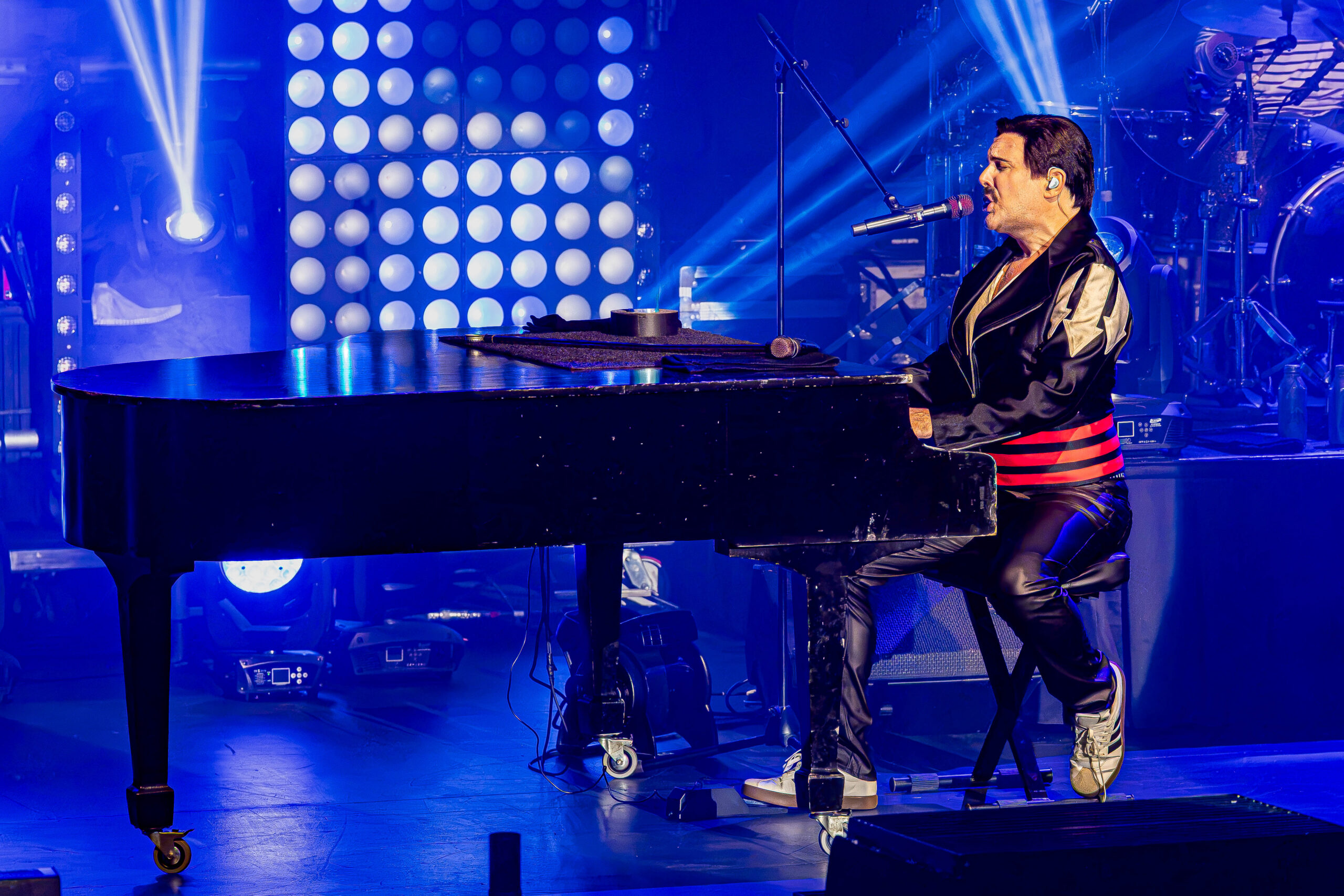
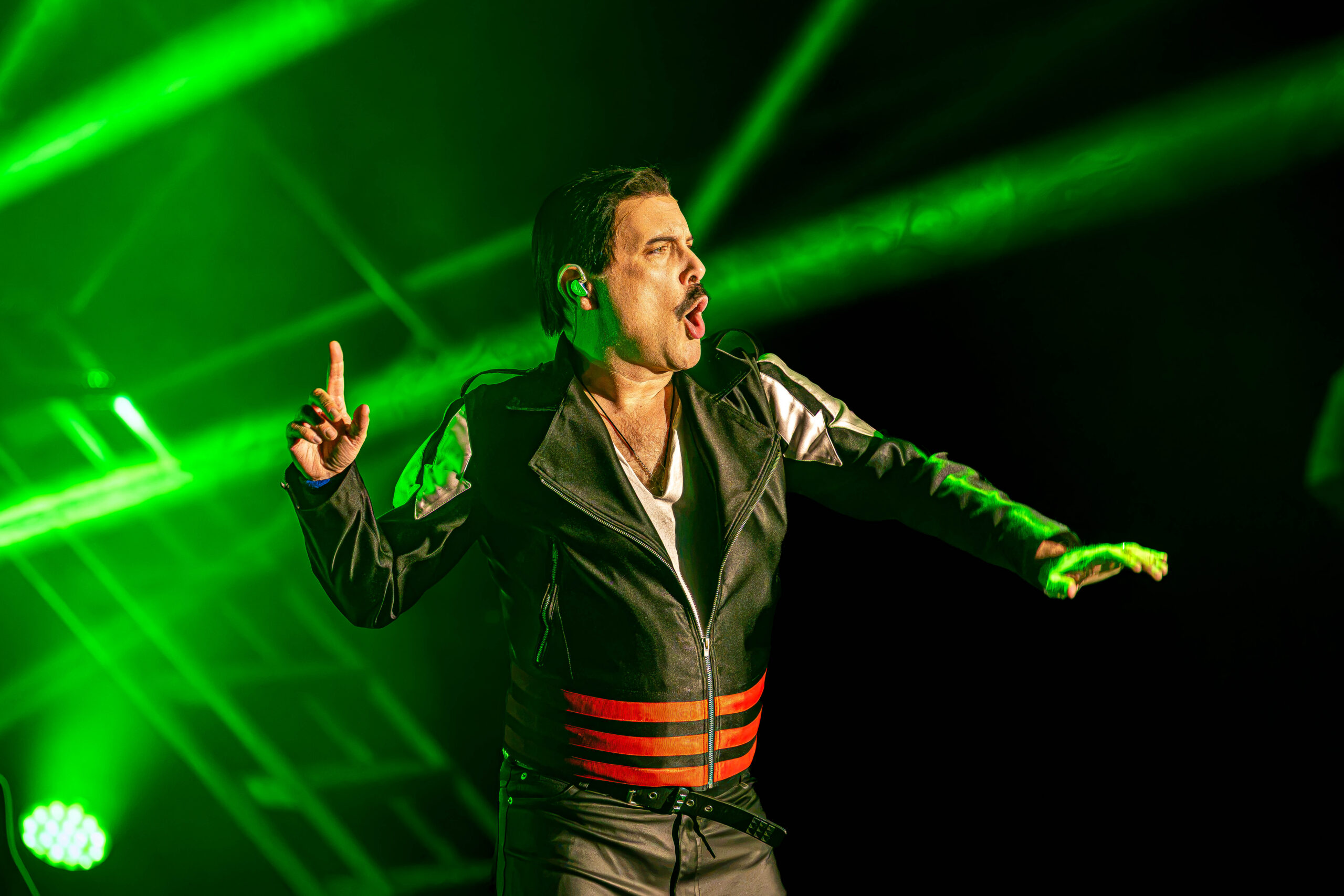
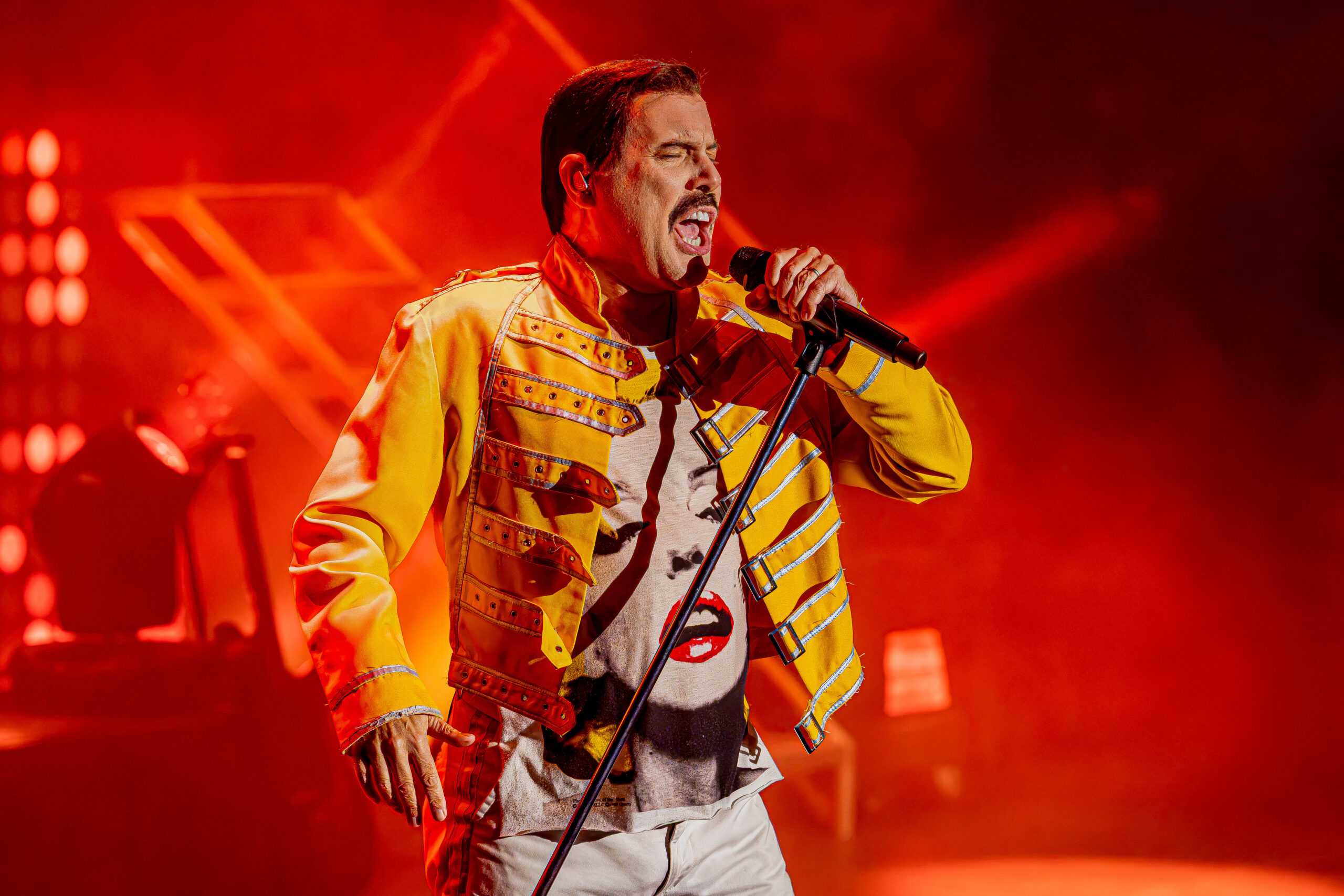
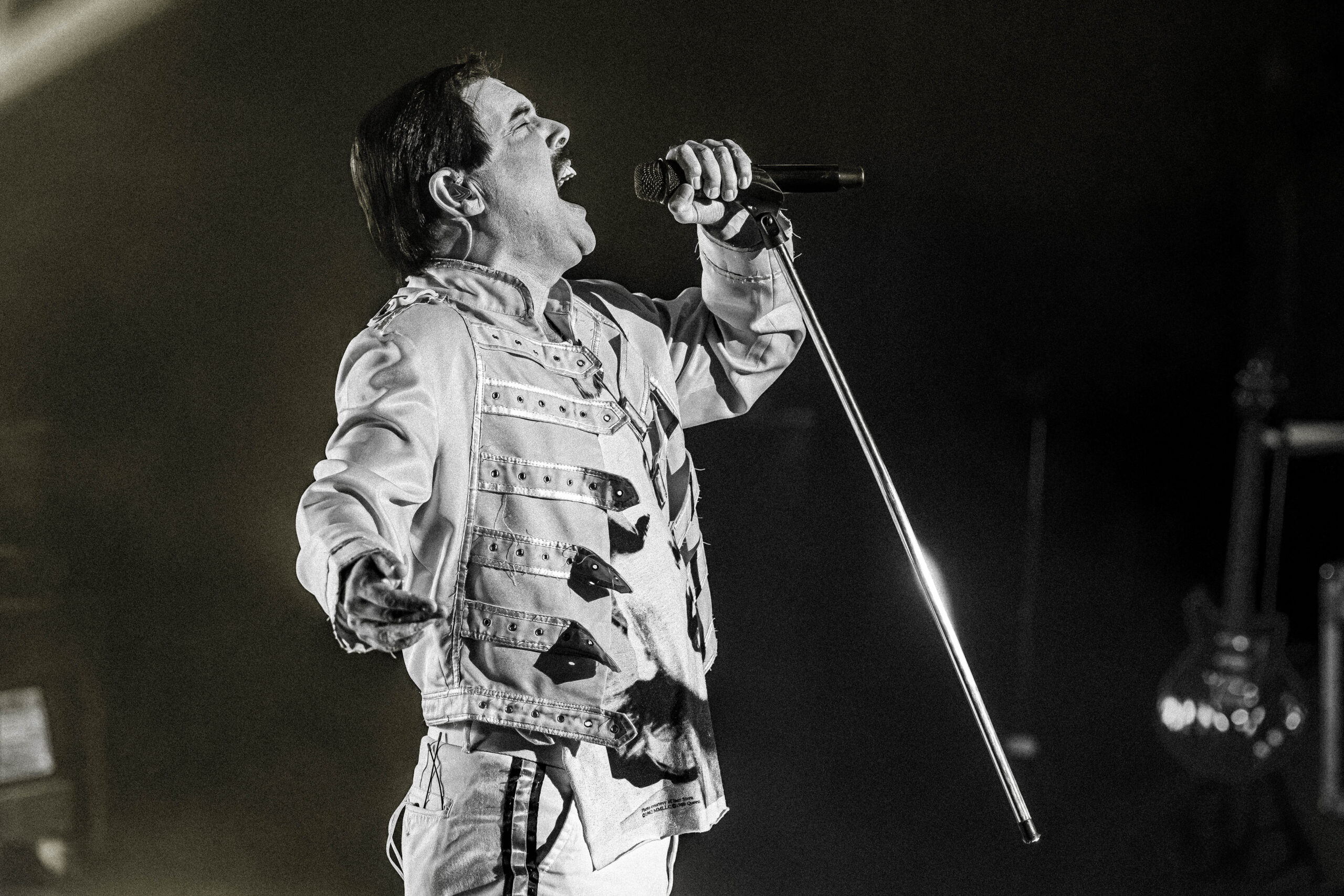
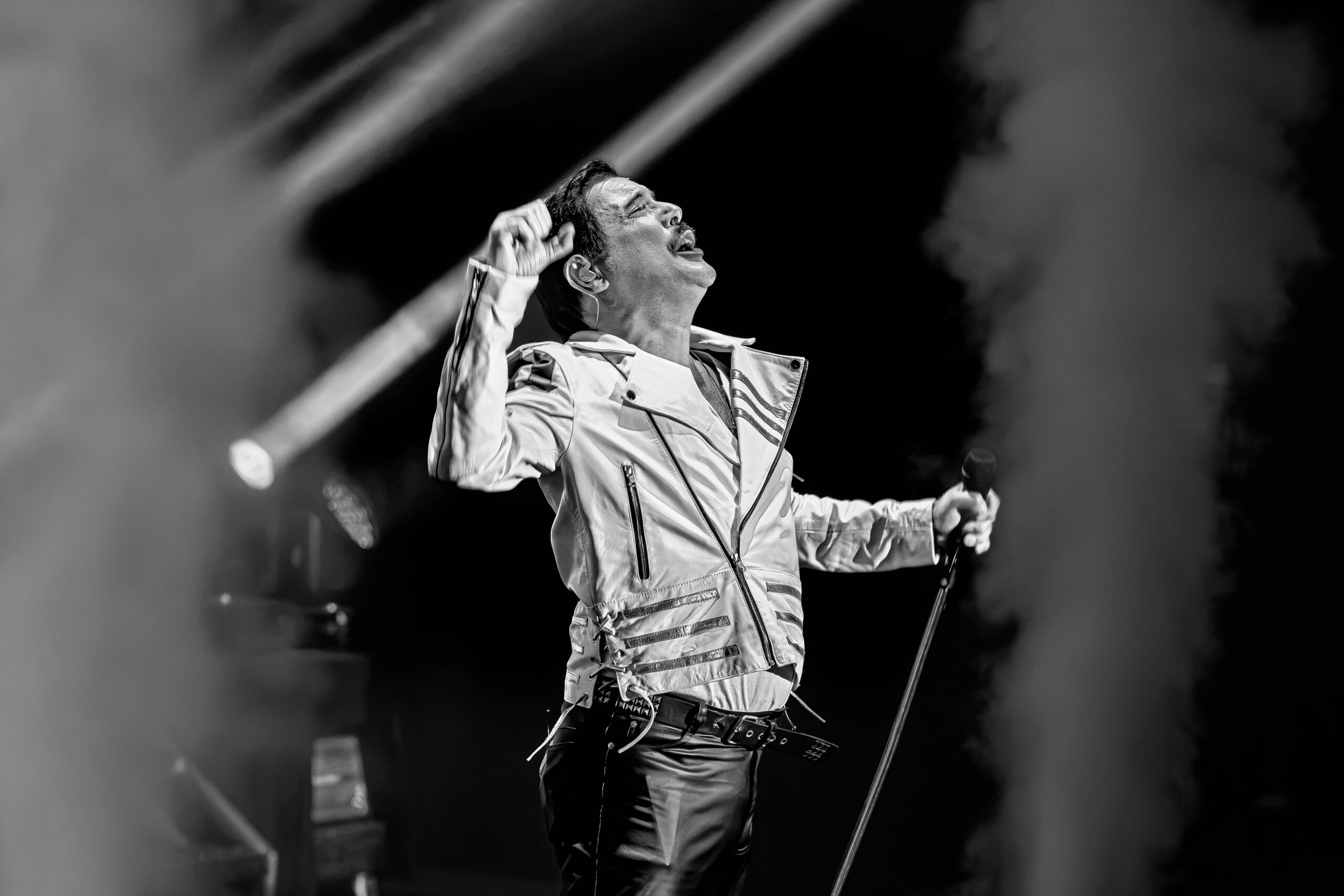
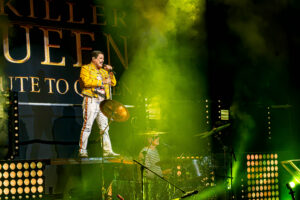
Patrick Myers’ vocals were superb, but his physical portrayal of Freddie Mercury was every bit as impressive. His movements and mannerisms captured Mercury’s unmistakable stage presence with a naturalness that went well beyond imitation. After more than three decades portraying Mercury onstage, Myers seems, in many ways, to have become him—not simply reproducing the gestures, but inhabiting the performance. That combination of vocal command and physical conviction made the illusion remarkably convincing.
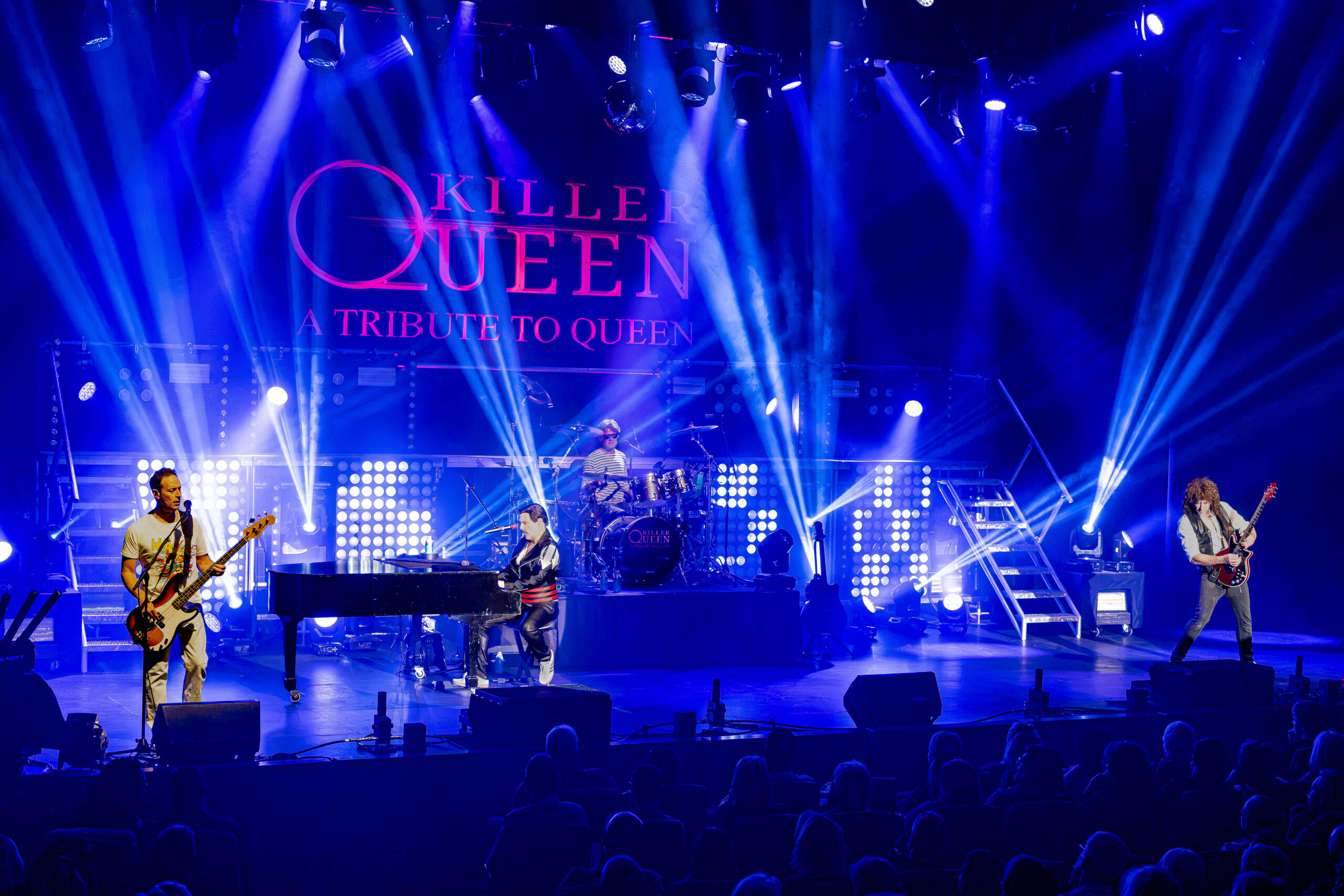
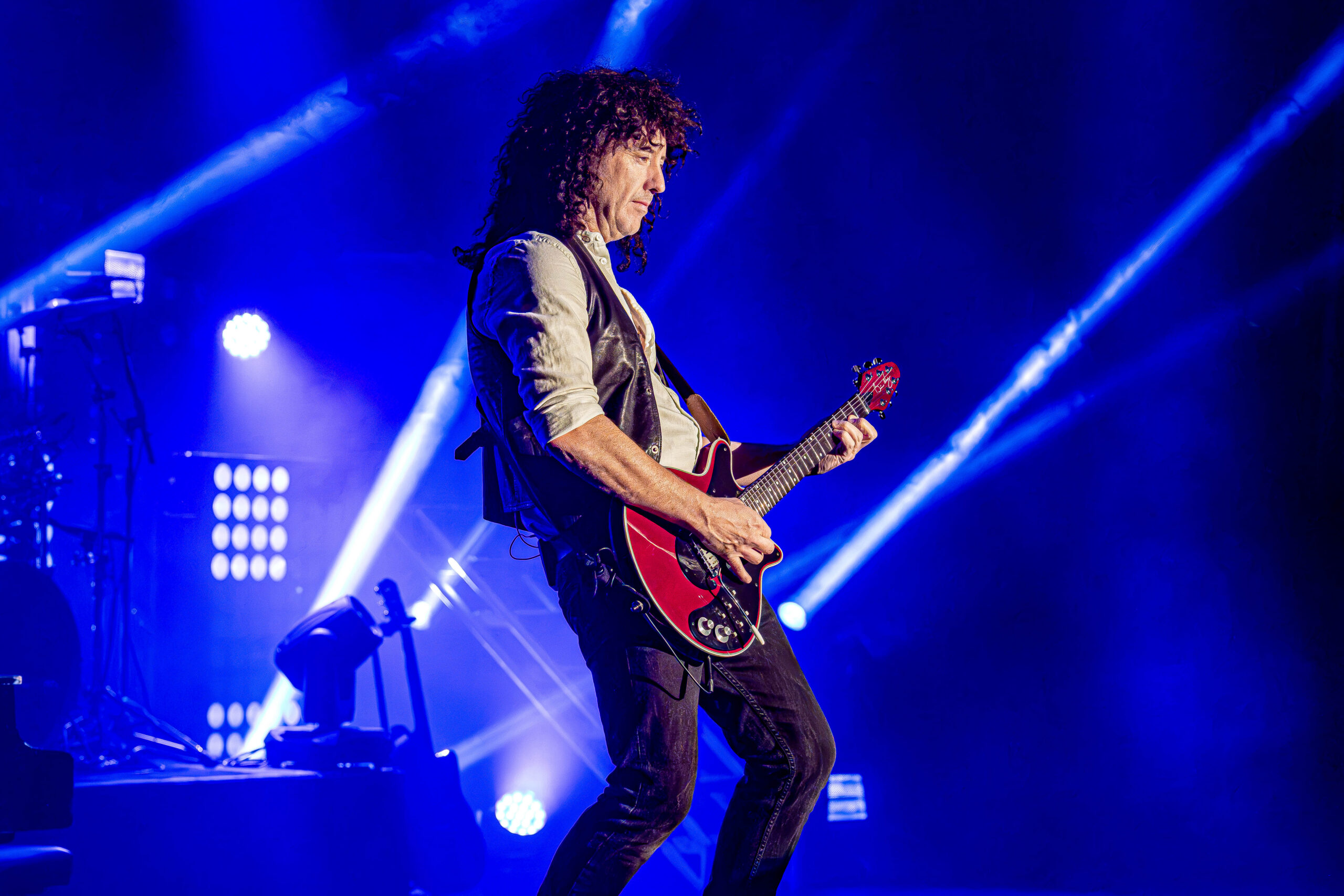
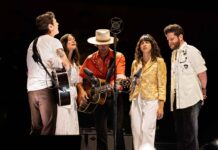
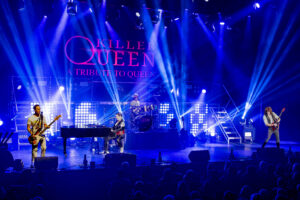
Myers was the focal point, but the evening’s success belonged to the entire band. With Simon Small on guitar (portraying Brian May), Brad Waissman on bass (portraying John Deacon), and Jon Howells on drums (portraying Roger Taylor), Killer Queen brought the instrumental strength essential to making this repertoire convincing. The performance invited appreciation not simply for the songs themselves, but for the musicianship required to bring them to life. Each player deserves credit for a show whose musical quality matched its considerable visual appeal.
Their contributions extended well beyond their instruments. Small, Waissman, and Howells did a fantastic job on harmony vocals, providing rich support for Myers’ lead vocals and adding another dimension to the band’s sound. That vocal teamwork was a highlight in its own right, underscoring how much the performance owed to the combined talents of all four musicians.
Small’s guitar solo and Howells’ drum solo also deserved special applause. Both were superbly performed, giving each musician a moment in the spotlight while staying true to the spirit of live shows from the classic rock era. These showcases of individual skill added to the evening’s sense of occasion, celebrating a concert tradition in which instrumental prowess was an essential part of the spectacle.
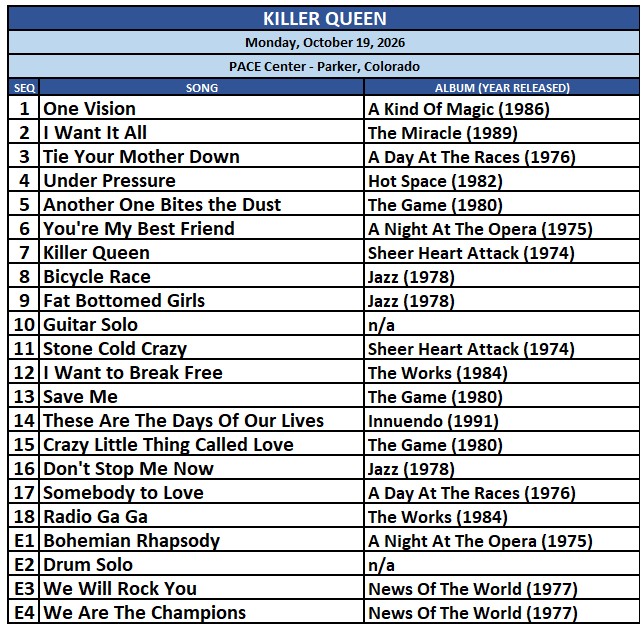
The set drew from 11 Queen albums spanning 1974 through 1991—a generous sweep of the band’s recorded legacy in a little more than 90 minutes. That ambitious range made the tribute especially rewarding, celebrating the catalog’s variety rather than offering a straightforward nostalgia exercise.
The show’s setlist, presented in performance order, can be found in the photo gallery below.
Lighting and special effects complemented the musicianship rather than substituting for it, giving the show a theatrical dimension worthy of equal praise. Together, music and spectacle honored the grandeur of Queen’s material while keeping the performance at the center of attention. The result felt like a fully realized concert, not merely a collection of well-played songs.
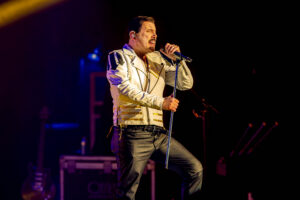
I went in with virtually no interest in seeing a Queen tribute band; I left convinced of what a carefully executed tribute can offer. In just over an hour and a half, Myers, Small, Waissman, and Howells backed the show’s ambition with musical quality, a wide-ranging repertoire, and an impressive sense of occasion. They made a compelling case for the enduring power of Queen’s music and for treating it with this much care. This was more than a fond look back—it was a glorious celebration.
One final recommendation: keep an eye on the PACE Center in Parker. This was my first time covering a show at the beautiful theater-style venue, which seats roughly 500 and has no standing-room section. Those living in or near Parker are lucky to have it close by, but it’s worth the trip for others, too. I drove from Westminster and would happily return for a show that interests me. Wherever you live, check https://parkerarts.org/ periodically for upcoming performances.
Story and photos by Rick Witt www.rickwittphotography.com