
Music gives us many gifts, chief among them the chance to step away from life’s harsher realities. That escape is temporary, of course – it does not fix anything. But it can give listeners the space and time to reset before returning to the fight with renewed perspective.
I put together a playlist – or, more accurately, a watchlist, since each song has an accompanying video – for moments when I need help staying grounded. It is a short collection, currently ten songs, with several by Drew Holcomb & The Neighbors (“Family” and “Find Your People”) and Drew & Ellie Holcomb (“Memory Bank”) featured prominently.
Like much of the music written, recorded, and performed by the Holcomb’s – both together and through their individual projects – these three songs are rooted in the essentials of everyday life: community, unity, resilience, love, human connection, and being present. These themes can easily get lost in the rush of daily life, but they resonate deeply with listeners and create a connection that goes beyond simple entertainment.
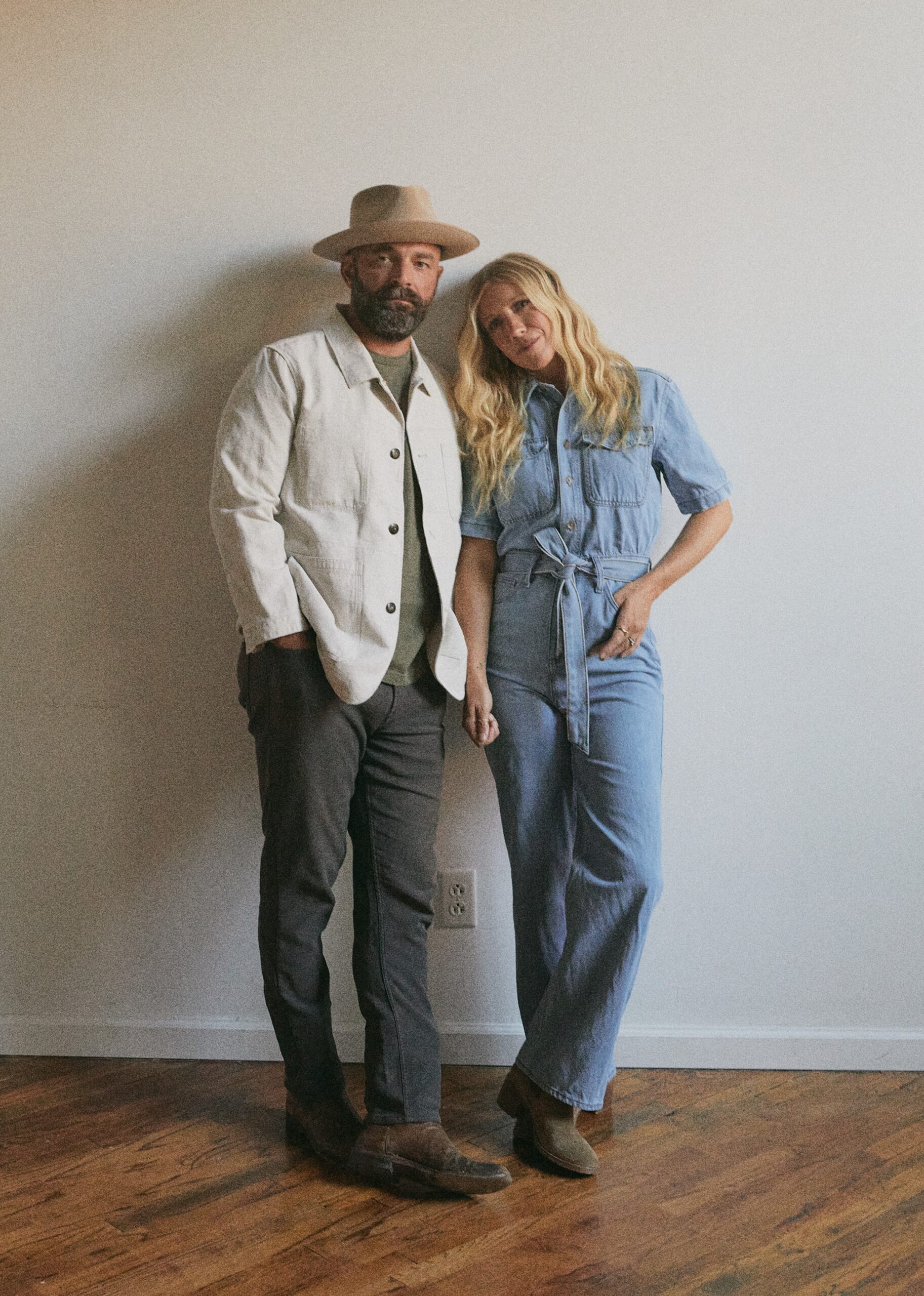
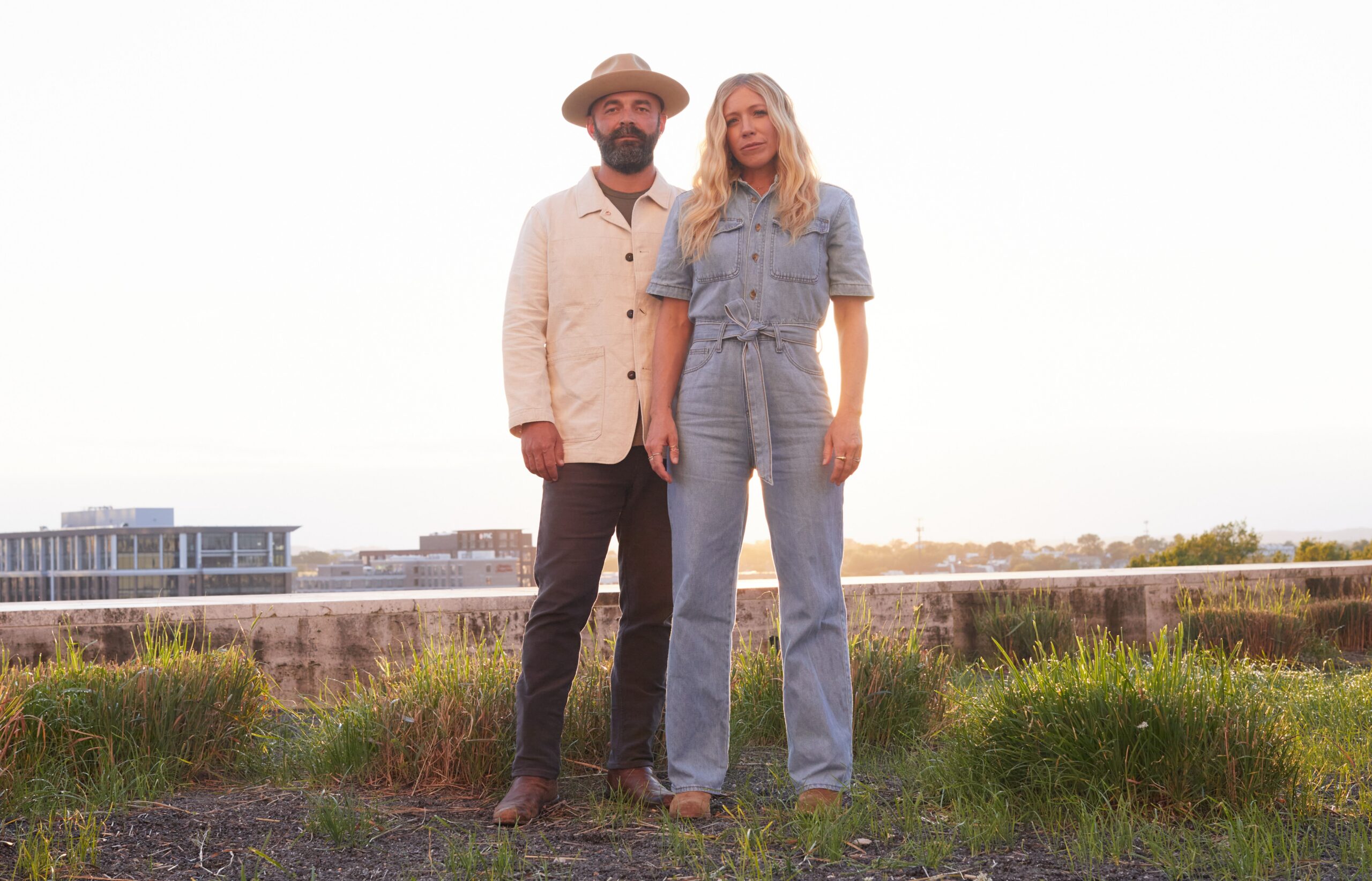
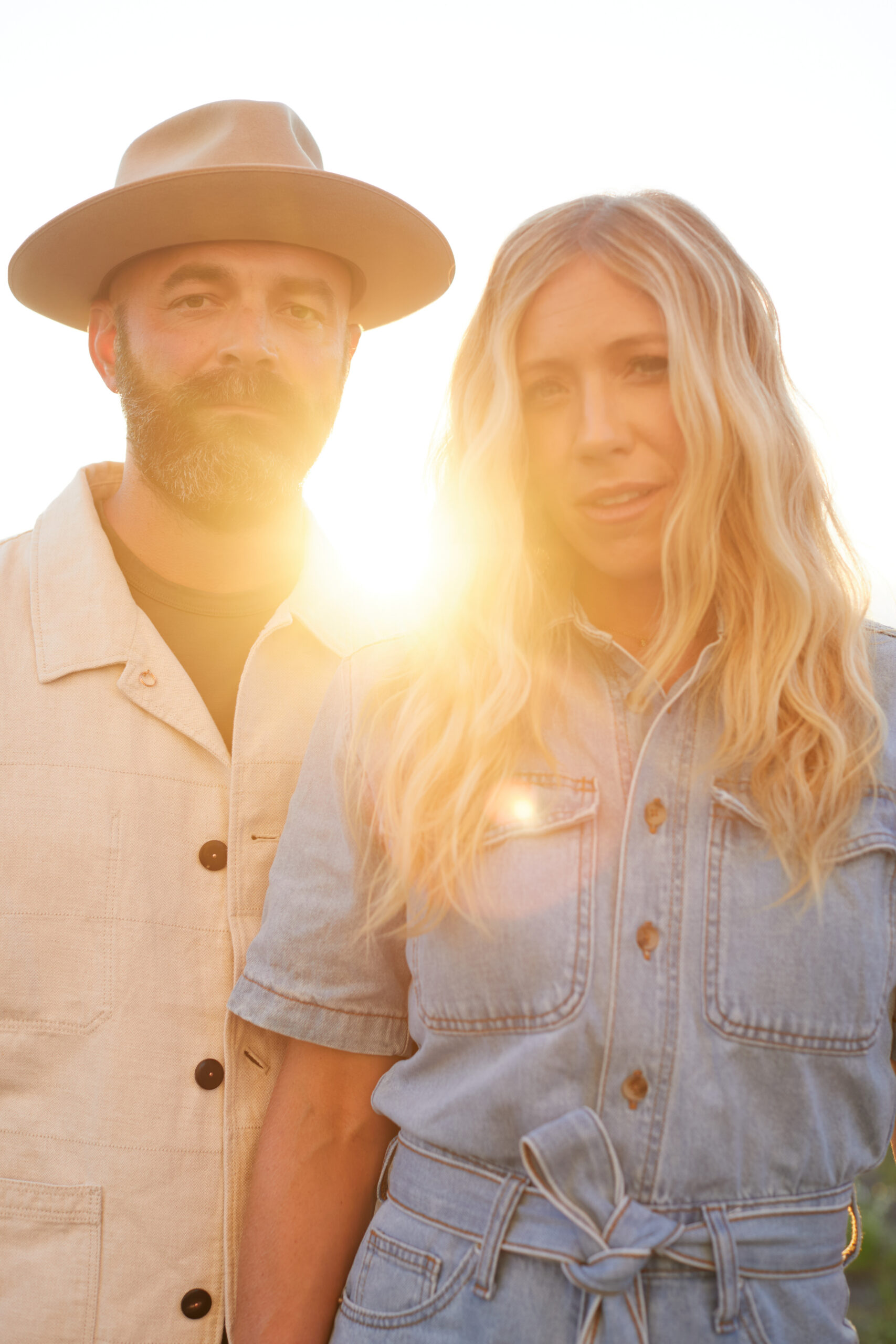
Drew and Ellie have spent much of the past year and a half on the road, touring as a duo in support of their first full-length album, Memory Bank, released in January 2025. After wrapping their latest headlining tour in mid-May, they are set to return in August as openers for NEEDTOBREATHE on a run that continues through September 20. The tour’s second stop is Friday, August 14, at the Dillon Amphitheater, followed 19 dates later by a Monday, September 14 show at Red Rocks.
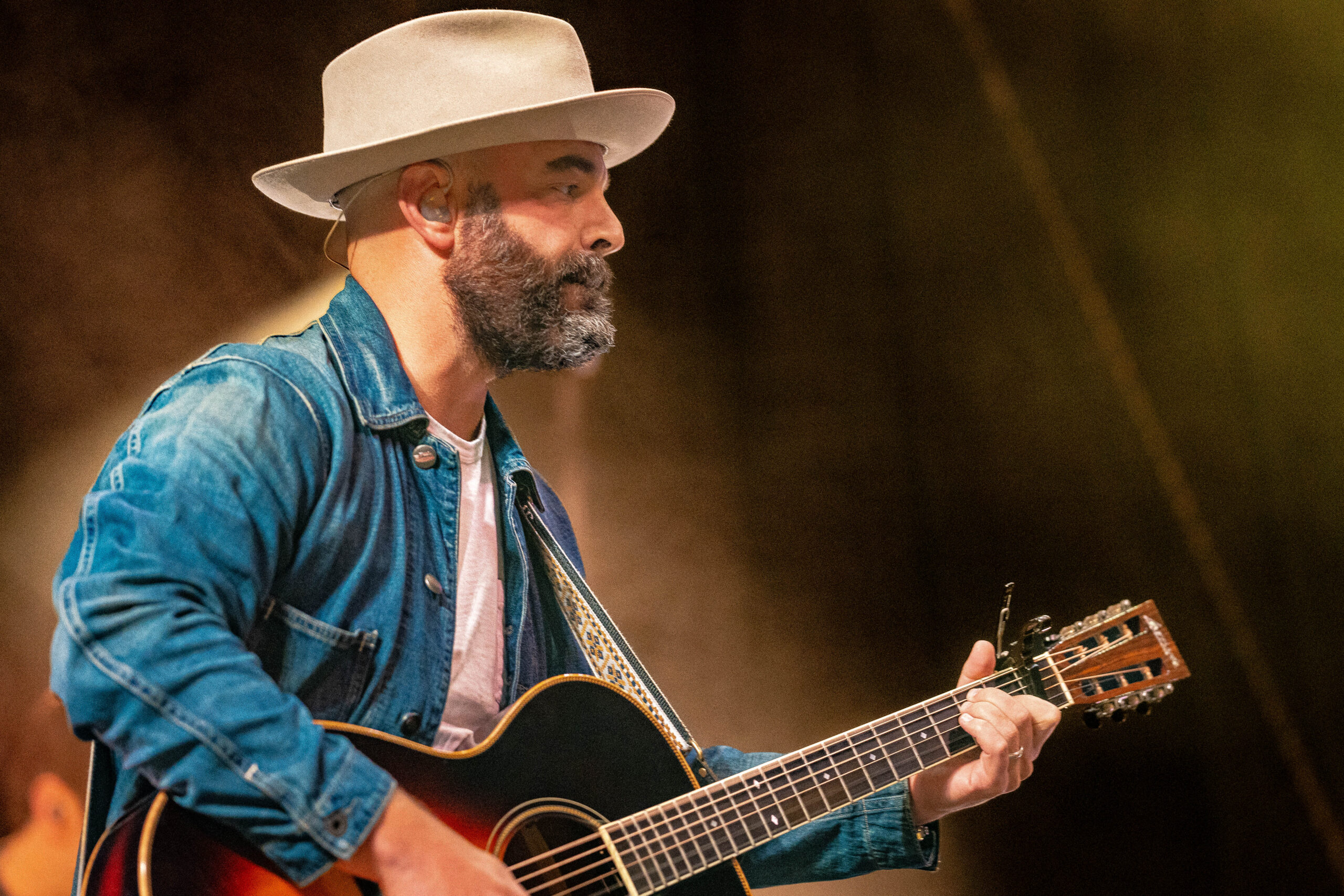
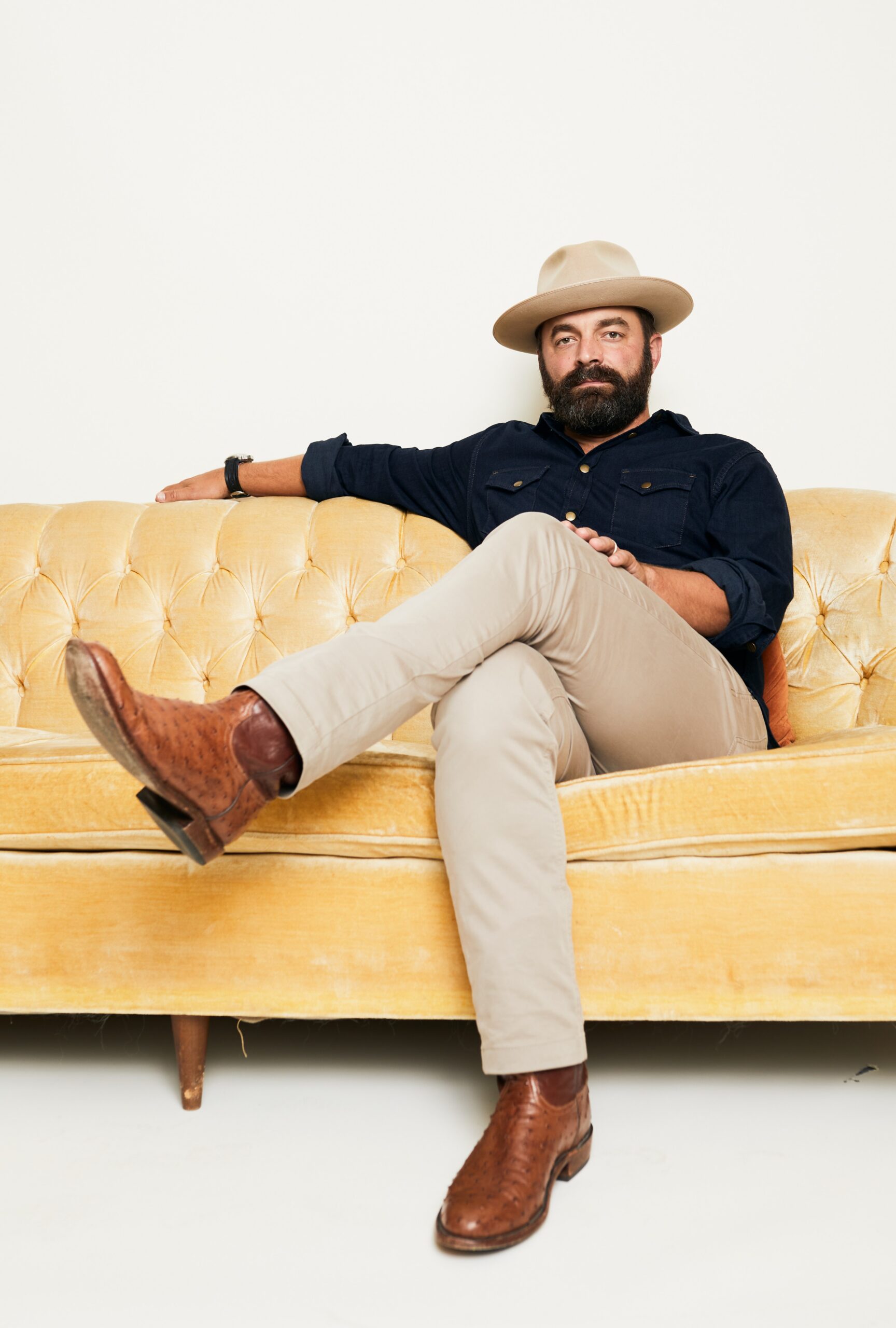
In advance of those dates, I spent time via Zoom with Drew Holcomb earlier this week. We talked about the unusual path he took to become a professional musician, songwriting as therapy, the challenges associated with balancing multiple career trajectories, having your wife mistaken for your sister, and other assorted topics. Read on…
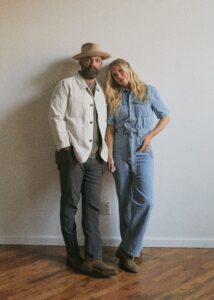 Rick: Thank you, Drew for taking time to talk with me today. I know you and Ellie are getting ready to head back out on the road again. I assume you’re at home today.
Drew: We are. We’re kind of in and out of town, classic sort of summertime, you know? Kids are in different camps and some family vacations, but yeah, we’re mainly home until the tour kicks back up.
Rick: That’s nice to get a little bit of time off the road. You guys have been on the road a lot.
Drew: We have, it’s been a very busy year. One of the busiest we’ve had in probably the last five years. It’s been good, though. We put out a new album, Memory Bank, and it’s been fun to tour it. And then this invitation from NEEDTOBREATHE to join their tour was a bit of a surprise. They’re old friends, so we wanted to make it work, and we’re excited to come back out on the road with them.
Rick: I definitely want to talk with you about this kind of dual career trajectory thing you and Ellie both have going on, but I want to start by making sure I have the chronology of your shared life journey correct for the folks who’ll be reading this article. You guys met when you were students at the University of Tennessee, right?
Drew: That’s right. Yeah, I was a sophomore, and she was a freshman, and some mutual friends introduced us.
Rick: What year was that?
Drew: That would have been the fall of 2001.
Rick: So, you had some friends that introduced you, but as I understand the story, you guys didn’t start dating for a while.
Drew: Yeah, a long time. I mean, we didn’t go on our first date until May of 2005. We were friendly, and music was a big part of that. We were part of a crew that went to a lot of shows together. I was interested in Ellie, but I also had seen the writing on the wall because she had kind of gone through a real bad late high school/early college breakup, and so I didn’t make my affections known until much later. So yeah, I was interested in her for a long time, but we really built a nice friendship around a lot of things, but mainly a shared love of music.
Rick: So, tell me the story of the song, “I Like To Be With Me When I’m With You.” As I understand it, that was kind of your first attempt to let her know you were interested in moving the relationship to the next level.
Drew: Yeah, it was. I had written the verses, and it was just this kind of a fun tongue in cheek song, a little bit like, if I could have everything that the world tells me is great, I’d rather just have you. And the punch line is “like putting on my favorite pair of shoes,” which came from a family story of a great aunt who ended up marrying her next door neighbor after five years of telling him no. She was like, “No, he’s just my friend.” And then one day she came home from a date with what she called a fancy guy, who was real wealthy and connected, but he was kind of an asshole. She was crying to her mother, and she said, “I just wish it felt like it does with Horace, because when I’m with him, it’s like putting on my favorite pair of shoes.” So that’s the line, and it was a way for me to tell her that we’ve been friends for a long, long time, but that’s not really my long-term interest in this relationship. I’d like a shot at something more than just being friends who sing together every now and then.
Rick: But initially she said, “maybe,” or something along those lines?
Drew: It wasn’t exactly that. You know, sometimes you have to shorten the truth to make the story accessible, but she said that she kind of felt that way too, but she’s had her heart broken, and was trying to work through some stuff, so give her some time. It was a “not yet” more than a maybe.
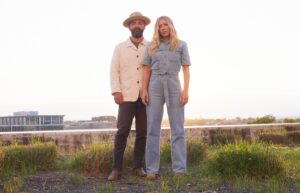 Rick: Wow… that was a pretty mature response from such a young person. So at this point you guys are in college, and you’re continuing as friends, but neither one of you were looking at music as a career path, right? What were you studying at school at that point?
Drew: I studied history and religious studies, and I had aspirations of teaching at the college level, and writing books. I was very interested in travel, and loved reading popular histories by people like Erik Larson, Jon Krakauer, and Hampton Sides, and had aspirations of teaching as a way to pay for those dreams. Music was just a thing I was doing mainly for fun, although I feel that songwriting is a form of therapy for everyone. That’s sort of where it started for me, but then I decided to put graduate school on hold for a minute and give it a shot. The original idea was it was going to be a way for me to pay for my travels. I’d play some coffee shops, do some house shows, some bars, and that would allow me to see the world. But it quickly turned into more than that, and I just basically never looked back.
(Author’s note: Holcomb’s younger brother, Jay, died from complications related to spina bifida when Holcomb was seventeen. Although he has spoken publicly about how that loss shaped his approach to life and relationships, I wanted to confirm during the interview that he was comfortable discussing it in this forum.)
Rick: It was a while ago when I heard you talk about your brother’s death in an interview. Are you okay talking about it more today?
Drew: Of course.
Rick: My understanding is that songwriting got a little bit more serious for you when you were dealing with the aftermath of his death. Is that an accurate characterization?
Drew: Yeah, it definitely did. Music helped me kind of wade through that season of grief. I grew up in a conservative, churched environment where there were a lot of easy answers for hard things. But they weren’t sufficient for what I was going through, and music was a thing that broadened my perspective. When I started writing songs, that was kind of a true north for me, and I wanted to write songs that would do for other people what certain music had done for me in that season. Music can run the spectrum of emotion from this song helped me bury my brother to this other song was the road trip song for me and my buddies, hauling ass down the highway, out to have some fun. So it wasn’t all totally heavy, but the heartbeat of my attraction to music was its sound tracking of that season of my life.
Rick: I get it. I frequently use music as a way to reground me. It’s just a temporary distraction, but it lifts the weight off my shoulders just enough to let me continue fighting the good fight.
Drew: Yeah, there’s a quote that Ellie likes that I can’t remember who it’s attributed to, but she would know, but basically it’s that art decorates our spaces, but music decorates time. I think that’s similar, like it’s certain seasons of life that music helps us navigate through.
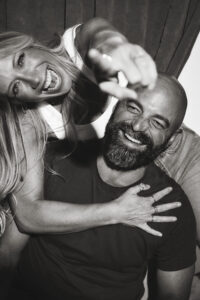 Rick: So let’s level set. You’ve gone to college, with plans to teach. But music has become a bigger and more important part of your life, and so you decide to see how far that might take you. And suddenly it’s more than twenty years later, and you’ve released all these albums, and done all these shows, and had all this success. When you look back over that whole period and how it evolved, do you ever ask yourself how in the world did this really happen?
Drew: You know, I was actually talking to my manager this morning about this. Doing this for 20 plus years, all of a sudden you sort of stop and take inventory of how much time that is, how many records that is, how many shows that is. People always say, “Wow, where did the time go?” I can tell you exactly where the time went. I’ve played 10 different venues in every major city in America over the last 20 years. I have memories of so many tours and so many music-making experiences and songwriting. And now, especially with children, the time just goes by so quickly. Sometimes I can’t believe that this career has happened. But it also makes sense that it’s been 20 something years because a lot has gone on in that time, and the world around us has changed so much. Looking back to when I first started, what the world looked like, it’s quite a different place, you know. Some good, some bad.
Rick: And the music industry has changed an awful lot during that time too. When you started, artists were still actually making records, or CDs, and you measured your success by the number of units sold. But today it’s a completely different ball game.
Drew: Yeah, we put a song out a couple years ago called “Way Back When,” which is one of the songs I’m most proud of from a songwriting perspective, but it’s kind of an intense, sad song about getting older, and it’s not a great song for the streaming era. People listen to it, and they love it, but they don’t want to listen to it on repeat, you know. Back in the day, or even during the iTunes era, I think a lot of people would have bought that song. So yeah, the industry has changed a lot. There’s parts of that that have been good for me, and parts that have been hard for everybody. But at the end of the day, I’m just grateful to get to do this really cool job that a lot of people would trade places with me in a heartbeat. I’m very aware of that. So, I mainly exist in gratitude for it, even though it can be a grind sometimes.
Rick: All right, let’s bring it up to the to the current day. For most people, the old work/life balance thing presents an ongoing challenge. In your case, and for Ellie, you’re a parent of three kids, and you’re a performer who spends a lot of time on the road, with not one but two professional career paths you’re trying to balance. Talk to me about how challenging it is to juggle between your careers with The Neighbors and as part of a duo with Ellie.
Drew: Well, it definitely is challenging. Although, it really wasn’t for a long time. Our separate careers didn’t overlap for about a decade, except for a few Christmas shows and having Ellie sing on a song here and there, and vice versa. So the decision to make an album together and to tour more together, part of it was just a creative thing that happened naturally. Ellie’s songwriting and music sort of started coming closer towards mine. And I learned how to sing harmonies, so me coming towards her. And then also, we kind of joked that it took 20 years for our egos to die, so that we could work together as co-equals. I mean, she was in the band back in the day, but she was really more of a Neighbor than a co-lead.
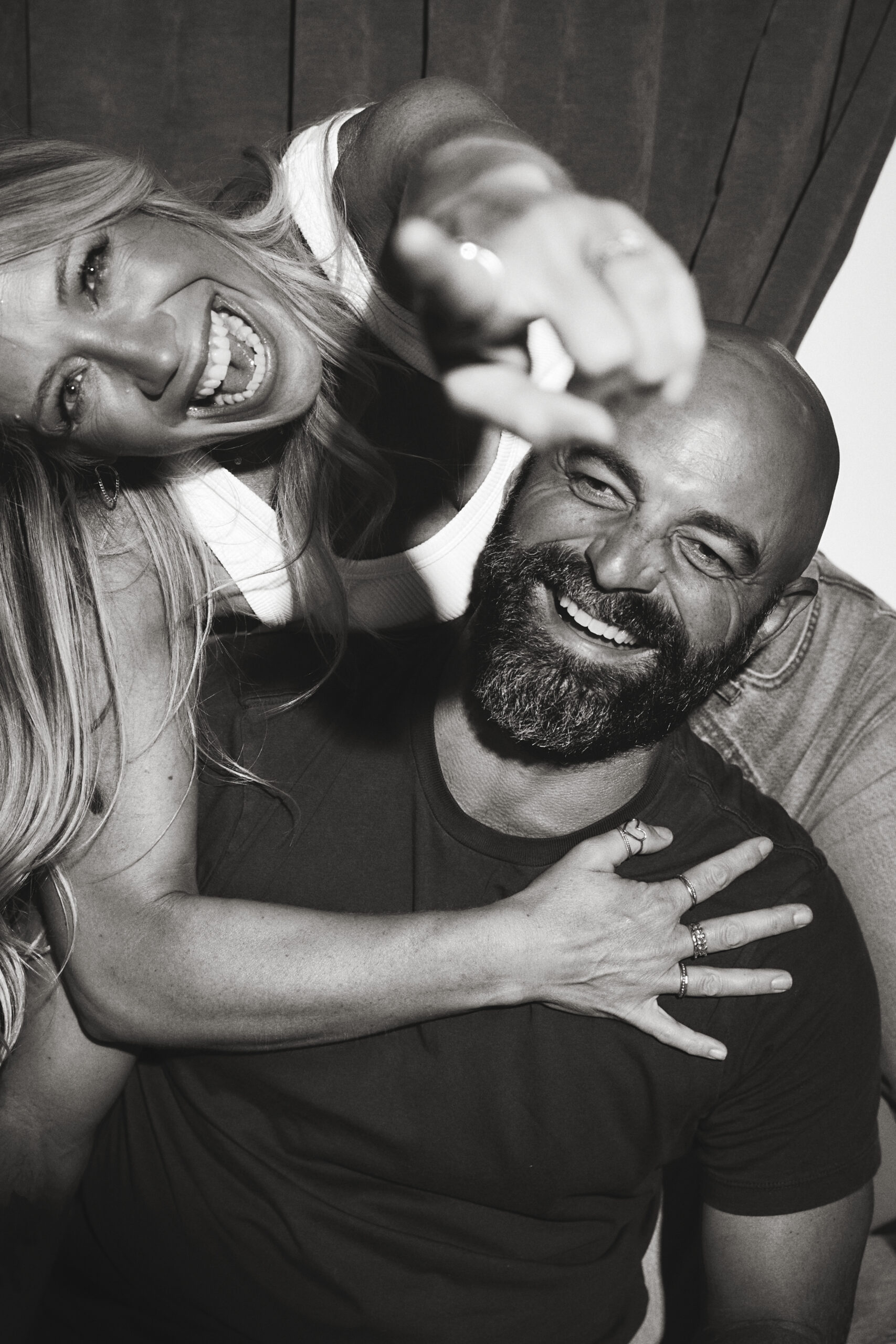
Ellie’s working on a new record right now that’s just hers. I’ve been working with the band on a new album that’s just ours. So I think it’ll probably continue to be a little bit of back and forth where we’re going to do our own things, then come back together some. We do want to try to be really clear, when we do shows, as to whether it’s billed as me and The Neighbors, or me and Ellie, or her by herself. I think people at this point have kind of learned the rhythm of that, but we still sometimes have people get confused. I had a woman just the other day that was like, “I love your band and your music, and I have just fallen in love with your sister Ellie’s music.” And I was like, “Thank you so much, but she’s not my sister, she’s my wife.”
Rick: Okay, well, there you go. That’s funny, man.
Drew: Yeah, it was funny.
 Rick: I don’t know how familiar you might be with Albert Castiglia and Mike Zito from the blues world, but they both have very successful, long-lasting solo careers. They’ve been friends forever, and a few years back, they came together to form a duo called Blood Brothers. I interviewed Albert a couple years ago, and I asked him about balancing their solo careers with their Blood Brothers project, and he told me they were going to rotate by year, where one year they’d focus on their own things, and the next they would focus on the collaboration. But they are able to go their separate ways, then come back together. With you and Ellie, I mean, to your point, she was in the band from the beginning, and even after she quote unquote left the band, you still see her on virtually every album that you guys record, singing background vocals or something. You guys can’t go your separate ways… you’re married.
Drew: Yeah, that’s true. I think we’ve just kind of made peace with that tension, and even learned to enjoy it. The thing is, with the exception of Memory Bank and a handful of other songs, we’ve primarily written music apart. We don’t write a lot together, but we do record a lot together. We do end up on stage together quite a bit. Part of it was for a long time, when our kids were young, Ellie just didn’t want to really be on the road, and now they’re a little older, a little more self-sufficient in their school years, it’s easier for her to pop out for a few days here and there, or have the kids come out with us. A big part of life is just about timing, and at this point our ambition is less about setting exact courses towards a destination and more just enjoying the ride.
Rick: Let’s talk a little bit more about songwriting. First of all, I really appreciate your songwriting. When I covered your show in Denver a couple of years ago, I wrote that your “songs are grounded in elemental aspects of everyday life… themes that sometimes get lost in the hustle and bustle of that everyday life.” In interviews you’ve given, you’ve talked about how songwriting as a way that you personally deal with the challenges and obstacles you’re facing in your life. At the same time, you talk about the courage to lay your heart out. That there’s a risk in that kind of vulnerability. At this point in your career, have you learned to be comfortable with that?
Drew: Yeah, I definitely am. We live in an era of a lot of oversharing of life, what with social media, so I really enjoy that there’s still an art to songwriting and there’s an editing to songwriting, and there’s the phases of writing and then recording and then touring. It still feels like art and real craft and not just publishing your journal. I mean, there’s a bit of that in songwriting, but there’s also still some mystery, and I think that’s one of the reasons people are able to latch on to songs as a way to tell their own story, even though they didn’t write it. That’s one of the beautiful things about music. You hear a song and it connects with your own experience, and then it helps you kind of define your life from a new angle, or in a new window. That’s different than just getting on social media and sharing your deepest, darkest secrets. I like that there is at least still some separation between my life and my work, and I’m carefully editing what it is I want to say in those songs, while also doing it without fear. I definitely don’t feel like I have anything to hide, but also don’t want to participate in that sort of oversharing ecosystem.

Rick: I saw a quote by you where you said that your love songs are not aspirational, they’re definitely in the trenches. I really like that. You don’t try to create this fantasy sort of thing.
Drew: Yeah, I had a fan tell me recently that the thing about my love songs is they’re not about falling in love, they’re about trying to stay in love. And I just kind of laughed and said, “Thank you, I think. What do you mean exactly?” And he said, “Well, take the song “What Would I Do Without You,” for instance. The lyrics “Sometimes I wake up with the sadness, Other days it feels like madness.” That doesn’t exactly tell you that you’re about to hear a love song, you know?” So I appreciate that. I hadn’t necessarily thought about it in those terms. But yeah, I try to make it as three dimensional as I can. Just having somebody is a really meaningful part of life, and it’s less about the romance and more about the experience of having somebody there for your hardest moments, and knowing that you’re not walking through it alone.
Rick: We’re starting to run a little short on time, so I want to segue and ask you about your master’s degree in theology. What was your motivation to pursue that?
Drew: There was a time when I wasn’t sure if this vocation (music) was going to work out, at least from a financial point of view. And I had always loved going to school, loved writing, and so I decided to hedge my bets a little bit and stay involved in academics while also continuing to try this music thing. And I was in a Doubting Thomas, wrestling phase with my own faith journey, which has honestly been sort of a perpetual part of my life. So I found this program at the University of St Andrews in Scotland, where they allowed me to sort of dive into music as a part of the master’s program. I ended up writing my thesis on Springsteen’s imagination. So yeah, it ended up being partially a bit for fun, partially a bit as a hedge, partially just personal challenge and gratification.
Rick: I had heard about your Springsteen thesis. When I first learned of it I laughed because it reminded me of a paper I did when I was in college. It was for a class on mass communication, and I decided to focus on song lyrics as theme for the paper. I thought it was going to be awesome, man. Just this creative way to bring something I really loved into a school project. Unfortunately, it didn’t fare terribly well for me. The professor didn’t necessarily share my vision. (Laughing) But I’m glad it worked out for you.
Drew: Yeah, well, I think maybe your generation paved the way for folks like me. I think y’all had to fight a little harder for pop culture and music to be taken seriously, but it obviously was such a force that it was finally inevitable that it needed to be taken seriously as a mass cultural force. There’s actually a Springsteen-like academic conference every year, a bunch of people from anthropology, sociology, religion all getting together to talk about his songs and America and all.
Rick: That’s awesome. Have you ever attended?
Drew: No, I’ve never been.
Rick: Man, they should bring you in as some sort of honorary something or other.
Drew: Yeah, that’d be fun. (Laughing)
Rick: All right, my friend, we need to try to wrap this up, so let’s talk quickly about this tour with NEEDTOBREATHE. Are you and Ellie performing as a duo, or will you have a band behind you?
Drew: We’ll have a backing band. It’s a couple of the Neighbors, plus a guy that plays in Ellie’s band. So it’ll be Ellie and me and three other folks backing us up.
Rick: You’re going to be in Dillon on August 14, which will be the second night of the tour, then you’ll wrap back around to Red Rocks on September 14.
Drew: Yeah, two Colorado stops, which is great.
Rick: That’s awesome, man. I will be at the show at the Dillon Amphitheater, so I look forward to seeing both you and Ellie then and there.
Drew: Yeah, looking forward to being back in Colorado, and I appreciate you having me on.
************************************************************************
Drew and Ellie Holcomb will be performing at the Dillon Amphitheater on Friday, August 14. Tickets are available at Dillon Amphitheater. One month later, on Monday, September 14, they will return to Colorado for a performance at Red Rocks. Tickets are available at Red Rocks Amphitheatre. For both shows Drew & Ellie will be opening for NEEDTOBREATHE.
Story by Rick Witt www.rickwittphotography.com Photos used by permission