
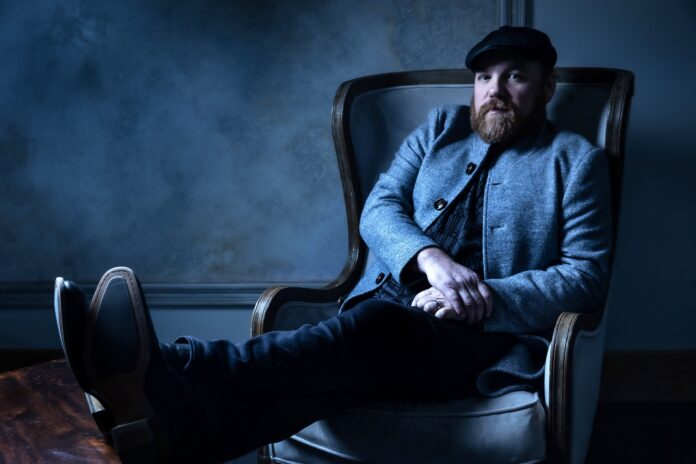
If you’ve followed my show reviews and artist interviews at all, you know how much I value genre-defying artists and bands. Although I tend to gravitate toward blues rock, I’m especially drawn to artists who blur the boundaries between blues, soul, funk, rock, pop, Americana, roots, and punk.
Marc Broussard is one such artist. If you forced me to put him into a single bucket, I would probably lean towards R&B. But that would be selling him way, way short.
In a 2024 review of Broussard’s June show at the Gothic Theatre, I wrote…
Broussard’s musical style isn’t as easy to classify as some would have you think. To many, he’s a soul and R&B artist. That’s absolutely true, but there’s more to it than that. He’s frequently characterized as a blues artist, but that doesn’t even begin to tell the story. He does play some blues music, but he certainly covers a lot more ground than that. His style has been described as “Bayou Soul,” which combines elements of funk, blues, soul, R&B, rock, folk and pop. It takes a lot of talent to be able to stretch that much, and to do it as masterfully as Broussard does.
Now Broussard is back with not one, but two new album releases that demonstrate his ability to master any genre he puts his mind to.
S.O.S. V: Songs of the ’50s, the latest in his series of cover albums where proceeds from sales go to nonprofit organizations, was released on February 6. That album features covers of eleven soul, pop, and R&B classics, including “Hallelujah, I Love Her So” (Ray Charles), “Unchained Melody” (The Righteous Brothers), and “Smile” (Nat King Cole).
On April 17, Broussard released Chance Worth Taking. Produced with Joe Bonamassa, Josh Smith, and Calvin Turner, the album ventures further into blues than any of his previous work. Even so, its fourteen tracks still showcase plenty of genre-blending.
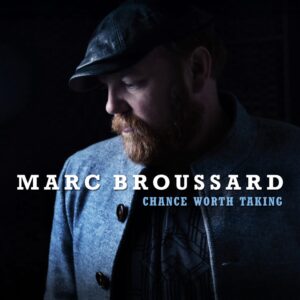
Broussard is set to open the 24th Annual Blues From The Top Music Festival in Winter Park on Friday evening, June 26. Ahead of that show, I spoke with him on Zoom earlier this week. We talked about the new albums, but our conversation covered much more than that. Broussard was candid about the personal and professional struggles he faced early in his career. He also spoke about the impact his wife and close friend Calvin Turner have had on him, both as a musician and as a person. He even offered a teaser about a possible future S.O.S. project. Read on…
************************************************************************
Rick: Marc, we were chatting before we actually started the interview, and you said you didn’t even know you could be a professional musician until you became a professional musician. Can you expand on that?
Marc: Yeah, like growing up, I was around a lot of musicians, right? My dad’s a player, and he was in bands, and virtually every single one of the bands that he was in, these guys all had day jobs. So that was my experience of a professional musician. They weren’t full-time musicians, they were part-time musicians. And all of a sudden I find myself in 2003 opening for Maroon Five, and so here I am now, a professional full-time musician. I was like, “Oh, okay, I guess this is what we’re doing.” That was what I though playing would be like when I was growing up. I thought it was always going to be a way to supplement my income.
Rick: Okay, well, that’s a good lead in to some questions I was hoping to ask you about the very early days, so let’s go there. I know you grew up in a musical family, your dad was a professional musician, and you were surrounded by music and music people all the time. I’ve read a lot of articles about you that say it was a foregone conclusion you were going to become a professional musician. Is that true, or were there other options you seriously considered?
Marc: I thought about law school. And I thought about working in the oil fields, because that industry kind of dominates here in South Louisiana, and I certainly knew several guys that had gone into that and done very well for themselves. I just wanted to make money. I really wanted a job where I could earn lots and lots and lots of money. And becoming a professional musician didn’t exactly match up to the desires of my youth, you know. But when I signed a record deal with Island, I thought I was going to be bigger than Michael Jackson. I thought that people would hear me sing, and I’d be famous. I didn’t realize yet what it really took to hit that level, and what I would have to sacrifice if I did hit that level. Thank God I didn’t, because I probably wouldn’t be with my wife still, probably wouldn’t have all four of the kids that I have. So I’m very grateful that things have gone the way they have, and not the way I thought I wanted them to go.
Rick: That’s interesting to hear, because I had a similar conversation over the weekend with your fellow Louisianan, Tab Benoit. I covered his back-to-back shows on Friday and Saturday, and after Saturday’s show he said he was grateful not to be famous. It made me think that it really comes down to perspective. He’s playing sold-out shows, and afterward there’s a crowd waiting to talk to him. He may not be Michael Jackson, but he’s certainly not unknown. And he gets to do what he loves, which is its own kind of wealth. The same seems true for you – you’re out there doing what you love, right?
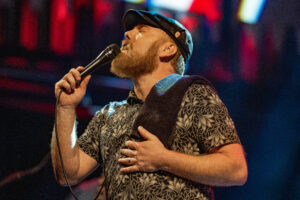
Marc: You know, that’s 100% true. I get to do what I love while still being able to walk down Main Street without being hassled. It’s been a hell of a ride, man. I can’t complain. It’s a great job, probably the best job in the world.
Rick: You mention being able to walk down Main Street without being hassled. Is there a definitive line between being politely acknowledged, and being hassled?
Marc: Well, the line might be, you know, interrupting a meal for more than just a hello. If I’m at dinner with my family and you come up to the table and ask me for a photograph, yeah, I’m going to give you the photograph because I don’t want to be a jerk. But I would have preferred that that photograph get taken at the merch table after a show, or at a meet and greet. But you know, I’ve got really nice fans… they’re really nice people. There are very few bad interactions that I’ve ever had with a fan. I can’t even remember one.
Rick: Okay, so now that my plan for the interview outline has been completely trashed, let’s circle back to where I had planned to start. 2026 is really starting off with a bang for Marc Broussard. We’re just coming up on the end of May, and you have two new albums out. In February you released the fifth album of your Save Our Soul series, S.O.S. V: Songs of the ‘50s. Then in April you released Chance Worth Taking, an album of completely original songs with a focus on the blues. I’ve listened to both – many times each – and they are simply outstanding. But before we talk about them, I want to give a nod to your contribution to the B.B. King Blues Summit 100 collection that was released in January. Chance Worth Taking is being marketed as a “stylistic pivot” towards the blues genre. But to me you can’t be much more engaged in the blues genre than playing on the B.B. King’s Blues Summit 100 collection. That must have been a thrill to be involved with.
Marc: Yeah, I actually cut that with Joe (Bonamassa) when we were in the studio making my latest album. He asked me to be a part of it, and of course I jumped at the opportunity. He didn’t even have to tell me who else was on the thing. I knew it was going to be star-studded and wanted to throw my hat in the ring, you know. I’m not a blues aficionado, but B.B. certainly towered over the genre, and I’ve always loved the way that man sang, and I love the way he played. He would be at the top of the list for almost anybody that’s been a fan of the blues. So it was a real honor to be asked to join that project.
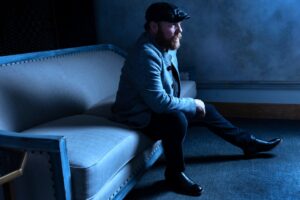
Rick: We could probably spend the next ten hours talking about the pros and cons of genre classification… I both love them and hate them. I’m sure you’re aware that you’ve been marketed as being, at a minimum, connected to the blues genre for years. But from the first time I heard you, I knew that you were more than just that. The first song I ever heard from you was “Home.” Oh, and I want to thank you for that song, man.
Marc (with a smile): I’m also very grateful for that song.
Rick: So we’ve got blues, and we’ve got soul, and funk, and R&B. And let’s not forget rock and pop. And this Marc Broussard cat, he can do all of them, and more. To me, all of these musical styles are brothers and sisters, each with their own personalities, but also with a ton of overlap. And you hear all of that, plus some tasty New Orleans Jazz, on the Chance Worth Taking album.
When I think about this new record and its emphasis on the blues, I look back on the S.O.S. 4: Blues For Your Soul album you did with Joe (Bonamassa). I know that wasn’t your original blues stuff, except for the one tune, but still… I think it’s fair for you to have characterized yourself as kind of a blues guy, even before this new record.
Marc: Well, I appreciate you saying that, Rick. Really, this pivot goes back to one of my best friends in the world, a guy by the name of Calvin Turner. He was my very first sideman. I met him at a club in New Orleans in like 2002 and we’ve spoken almost every day since. He’s now playing bass for Joe Bonamassa. He was really the driving force behind getting me connected with Joe for S.O.S. 4, and as soon as we were done recording that, he was like, “Dude, we’ve got to do an original record. You’ve got to come over here, man, because there’s nobody in this genre that’s singing the way you do.” So, all credit to Calvin for continually pushing, sometimes daily, for me to make a blues album.
Rick: I definitely want to dive down into that. I know your relationship with Calvin goes back a long, long way, and I’ve read the stories about how Calvin sent you 15 songs, just music, and you went to work coming up with the lyrics. How in the world did that work? I mean, where did the inspiration come from? Listening to the music, and just figuring out what kind of lyrics you want to fit into there? How does that process work?
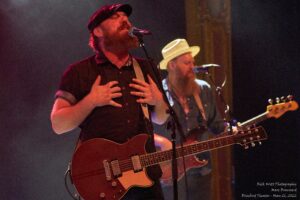
Marc: Well, in some cases I would call Calvin before I started the writing process and say, “Hey, you got any ideas for this?” And he might have a melody idea, or a lyric idea, and that made things very easy for me because I’ve got a well-defined idea of where to begin. When he didn’t have any ideas… Man, I don’t know exactly how to explain it. You’re just sitting there listening to this tune and melody ideas start coming to you, and initially it’s like phrasing… syllabic phrasing. And from there it’s kind of easy to shoehorn words into these defined syllables. And when you’re focused on writing for a blues album, that’s a pretty well defined lane. So it just kind of comes to you, sometimes in big waves and sometimes in small waves. Other times you open up a thesaurus, or you open up RhymeZone (online rhyming dictionary and thesaurus) and you look for near syllables or near rhymes. There are lots of tools that you can use to help get you over the finish line.
Rick: That’s absolutely fascinating. I had no idea. You know, that’s not dissimilar from how I draft my articles many times. I mean, there’s all kinds of tools out there that help you, especially when you get stuck, right? It never occurred to me that the same thing might be available for writing songs.
So as I already mentioned Chance Worth Taking is absolutely awesome. Start to finish. I just listened to it this morning, as a matter of fact. There’s a lot of songs about the various stages of love, and you’ve been quoted as saying that two in particular – “I’m Going Home” and “Trying To Do Right” – are about your relationship with your wife, past and present. Can you talk a little bit about that?
Marc: Well, she’s played a critical role in my life as a human being. She really taught me how to love somebody. When we first got together, we would both say “I love you,” but my behavior wouldn’t always reflect that. In fact, it was Calvin that called me out on some of my behavior back in the day. He said, “Man, that’s a good woman, and you’re not treating her right.” And initially I rejected that notion, because I was under the impression I was a good guy. I just was having fun, but in reality I was hurting her. Eventually I had to accept that even though I wasn’t meaning to hurt her, that’s what I was doing. I just wasn’t thinking about my actions in that way. When I finally accepted that, I became a different human being. In fact, the highest compliment she’s ever paid me was one time when she said she’d been thinking about something I did to her 20 years ago, and she snapped herself out of it by saying, “Marc would never do that.” She’s talking about something that I actually did to her, but then she said I would never do that to her. That was essentially an acknowledgement of how much of a different person I am from who I used to be.

Rick: That’s some heavy stuff, my friend. I appreciate you being willing to share that. It makes me think about my relationship with my wife, which is a good thing.
Back to the new record… I realize there was a concerted effort to make Chance Worth Taking a blues album. I’m comfortable calling it that, but with the caveat that it crosses all kinds of those sibling lines, right? Songs like “Sweet Love,” “Whispers,” and probably my favorite song on the album, “No More,” come across to me as classic R&B songs. There’s some great blues guitar in them, but they’re still R&B. And “Satisfaction Guaranteed”… man, that’s a good old funky dance song. I guess what I’m saying, and I’d ask you to comment on it, is that even though there’s a distinct blues flavor to this album, it crosses a lot of lines, and in the end it’s still a Marc Broussard record.
Marc: I think Calvin is owed a debt of gratitude for that. He’s obviously very familiar with the genre, while at the same time having a keen sense of knowing where to push against the walls when it comes to writing for a project like this. And he’s certainly extremely familiar with me and who I am as a person and what I do as a vocalist, so having him as a co-writer on this project was critical to how it sounds. So critical that he got co-production credit on it. He’s really the driving force behind the creative on this.
Rick: For the sake of time, let’s shift our focus to S.O.S. V: Songs of the ’50s. Man, I just want to say thank you. That album brought back so many fabulous memories to me. Not directly to me… I’m old, but not that old. It brings back memories of my dad, and the music he listened to, which really made up the soundtrack of my very young life. When “Unchained Melody” came up, I just closed my eyes and let it wash over me. The whole album is absolutely brilliant. My only criticism is that even with 11 songs, it ends too soon.
You’ve been doing the S.O.S. records for a long time, and when it’s time to do the next one, how do you decide where you’re going with it?
Marc: Actually, this record wasn’t supposed to be songs from the 50s. We had a playlist of a bunch of late 60s and 70s sold, and it wasn’t until about two weeks before we got in the studio that I thought back to the success of “Cry To Me”, which was on S.O.S 2, and is arguably the most popular song I’ve ever recorded. You know, there’s a video of my dad and me playing that song on YouTube that’s gotten over 55 million views at this point. It’s still at the top of the Spotify list, I think. So I thought, hold on, “Cry To Me” has done so freaking well, we should go back to that era. So I quickly adjusted and made a new playlist and passed it around to management and the players, and everybody agreed it was a good call. I do wish that I had had a little bit more time, and hadn’t been so under the gun to get the material into the guy’s hands, because I probably would have dove a little deeper to find some real gems. It’s always kind of a battle between deep cuts and hits. Management wants nothing but the hits, and the players want the deep gems. So it’s a balancing act. This album probably has the most hits out of all of the S.O.S. albums.
Rick: Well, so now you already have the next one teed up, right? Songs from the 60s and 70s.
Marc: Actually, right now I’m tentatively planning a tribute to Huey Lewis and the News.
Rick: Oh, man… that would be so cool!
Marc: Yeah, I’m pretty excited about that.
Rick: Is your management team going to be upset with me if I put that in the article?
Marc: No, not at all. It’s not set in stone, so I’m not worried about it.
Rick: The S.O.S records clearly reflect your commitment to philanthropy. Where does that come from?
Marc: I’ve been asked that question a ton, and there’s not really a great answer. I think a lot of it has to do with my family, with my parents, and how they raised me. They volunteered their time when I was growing up, and they certainly donated plenty of money to charitable causes. I really don’t know where the inspiration came from. I think it was God that kind of put it in my heart to build a vehicle for philanthropy into my business, and I’m very grateful that we did. It’s not only allowed us to raise tons of cash for various really great causes, but it has allowed me to record some of my favorite music. It’s allowed me to spend more time focused on original projects in between those projects, while still getting new music out to my fans, who would consume a new album every week if I could give it to them. There’s such an insatiable appetite for new music these days. Record cycles used to be like a year and a half or two years, and now they’re like two weeks. So being able to do these records has been a blessing in so many ways.

Rick: I think what you’re talking about, about the cycles, that’s a function of the instant gratification nature of our society today. And I’d like to talk about that, because of how it’s changed the record industry so much. I mean, it’s kind of funny that we still refer to it as the record industry. Vinyl is still being sold, but mass consumption comes instantly from streaming. You released the first S.O.S. record in 2007, and back then people were still buying CDs. The revenue generated from those CD sales – and the corresponding revenue that fed into the charitable organizations being supported – had to be much higher back then than what you’re seeing now. Or am I missing something?
Marc: Well, people still buy these, so there’s that. There’s an extra incentive because they know it’s got a charity component. I sell a ton of them at the shows.
Rick: Well, that’s great to hear. Are people buying them other than at the shows? Nobody talks any more about how many CDs or albums have been sold. That used to be a measure of an album’s success, but now we never hear anything about it.
Marc: No, it’s not, not at all. I mean, I think that there’s some calculation that Billboard does, but that’s a very good question. I know that we ship them to our merch supplier, so I think people are buying them, but that’s a management question. I honestly don’t know.
Rick: Well, it certainly adds yet another layer of difficulty for success in this business, doesn’t it? Especially for young bands and artists trying to crack into the business. I guess one of the lessons here is that when you go see someone perform live, make sure to check out the merch table.
Marc: It’s a very, very difficult business, and it’s not getting any easier, you know. Sony, Universal, and Warner effectively own Spotify, so there’s extra incentive for that platform to push certain artists, namely artists that are on Sony, Universal, and Warner. It doesn’t feel like a very transparent company either, so I think auditing them would be totally useless. It’s just such a behemoth, so it would be very, very difficult to get at the truth of the matter. I, for one, hope that company dies a very violent death.

Rick: Before I let you go, Marc, I want to circle back around to your early days in the business one more time. I know your first album was well received. And I know your follow up, Carencro also did well. So a person could assume that your climb into the business was relatively smooth. Was there ever a time, back in those early days, when you were discouraged, and thought that maybe you should pivot completely and try something different?
Marc: Not in those earliest days, but definitely after my relationship with Atlantic Records fell apart. I did two albums for them, Keep Coming Back and a self-titled album called Marc Broussard. That was a really rough time. It had been a steady downturn for a number of years, and I was hemorrhaging money. I still had a bus and a crew and a full band, and we decided to scrap that whole routine. We got back into a van, went down to a trio, and started playing much smaller rooms. We’re selling them out, but it didn’t feel great, because it was a major wake-up call.
I had been checked out, and was assuming that all I had to do was show up and my managers, the record label, and my bandmates would take care of all the stuff that needed to get taken care of. I would sleep until five minutes before a show, and I was checked out creatively, and my business suffered because of it. And after we did that living room tour with the trio, I came to realize that if I wasn’t carrying the football, we weren’t moving up the field. So I grabbed the football and started actually engaging and really focusing and learning all the various aspects of what made my company successful in the first place and what it was lacking at that moment in time. And out of that, I think not only did we start moving up field and gaining some ground, but I think I started making better albums. Everything kind of fell into place. So it taught me that I needed to stay engaged, and I have tried to continue to do that.
Rick: Wow… that really makes me think. Those of us who are just consuming the music generally don’t have a clue as to what’s going on in the background. I’m glad you made it through that tough time. And by the way, I really, really liked that Marc Broussard album. I thought it was really good.
Marc: I thought so too. In fact, I loved it. I just think the record label was done with me by that point, though. They actually let me out of my contract and picked up representation for the guy that produced that album. In other words, they were like, “Hey, look, we don’t really like you so much. But we really like what he did on this album.”
Rick (wise guy tone): Well, the production on it was really good.
So Marc, we’re talking today not only because you have a couple of new albums out, but also because you’re going to be playing the Winter Park Blues from the Top Festival in just under a month. You’re actually opening the festival on Friday (June 26) night. I’ve got to assume you’ll be rolling out a fair amount of music from the new Chance Worth Taking album.
Marc: Yeah, we’re playing a bunch of them. We’re playing, I think, six tunes from the new album.

Rick: Have you played the Winter Park Festival before?
Marc: I don’t think so. I’ve played Telluride, but I don’t think Winter Park.
Rick: Winter Park’s a really nice festival. It’s a great single stage setup, is extremely well run, and pulls in a very engaged audience. I think you’ll really like it.
With that, I’ll let you go. I really appreciate your time today, Marc, as well as your music, so keep doing what you’re doing. You take care, get some quality time with your family before you head back out on the road, and we’ll see you in about a month at the Winter Park Blues from the Top Festival.
Marc: Beautiful, thanks so much, Rick. Take care, bro.
************************************************************************
The 24th Annual Blues From The Top Music Festival is set for June 26–28 at the Rendezvous Event Center in downtown Winter Park. I’ve attended and covered the festival several times, and I can confidently say it belongs on every blues fan’s must-see list.
Friday’s June 26 lineup includes Marc Broussard and The Wood Brothers. As noted in the interview above, Marc plans to perform about half a dozen songs from his new album, Chance Worth Taking. I’ll definitely be there, and you should be too.
Tickets for the festival can be purchased at Blues From The Top Tickets.
Interview/story by Rick Witt www.rickwittphotography.com
Photo credits as noted